

Influence of Sintering on the Development of Alumina-Toughened …
175
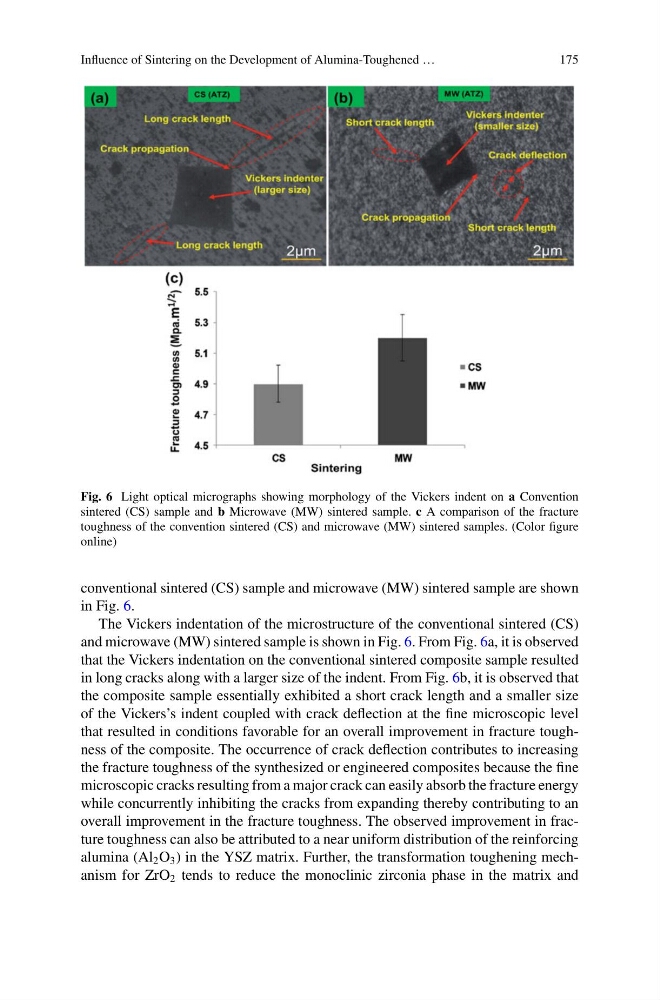
Fig. 6 Light optical micrographs showing morphology of the Vickers indent on a Convention
sintered (CS) sample and b Microwave (MW) sintered sample. c A comparison of the fracture
toughness of the convention sintered (CS) and microwave (MW) sintered samples. (Color figure
online)
conventional sintered (CS) sample and microwave (MW) sintered sample are shown
in Fig. 6.
The Vickers indentation of the microstructure of the conventional sintered (CS)
and microwave (MW) sintered sample is shown in Fig. 6. From Fig. 6a, it is observed
that the Vickers indentation on the conventional sintered composite sample resulted
in long cracks along with a larger size of the indent. From Fig. 6b, it is observed that
the composite sample essentially exhibited a short crack length and a smaller size
of the Vickers’s indent coupled with crack deflection at the fine microscopic level
that resulted in conditions favorable for an overall improvement in fracture toughness of the composite. The occurrence of crack deflection contributes to increasing
the fracture toughness of the synthesized or engineered composites because the fine
microscopic cracks resulting from a major crack can easily absorb the fracture energy
while concurrently inhibiting the cracks from expanding thereby contributing to an
overall improvement in the fracture toughness. The observed improvement in fracture toughness can also be attributed to a near uniform distribution of the reinforcing
alumina (Al 2 O 3 ) in the YSZ matrix. Further, the transformation toughening mechanism for ZrO 2 tends to reduce the monoclinic zirconia phase in the matrix and
175
Fig. 6 Light optical micrographs showing morphology of the Vickers indent on a Convention
sintered (CS) sample and b Microwave (MW) sintered sample. c A comparison of the fracture
toughness of the convention sintered (CS) and microwave (MW) sintered samples. (Color figure
online)
conventional sintered (CS) sample and microwave (MW) sintered sample are shown
in Fig. 6.
The Vickers indentation of the microstructure of the conventional sintered (CS)
and microwave (MW) sintered sample is shown in Fig. 6. From Fig. 6a, it is observed
that the Vickers indentation on the conventional sintered composite sample resulted
in long cracks along with a larger size of the indent. From Fig. 6b, it is observed that
the composite sample essentially exhibited a short crack length and a smaller size
of the Vickers’s indent coupled with crack deflection at the fine microscopic level
that resulted in conditions favorable for an overall improvement in fracture toughness of the composite. The occurrence of crack deflection contributes to increasing
the fracture toughness of the synthesized or engineered composites because the fine
microscopic cracks resulting from a major crack can easily absorb the fracture energy
while concurrently inhibiting the cracks from expanding thereby contributing to an
overall improvement in the fracture toughness. The observed improvement in fracture toughness can also be attributed to a near uniform distribution of the reinforcing
alumina (Al 2 O 3 ) in the YSZ matrix. Further, the transformation toughening mechanism for ZrO 2 tends to reduce the monoclinic zirconia phase in the matrix and