

Influence of Sintering on the Development of Alumina-Toughened …
167
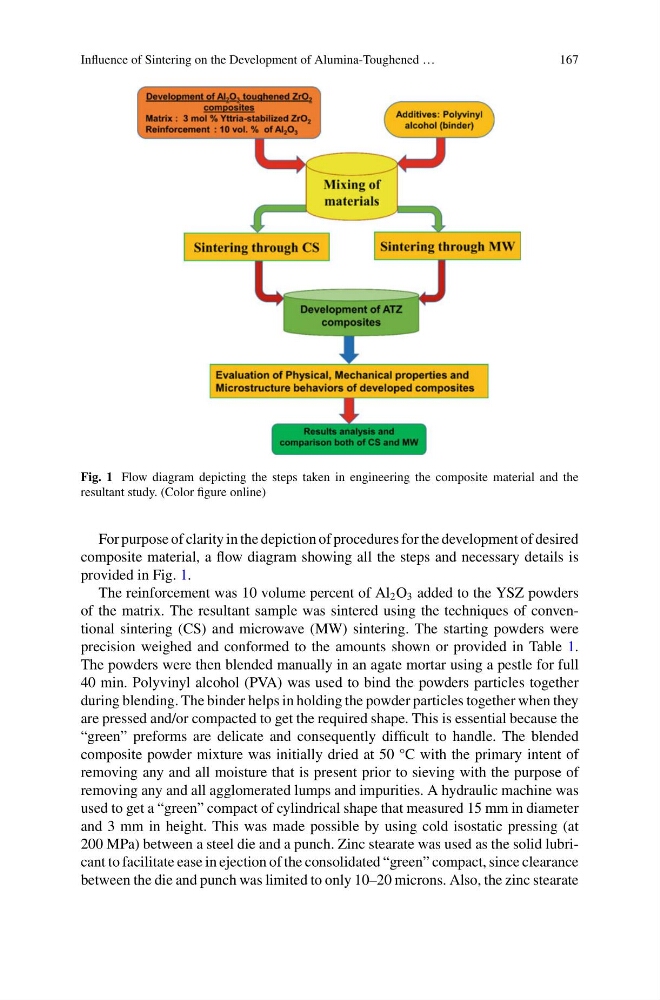
Fig. 1 Flow diagram depicting the steps taken in engineering the composite material and the
resultant study. (Color figure online)
For purpose of clarity in the depiction of procedures for the development of desired
composite material, a flow diagram showing all the steps and necessary details is
provided in Fig. 1.
The reinforcement was 10 volume percent of Al 2 O 3 added to the YSZ powders
of the matrix. The resultant sample was sintered using the techniques of conventional sintering (CS) and microwave (MW) sintering. The starting powders were
precision weighed and conformed to the amounts shown or provided in Table 1.
The powders were then blended manually in an agate mortar using a pestle for full
40 min. Polyvinyl alcohol (PVA) was used to bind the powders particles together
during blending. The binder helps in holding the powder particles together when they
are pressed and/or compacted to get the required shape. This is essential because the
“green” preforms are delicate and consequently difficult to handle. The blended
composite powder mixture was initially dried at 50 °C with the primary intent of
removing any and all moisture that is present prior to sieving with the purpose of
removing any and all agglomerated lumps and impurities. A hydraulic machine was
used to get a “green” compact of cylindrical shape that measured 15 mm in diameter
and 3 mm in height. This was made possible by using cold isostatic pressing (at
200 MPa) between a steel die and a punch. Zinc stearate was used as the solid lubricant to facilitate ease in ejection of the consolidated “green” compact, since clearance
between the die and punch was limited to only 10–20 microns. Also, the zinc stearate
167
Fig. 1 Flow diagram depicting the steps taken in engineering the composite material and the
resultant study. (Color figure online)
For purpose of clarity in the depiction of procedures for the development of desired
composite material, a flow diagram showing all the steps and necessary details is
provided in Fig. 1.
The reinforcement was 10 volume percent of Al 2 O 3 added to the YSZ powders
of the matrix. The resultant sample was sintered using the techniques of conventional sintering (CS) and microwave (MW) sintering. The starting powders were
precision weighed and conformed to the amounts shown or provided in Table 1.
The powders were then blended manually in an agate mortar using a pestle for full
40 min. Polyvinyl alcohol (PVA) was used to bind the powders particles together
during blending. The binder helps in holding the powder particles together when they
are pressed and/or compacted to get the required shape. This is essential because the
“green” preforms are delicate and consequently difficult to handle. The blended
composite powder mixture was initially dried at 50 °C with the primary intent of
removing any and all moisture that is present prior to sieving with the purpose of
removing any and all agglomerated lumps and impurities. A hydraulic machine was
used to get a “green” compact of cylindrical shape that measured 15 mm in diameter
and 3 mm in height. This was made possible by using cold isostatic pressing (at
200 MPa) between a steel die and a punch. Zinc stearate was used as the solid lubricant to facilitate ease in ejection of the consolidated “green” compact, since clearance
between the die and punch was limited to only 10–20 microns. Also, the zinc stearate