

60
3 Single Molecule Non-cleavable Multiply Active Antibacterials
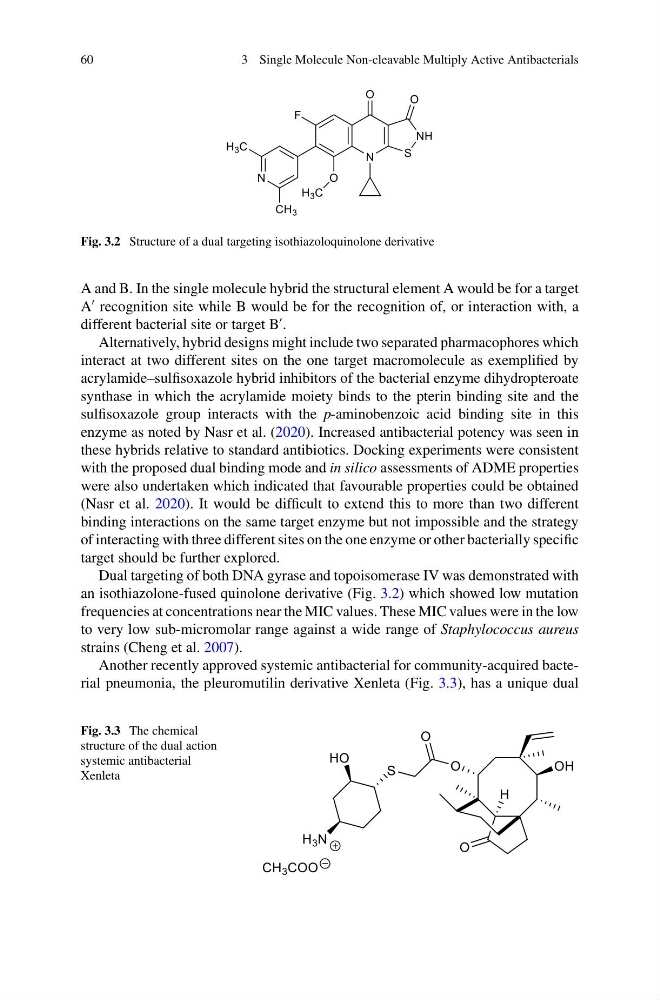
Fig. 3.2 Structure of a dual targeting isothiazoloquinolone derivative
A and B. In the single molecule hybrid the structural element A would be for a target
A
recognition site while B would be for the recognition of, or interaction with, a
different bacterial site or target B
.
Alternatively, hybrid designs might include two separated pharmacophores which
interact at two different sites on the one target macromolecule as exemplified by
acrylamide–sulfisoxazole hybrid inhibitors of the bacterial enzyme dihydropteroate
synthase in which the acrylamide moiety binds to the pterin binding site and the
sulfisoxazole group interacts with the p-aminobenzoic acid binding site in this
enzyme as noted by Nasr et al. (2020). Increased antibacterial potency was seen in
these hybrids relative to standard antibiotics. Docking experiments were consistent
with the proposed dual binding mode and in silico assessments of ADME properties
were also undertaken which indicated that favourable properties could be obtained
(Nasr et al. 2020). It would be difficult to extend this to more than two different
binding interactions on the same target enzyme but not impossible and the strategy
of interacting with three different sites on the one enzyme or other bacterially specific
target should be further explored.
Dual targeting of both DNA gyrase and topoisomerase IV was demonstrated with
an isothiazolone-fused quinolone derivative (Fig. 3.2) which showed low mutation
frequencies at concentrations near the MIC values. These MIC values were in the low
to very low sub-micromolar range against a wide range of Staphylococcus aureus
strains (Cheng et al. 2007).
Another recently approved systemic antibacterial for community-acquired bacterial pneumonia, the pleuromutilin derivative Xenleta (Fig. 3.3), has a unique dual
Fig. 3.3 The chemical
structure of the dual action
systemic antibacterial
Xenleta
3 Single Molecule Non-cleavable Multiply Active Antibacterials
Fig. 3.2 Structure of a dual targeting isothiazoloquinolone derivative
A and B. In the single molecule hybrid the structural element A would be for a target
A
recognition site while B would be for the recognition of, or interaction with, a
different bacterial site or target B
.
Alternatively, hybrid designs might include two separated pharmacophores which
interact at two different sites on the one target macromolecule as exemplified by
acrylamide–sulfisoxazole hybrid inhibitors of the bacterial enzyme dihydropteroate
synthase in which the acrylamide moiety binds to the pterin binding site and the
sulfisoxazole group interacts with the p-aminobenzoic acid binding site in this
enzyme as noted by Nasr et al. (2020). Increased antibacterial potency was seen in
these hybrids relative to standard antibiotics. Docking experiments were consistent
with the proposed dual binding mode and in silico assessments of ADME properties
were also undertaken which indicated that favourable properties could be obtained
(Nasr et al. 2020). It would be difficult to extend this to more than two different
binding interactions on the same target enzyme but not impossible and the strategy
of interacting with three different sites on the one enzyme or other bacterially specific
target should be further explored.
Dual targeting of both DNA gyrase and topoisomerase IV was demonstrated with
an isothiazolone-fused quinolone derivative (Fig. 3.2) which showed low mutation
frequencies at concentrations near the MIC values. These MIC values were in the low
to very low sub-micromolar range against a wide range of Staphylococcus aureus
strains (Cheng et al. 2007).
Another recently approved systemic antibacterial for community-acquired bacterial pneumonia, the pleuromutilin derivative Xenleta (Fig. 3.3), has a unique dual
Fig. 3.3 The chemical
structure of the dual action
systemic antibacterial
Xenleta