

2.1 Introduction
31
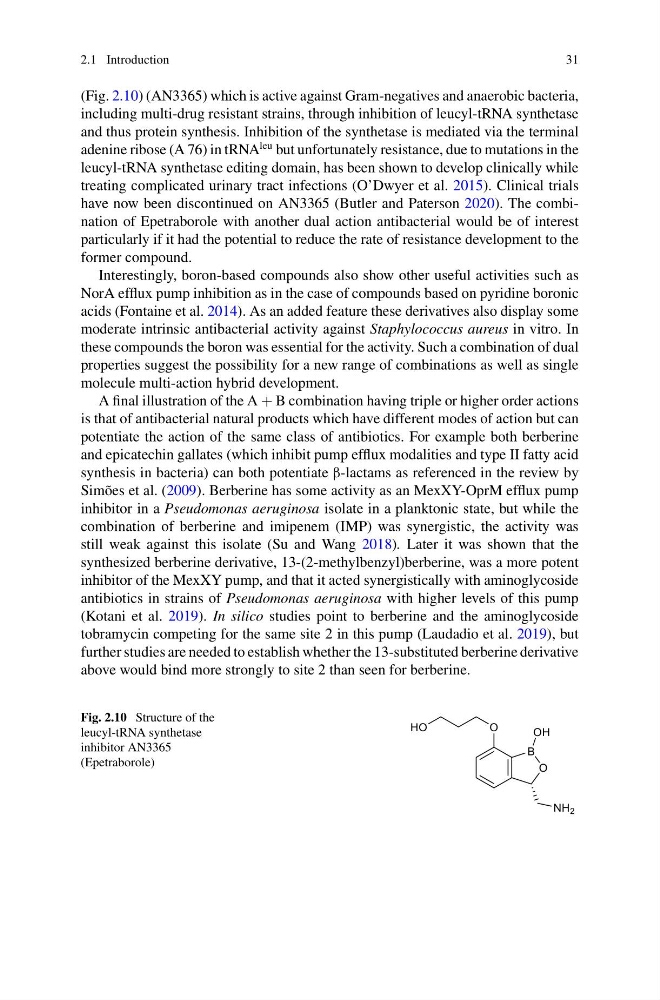
(Fig. 2.10) (AN3365) which is active against Gram-negatives and anaerobic bacteria,
including multi-drug resistant strains, through inhibition of leucyl-tRNA synthetase
and thus protein synthesis. Inhibition of the synthetase is mediated via the terminal
adenine ribose (A 76) in tRNA
leu but unfortunately resistance, due to mutations in the
leucyl-tRNA synthetase editing domain, has been shown to develop clinically while
treating complicated urinary tract infections (O’Dwyer et al. 2015). Clinical trials
have now been discontinued on AN3365 (Butler and Paterson 2020). The combination of Epetraborole with another dual action antibacterial would be of interest
particularly if it had the potential to reduce the rate of resistance development to the
former compound.
Interestingly, boron-based compounds also show other useful activities such as
NorA efflux pump inhibition as in the case of compounds based on pyridine boronic
acids (Fontaine et al. 2014). As an added feature these derivatives also display some
moderate intrinsic antibacterial activity against Staphylococcus aureus in vitro. In
these compounds the boron was essential for the activity. Such a combination of dual
properties suggest the possibility for a new range of combinations as well as single
molecule multi-action hybrid development.
A final illustration of the A + B combination having triple or higher order actions
is that of antibacterial natural products which have different modes of action but can
potentiate the action of the same class of antibiotics. For example both berberine
and epicatechin gallates (which inhibit pump efflux modalities and type II fatty acid
synthesis in bacteria) can both potentiate β-lactams as referenced in the review by
Simões et al. (2009). Berberine has some activity as an MexXY-OprM efflux pump
inhibitor in a Pseudomonas aeruginosa isolate in a planktonic state, but while the
combination of berberine and imipenem (IMP) was synergistic, the activity was
still weak against this isolate (Su and Wang 2018). Later it was shown that the
synthesized berberine derivative, 13-(2-methylbenzyl)berberine, was a more potent
inhibitor of the MexXY pump, and that it acted synergistically with aminoglycoside
antibiotics in strains of Pseudomonas aeruginosa with higher levels of this pump
(Kotani et al. 2019). In silico studies point to berberine and the aminoglycoside
tobramycin competing for the same site 2 in this pump (Laudadio et al. 2019), but
further studies are needed to establish whether the 13-substituted berberine derivative
above would bind more strongly to site 2 than seen for berberine.
Fig. 2.10 Structure of the
leucyl-tRNA synthetase
inhibitor AN3365
(Epetraborole)
31
(Fig. 2.10) (AN3365) which is active against Gram-negatives and anaerobic bacteria,
including multi-drug resistant strains, through inhibition of leucyl-tRNA synthetase
and thus protein synthesis. Inhibition of the synthetase is mediated via the terminal
adenine ribose (A 76) in tRNA
leu but unfortunately resistance, due to mutations in the
leucyl-tRNA synthetase editing domain, has been shown to develop clinically while
treating complicated urinary tract infections (O’Dwyer et al. 2015). Clinical trials
have now been discontinued on AN3365 (Butler and Paterson 2020). The combination of Epetraborole with another dual action antibacterial would be of interest
particularly if it had the potential to reduce the rate of resistance development to the
former compound.
Interestingly, boron-based compounds also show other useful activities such as
NorA efflux pump inhibition as in the case of compounds based on pyridine boronic
acids (Fontaine et al. 2014). As an added feature these derivatives also display some
moderate intrinsic antibacterial activity against Staphylococcus aureus in vitro. In
these compounds the boron was essential for the activity. Such a combination of dual
properties suggest the possibility for a new range of combinations as well as single
molecule multi-action hybrid development.
A final illustration of the A + B combination having triple or higher order actions
is that of antibacterial natural products which have different modes of action but can
potentiate the action of the same class of antibiotics. For example both berberine
and epicatechin gallates (which inhibit pump efflux modalities and type II fatty acid
synthesis in bacteria) can both potentiate β-lactams as referenced in the review by
Simões et al. (2009). Berberine has some activity as an MexXY-OprM efflux pump
inhibitor in a Pseudomonas aeruginosa isolate in a planktonic state, but while the
combination of berberine and imipenem (IMP) was synergistic, the activity was
still weak against this isolate (Su and Wang 2018). Later it was shown that the
synthesized berberine derivative, 13-(2-methylbenzyl)berberine, was a more potent
inhibitor of the MexXY pump, and that it acted synergistically with aminoglycoside
antibiotics in strains of Pseudomonas aeruginosa with higher levels of this pump
(Kotani et al. 2019). In silico studies point to berberine and the aminoglycoside
tobramycin competing for the same site 2 in this pump (Laudadio et al. 2019), but
further studies are needed to establish whether the 13-substituted berberine derivative
above would bind more strongly to site 2 than seen for berberine.
Fig. 2.10 Structure of the
leucyl-tRNA synthetase
inhibitor AN3365
(Epetraborole)