

2.1 Introduction
25
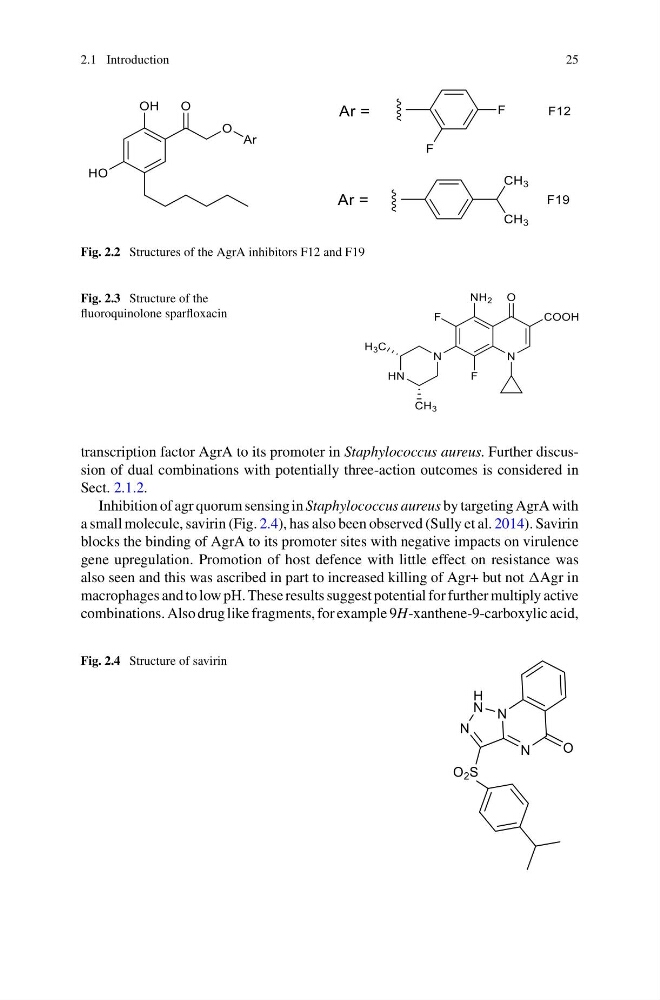
Fig. 2.2 Structures of the AgrA inhibitors F12 and F19
Fig. 2.3 Structure of the
fluoroquinolone sparfloxacin
transcription factor AgrA to its promoter in Staphylococcus aureus. Further discussion of dual combinations with potentially three-action outcomes is considered in
Sect. 2.1.2.
Inhibition of agr quorum sensing in Staphylococcus aureus by targeting AgrA with
a small molecule, savirin (Fig. 2.4), has also been observed (Sully et al. 2014). Savirin
blocks the binding of AgrA to its promoter sites with negative impacts on virulence
gene upregulation. Promotion of host defence with little effect on resistance was
also seen and this was ascribed in part to increased killing of Agr+ but not Agr in
macrophages and to low pH. These results suggest potential for further multiply active
combinations. Also drug like fragments, for example 9H-xanthene-9-carboxylic acid,
Fig. 2.4 Structure of savirin
25
Fig. 2.2 Structures of the AgrA inhibitors F12 and F19
Fig. 2.3 Structure of the
fluoroquinolone sparfloxacin
transcription factor AgrA to its promoter in Staphylococcus aureus. Further discussion of dual combinations with potentially three-action outcomes is considered in
Sect. 2.1.2.
Inhibition of agr quorum sensing in Staphylococcus aureus by targeting AgrA with
a small molecule, savirin (Fig. 2.4), has also been observed (Sully et al. 2014). Savirin
blocks the binding of AgrA to its promoter sites with negative impacts on virulence
gene upregulation. Promotion of host defence with little effect on resistance was
also seen and this was ascribed in part to increased killing of Agr+ but not Agr in
macrophages and to low pH. These results suggest potential for further multiply active
combinations. Also drug like fragments, for example 9H-xanthene-9-carboxylic acid,
Fig. 2.4 Structure of savirin