

5.4 New Modes of Action/New Targets
177
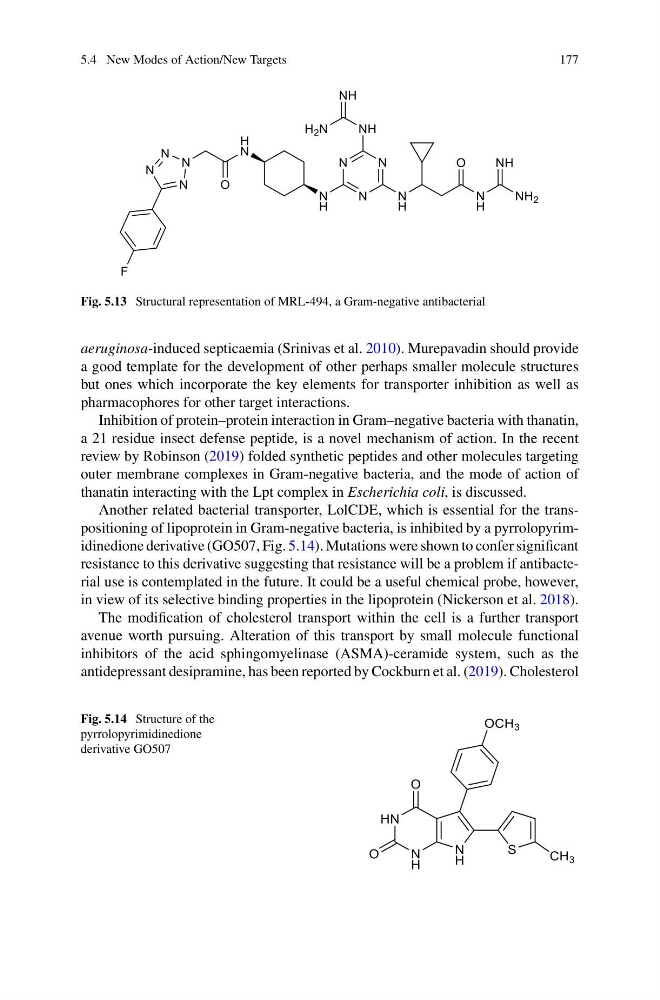
Fig. 5.13 Structural representation of MRL-494, a Gram-negative antibacterial
aeruginosa-induced septicaemia (Srinivas et al. 2010). Murepavadin should provide
a good template for the development of other perhaps smaller molecule structures
but ones which incorporate the key elements for transporter inhibition as well as
pharmacophores for other target interactions.
Inhibition of protein–protein interaction in Gram–negative bacteria with thanatin,
a 21 residue insect defense peptide, is a novel mechanism of action. In the recent
review by Robinson (2019) folded synthetic peptides and other molecules targeting
outer membrane complexes in Gram-negative bacteria, and the mode of action of
thanatin interacting with the Lpt complex in Escherichia coli, is discussed.
Another related bacterial transporter, LolCDE, which is essential for the transpositioning of lipoprotein in Gram-negative bacteria, is inhibited by a pyrrolopyrimidinedione derivative (GO507, Fig. 5.14). Mutations were shown to confer significant
resistance to this derivative suggesting that resistance will be a problem if antibacterial use is contemplated in the future. It could be a useful chemical probe, however,
in view of its selective binding properties in the lipoprotein (Nickerson et al. 2018).
The modification of cholesterol transport within the cell is a further transport
avenue worth pursuing. Alteration of this transport by small molecule functional
inhibitors of the acid sphingomyelinase (ASMA)-ceramide system, such as the
antidepressant desipramine, has been reported by Cockburn et al. (2019). Cholesterol
Fig. 5.14 Structure of the
pyrrolopyrimidinedione
derivative GO507
177
Fig. 5.13 Structural representation of MRL-494, a Gram-negative antibacterial
aeruginosa-induced septicaemia (Srinivas et al. 2010). Murepavadin should provide
a good template for the development of other perhaps smaller molecule structures
but ones which incorporate the key elements for transporter inhibition as well as
pharmacophores for other target interactions.
Inhibition of protein–protein interaction in Gram–negative bacteria with thanatin,
a 21 residue insect defense peptide, is a novel mechanism of action. In the recent
review by Robinson (2019) folded synthetic peptides and other molecules targeting
outer membrane complexes in Gram-negative bacteria, and the mode of action of
thanatin interacting with the Lpt complex in Escherichia coli, is discussed.
Another related bacterial transporter, LolCDE, which is essential for the transpositioning of lipoprotein in Gram-negative bacteria, is inhibited by a pyrrolopyrimidinedione derivative (GO507, Fig. 5.14). Mutations were shown to confer significant
resistance to this derivative suggesting that resistance will be a problem if antibacterial use is contemplated in the future. It could be a useful chemical probe, however,
in view of its selective binding properties in the lipoprotein (Nickerson et al. 2018).
The modification of cholesterol transport within the cell is a further transport
avenue worth pursuing. Alteration of this transport by small molecule functional
inhibitors of the acid sphingomyelinase (ASMA)-ceramide system, such as the
antidepressant desipramine, has been reported by Cockburn et al. (2019). Cholesterol
Fig. 5.14 Structure of the
pyrrolopyrimidinedione
derivative GO507