

176
5 Future Possibilities
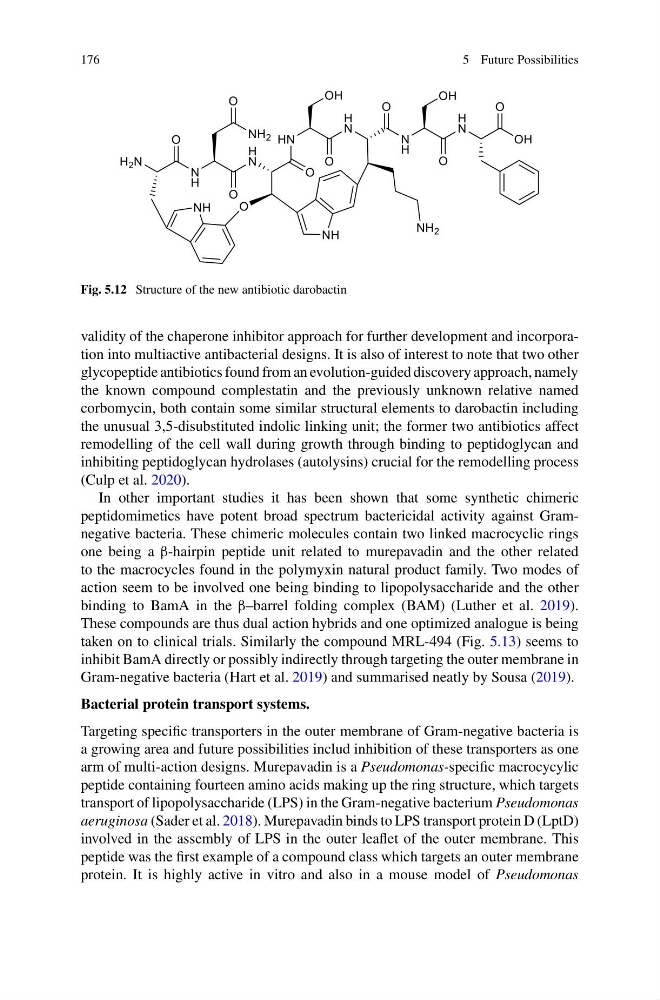
Fig. 5.12 Structure of the new antibiotic darobactin
validity of the chaperone inhibitor approach for further development and incorporation into multiactive antibacterial designs. It is also of interest to note that two other
glycopeptide antibiotics found from an evolution-guided discovery approach, namely
the known compound complestatin and the previously unknown relative named
corbomycin, both contain some similar structural elements to darobactin including
the unusual 3,5-disubstituted indolic linking unit; the former two antibiotics affect
remodelling of the cell wall during growth through binding to peptidoglycan and
inhibiting peptidoglycan hydrolases (autolysins) crucial for the remodelling process
(Culp et al. 2020).
In other important studies it has been shown that some synthetic chimeric
peptidomimetics have potent broad spectrum bactericidal activity against Gramnegative bacteria. These chimeric molecules contain two linked macrocyclic rings
one being a β-hairpin peptide unit related to murepavadin and the other related
to the macrocycles found in the polymyxin natural product family. Two modes of
action seem to be involved one being binding to lipopolysaccharide and the other
binding to BamA in the β–barrel folding complex (BAM) (Luther et al. 2019).
These compounds are thus dual action hybrids and one optimized analogue is being
taken on to clinical trials. Similarly the compound MRL-494 (Fig. 5.13) seems to
inhibit BamA directly or possibly indirectly through targeting the outer membrane in
Gram-negative bacteria (Hart et al. 2019) and summarised neatly by Sousa (2019).
Bacterial protein transport systems.
Targeting specific transporters in the outer membrane of Gram-negative bacteria is
a growing area and future possibilities includ inhibition of these transporters as one
arm of multi-action designs. Murepavadin is a Pseudomonas-specific macrocycylic
peptide containing fourteen amino acids making up the ring structure, which targets
transport of lipopolysaccharide (LPS) in the Gram-negative bacterium Pseudomonas
aeruginosa (Sader et al. 2018). Murepavadin binds to LPS transport protein D (LptD)
involved in the assembly of LPS in the outer leaflet of the outer membrane. This
peptide was the first example of a compound class which targets an outer membrane
protein. It is highly active in vitro and also in a mouse model of Pseudomonas
5 Future Possibilities
Fig. 5.12 Structure of the new antibiotic darobactin
validity of the chaperone inhibitor approach for further development and incorporation into multiactive antibacterial designs. It is also of interest to note that two other
glycopeptide antibiotics found from an evolution-guided discovery approach, namely
the known compound complestatin and the previously unknown relative named
corbomycin, both contain some similar structural elements to darobactin including
the unusual 3,5-disubstituted indolic linking unit; the former two antibiotics affect
remodelling of the cell wall during growth through binding to peptidoglycan and
inhibiting peptidoglycan hydrolases (autolysins) crucial for the remodelling process
(Culp et al. 2020).
In other important studies it has been shown that some synthetic chimeric
peptidomimetics have potent broad spectrum bactericidal activity against Gramnegative bacteria. These chimeric molecules contain two linked macrocyclic rings
one being a β-hairpin peptide unit related to murepavadin and the other related
to the macrocycles found in the polymyxin natural product family. Two modes of
action seem to be involved one being binding to lipopolysaccharide and the other
binding to BamA in the β–barrel folding complex (BAM) (Luther et al. 2019).
These compounds are thus dual action hybrids and one optimized analogue is being
taken on to clinical trials. Similarly the compound MRL-494 (Fig. 5.13) seems to
inhibit BamA directly or possibly indirectly through targeting the outer membrane in
Gram-negative bacteria (Hart et al. 2019) and summarised neatly by Sousa (2019).
Bacterial protein transport systems.
Targeting specific transporters in the outer membrane of Gram-negative bacteria is
a growing area and future possibilities includ inhibition of these transporters as one
arm of multi-action designs. Murepavadin is a Pseudomonas-specific macrocycylic
peptide containing fourteen amino acids making up the ring structure, which targets
transport of lipopolysaccharide (LPS) in the Gram-negative bacterium Pseudomonas
aeruginosa (Sader et al. 2018). Murepavadin binds to LPS transport protein D (LptD)
involved in the assembly of LPS in the outer leaflet of the outer membrane. This
peptide was the first example of a compound class which targets an outer membrane
protein. It is highly active in vitro and also in a mouse model of Pseudomonas