

128
4 Design Principles and Development of Prodrugs for Multiply …
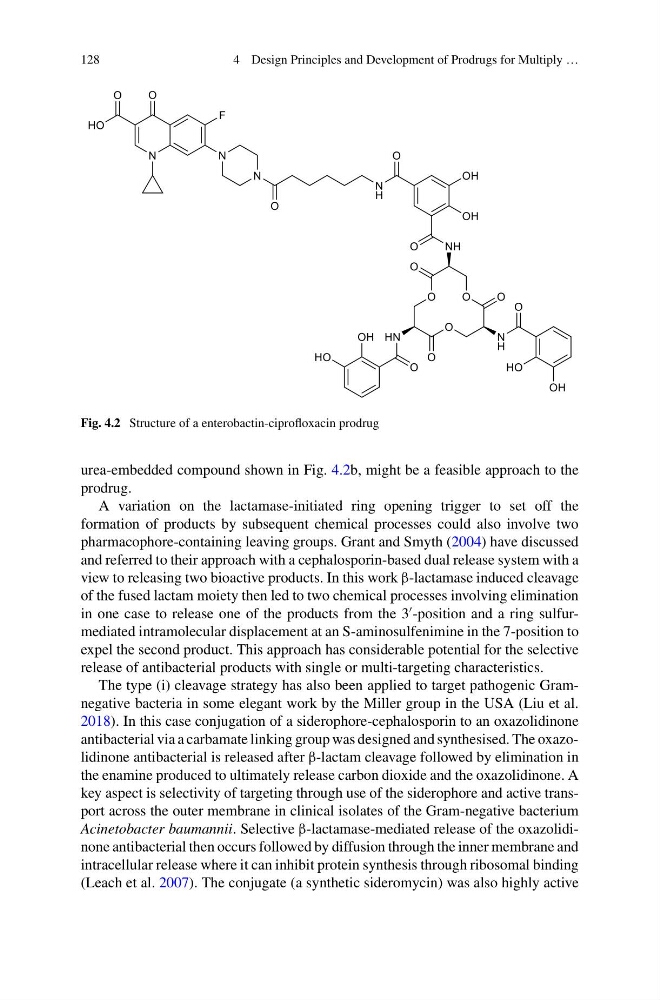
Fig. 4.2 Structure of a enterobactin-ciprofloxacin prodrug
urea-embedded compound shown in Fig. 4.2b, might be a feasible approach to the
prodrug.
A variation on the lactamase-initiated ring opening trigger to set off the
formation of products by subsequent chemical processes could also involve two
pharmacophore-containing leaving groups. Grant and Smyth (2004) have discussed
and referred to their approach with a cephalosporin-based dual release system with a
view to releasing two bioactive products. In this work β-lactamase induced cleavage
of the fused lactam moiety then led to two chemical processes involving elimination
in one case to release one of the products from the 3
-position and a ring sulfurmediated intramolecular displacement at an S-aminosulfenimine in the 7-position to
expel the second product. This approach has considerable potential for the selective
release of antibacterial products with single or multi-targeting characteristics.
The type (i) cleavage strategy has also been applied to target pathogenic Gramnegative bacteria in some elegant work by the Miller group in the USA (Liu et al.
2018). In this case conjugation of a siderophore-cephalosporin to an oxazolidinone
antibacterial via a carbamate linking group was designed and synthesised. The oxazolidinone antibacterial is released after β-lactam cleavage followed by elimination in
the enamine produced to ultimately release carbon dioxide and the oxazolidinone. A
key aspect is selectivity of targeting through use of the siderophore and active transport across the outer membrane in clinical isolates of the Gram-negative bacterium
Acinetobacter baumannii. Selective β-lactamase-mediated release of the oxazolidinone antibacterial then occurs followed by diffusion through the inner membrane and
intracellular release where it can inhibit protein synthesis through ribosomal binding
(Leach et al. 2007). The conjugate (a synthetic sideromycin) was also highly active
4 Design Principles and Development of Prodrugs for Multiply …
Fig. 4.2 Structure of a enterobactin-ciprofloxacin prodrug
urea-embedded compound shown in Fig. 4.2b, might be a feasible approach to the
prodrug.
A variation on the lactamase-initiated ring opening trigger to set off the
formation of products by subsequent chemical processes could also involve two
pharmacophore-containing leaving groups. Grant and Smyth (2004) have discussed
and referred to their approach with a cephalosporin-based dual release system with a
view to releasing two bioactive products. In this work β-lactamase induced cleavage
of the fused lactam moiety then led to two chemical processes involving elimination
in one case to release one of the products from the 3
-position and a ring sulfurmediated intramolecular displacement at an S-aminosulfenimine in the 7-position to
expel the second product. This approach has considerable potential for the selective
release of antibacterial products with single or multi-targeting characteristics.
The type (i) cleavage strategy has also been applied to target pathogenic Gramnegative bacteria in some elegant work by the Miller group in the USA (Liu et al.
2018). In this case conjugation of a siderophore-cephalosporin to an oxazolidinone
antibacterial via a carbamate linking group was designed and synthesised. The oxazolidinone antibacterial is released after β-lactam cleavage followed by elimination in
the enamine produced to ultimately release carbon dioxide and the oxazolidinone. A
key aspect is selectivity of targeting through use of the siderophore and active transport across the outer membrane in clinical isolates of the Gram-negative bacterium
Acinetobacter baumannii. Selective β-lactamase-mediated release of the oxazolidinone antibacterial then occurs followed by diffusion through the inner membrane and
intracellular release where it can inhibit protein synthesis through ribosomal binding
(Leach et al. 2007). The conjugate (a synthetic sideromycin) was also highly active