

98
3 Single Molecule Non-cleavable Multiply Active Antibacterials
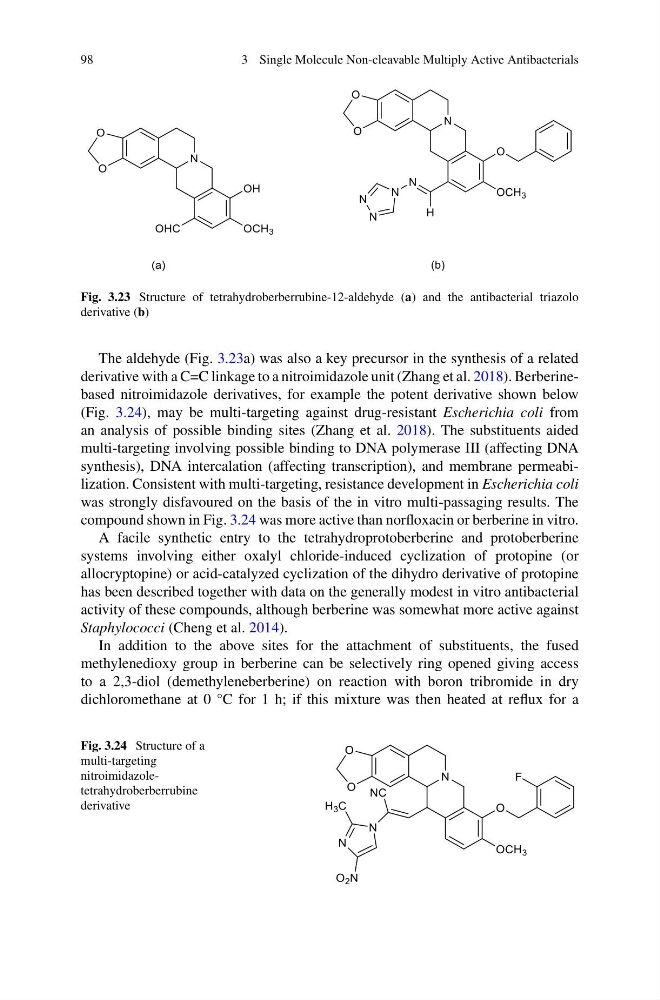
Fig. 3.23 Structure of tetrahydroberberrubine-12-aldehyde (a) and the antibacterial triazolo
derivative (b)
The aldehyde (Fig. 3.23a) was also a key precursor in the synthesis of a related
derivative with a C=C linkage to a nitroimidazole unit (Zhang et al. 2018). Berberinebased nitroimidazole derivatives, for example the potent derivative shown below
(Fig. 3.24), may be multi-targeting against drug-resistant Escherichia coli from
an analysis of possible binding sites (Zhang et al. 2018). The substituents aided
multi-targeting involving possible binding to DNA polymerase III (affecting DNA
synthesis), DNA intercalation (affecting transcription), and membrane permeabilization. Consistent with multi-targeting, resistance development in Escherichia coli
was strongly disfavoured on the basis of the in vitro multi-passaging results. The
compound shown in Fig. 3.24 was more active than norfloxacin or berberine in vitro.
A facile synthetic entry to the tetrahydroprotoberberine and protoberberine
systems involving either oxalyl chloride-induced cyclization of protopine (or
allocryptopine) or acid-catalyzed cyclization of the dihydro derivative of protopine
has been described together with data on the generally modest in vitro antibacterial
activity of these compounds, although berberine was somewhat more active against
Staphylococci (Cheng et al. 2014).
In addition to the above sites for the attachment of substituents, the fused
methylenedioxy group in berberine can be selectively ring opened giving access
to a 2,3-diol (demethyleneberberine) on reaction with boron tribromide in dry
dichloromethane at 0 °C for 1 h; if this mixture was then heated at reflux for a
Fig. 3.24 Structure of a
multi-targeting
nitroimidazoletetrahydroberberrubine
derivative
3 Single Molecule Non-cleavable Multiply Active Antibacterials
Fig. 3.23 Structure of tetrahydroberberrubine-12-aldehyde (a) and the antibacterial triazolo
derivative (b)
The aldehyde (Fig. 3.23a) was also a key precursor in the synthesis of a related
derivative with a C=C linkage to a nitroimidazole unit (Zhang et al. 2018). Berberinebased nitroimidazole derivatives, for example the potent derivative shown below
(Fig. 3.24), may be multi-targeting against drug-resistant Escherichia coli from
an analysis of possible binding sites (Zhang et al. 2018). The substituents aided
multi-targeting involving possible binding to DNA polymerase III (affecting DNA
synthesis), DNA intercalation (affecting transcription), and membrane permeabilization. Consistent with multi-targeting, resistance development in Escherichia coli
was strongly disfavoured on the basis of the in vitro multi-passaging results. The
compound shown in Fig. 3.24 was more active than norfloxacin or berberine in vitro.
A facile synthetic entry to the tetrahydroprotoberberine and protoberberine
systems involving either oxalyl chloride-induced cyclization of protopine (or
allocryptopine) or acid-catalyzed cyclization of the dihydro derivative of protopine
has been described together with data on the generally modest in vitro antibacterial
activity of these compounds, although berberine was somewhat more active against
Staphylococci (Cheng et al. 2014).
In addition to the above sites for the attachment of substituents, the fused
methylenedioxy group in berberine can be selectively ring opened giving access
to a 2,3-diol (demethyleneberberine) on reaction with boron tribromide in dry
dichloromethane at 0 °C for 1 h; if this mixture was then heated at reflux for a
Fig. 3.24 Structure of a
multi-targeting
nitroimidazoletetrahydroberberrubine
derivative