

is based on the Kolmogorov length scale, which can be calculated from CFD
simulations. While cells in suspension are assumed to only be affected by turbulent
eddies of comparable size, those growing on the surface of an MC appear to be more
shear sensitive. Croughan et al. [106] found that cell damage became significant
when the smallest turbulent eddies were approximately two-thirds of the size of an
MC. However, to apply Kolmogorov’s theory, the fluid flow must be very turbulent
(Re > 10
4 ). The flow in the two-spinner flasks can be described as moderately
turbulent. However, the calculated maximum dissipation rates were higher by a
factor of two in the impeller swept volume than in the bulk. As expected, the smallest
turbulent eddies were found for the highest tested impeller speeds, with values
between 30 and 47 μm. In terms of the suspension criteria, the minimum values
were predicted between 60 and 76 μm, which is much lower than the proposed
two-thirds MC size. In contrast, the volume-weighted mean values were slightly
higher than the MC size, which demonstrated that only a small proportion of the
turbulent eddies are comparable in size to the MCs. This lowers the risk that the MCs
might come into contact with these detrimental eddies. However, this fact also
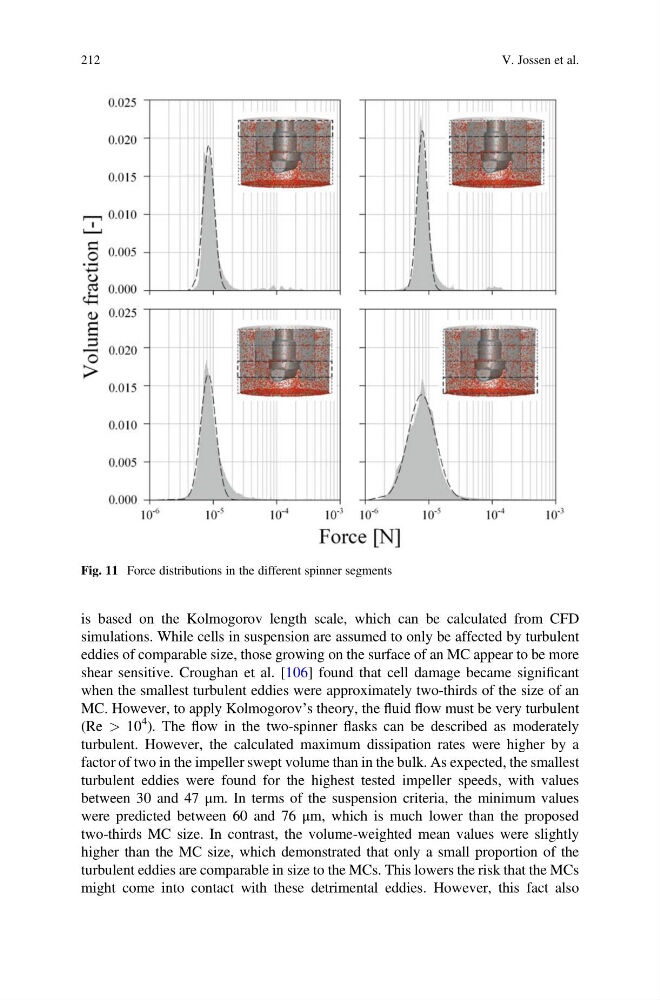
Fig. 11 Force distributions in the different spinner segments
212
V. Jossen et al.
simulations. While cells in suspension are assumed to only be affected by turbulent
eddies of comparable size, those growing on the surface of an MC appear to be more
shear sensitive. Croughan et al. [106] found that cell damage became significant
when the smallest turbulent eddies were approximately two-thirds of the size of an
MC. However, to apply Kolmogorov’s theory, the fluid flow must be very turbulent
(Re > 10
4 ). The flow in the two-spinner flasks can be described as moderately
turbulent. However, the calculated maximum dissipation rates were higher by a
factor of two in the impeller swept volume than in the bulk. As expected, the smallest
turbulent eddies were found for the highest tested impeller speeds, with values
between 30 and 47 μm. In terms of the suspension criteria, the minimum values
were predicted between 60 and 76 μm, which is much lower than the proposed
two-thirds MC size. In contrast, the volume-weighted mean values were slightly
higher than the MC size, which demonstrated that only a small proportion of the
turbulent eddies are comparable in size to the MCs. This lowers the risk that the MCs
might come into contact with these detrimental eddies. However, this fact also
Fig. 11 Force distributions in the different spinner segments
212
V. Jossen et al.