

124
5 Gravitational (Clock) Compass
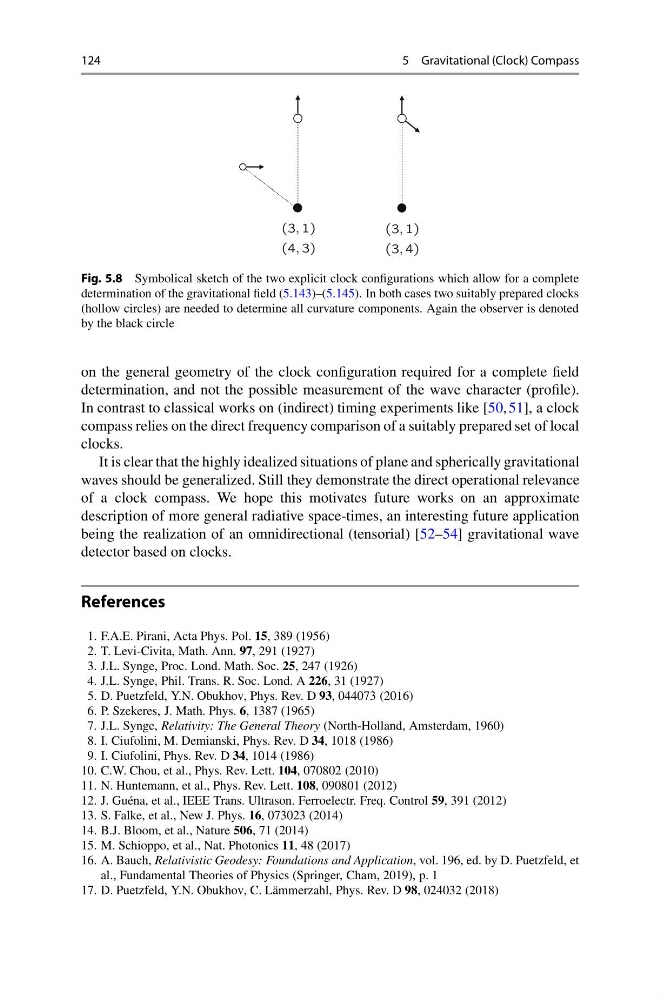
Fig. 5.8 Symbolical sketch of the two explicit clock configurations which allow for a complete
determination of the gravitational field (5.143)–(5.145). In both cases two suitably prepared clocks
(hollow circles) are needed to determine all curvature components. Again the observer is denoted
by the black circle
on the general geometry of the clock configuration required for a complete field
determination, and not the possible measurement of the wave character (profile).
In contrast to classical works on (indirect) timing experiments like [50, 51], a clock
compass relies on the direct frequency comparison of a suitably prepared set of local
clocks.
It is clear that the highly idealized situations of plane and spherically gravitational
waves should be generalized. Still they demonstrate the direct operational relevance
of a clock compass. We hope this motivates future works on an approximate
description of more general radiative space-times, an interesting future application
being the realization of an omnidirectional (tensorial) [52–54] gravitational wave
detector based on clocks.
References
1. F.A.E. Pirani, Acta Phys. Pol. 15, 389 (1956)
2. T. Levi-Civita, Math. Ann. 97, 291 (1927)
3. J.L. Synge, Proc. Lond. Math. Soc. 25, 247 (1926)
4. J.L. Synge, Phil. Trans. R. Soc. Lond. A 226, 31 (1927)
5. D. Puetzfeld, Y.N. Obukhov, Phys. Rev. D 93, 044073 (2016)
6. P. Szekeres, J. Math. Phys. 6, 1387 (1965)
7. J.L. Synge, Relativity: The General Theory (North-Holland, Amsterdam, 1960)
8. I. Ciufolini, M. Demianski, Phys. Rev. D 34, 1018 (1986)
9. I. Ciufolini, Phys. Rev. D 34, 1014 (1986)
10. C.W. Chou, et al., Phys. Rev. Lett. 104, 070802 (2010)
11. N. Huntemann, et al., Phys. Rev. Lett. 108, 090801 (2012)
12. J. Guéna, et al., IEEE Trans. Ultrason. Ferroelectr. Freq. Control 59, 391 (2012)
13. S. Falke, et al., New J. Phys. 16, 073023 (2014)
14. B.J. Bloom, et al., Nature 506, 71 (2014)
15. M. Schioppo, et al., Nat. Photonics 11, 48 (2017)
16. A. Bauch, Relativistic Geodesy: Foundations and Application, vol. 196, ed. by D. Puetzfeld, et
al., Fundamental Theories of Physics (Springer, Cham, 2019), p. 1
17. D. Puetzfeld, Y.N. Obukhov, C. Lämmerzahl, Phys. Rev. D 98, 024032 (2018)
5 Gravitational (Clock) Compass
Fig. 5.8 Symbolical sketch of the two explicit clock configurations which allow for a complete
determination of the gravitational field (5.143)–(5.145). In both cases two suitably prepared clocks
(hollow circles) are needed to determine all curvature components. Again the observer is denoted
by the black circle
on the general geometry of the clock configuration required for a complete field
determination, and not the possible measurement of the wave character (profile).
In contrast to classical works on (indirect) timing experiments like [50, 51], a clock
compass relies on the direct frequency comparison of a suitably prepared set of local
clocks.
It is clear that the highly idealized situations of plane and spherically gravitational
waves should be generalized. Still they demonstrate the direct operational relevance
of a clock compass. We hope this motivates future works on an approximate
description of more general radiative space-times, an interesting future application
being the realization of an omnidirectional (tensorial) [52–54] gravitational wave
detector based on clocks.
References
1. F.A.E. Pirani, Acta Phys. Pol. 15, 389 (1956)
2. T. Levi-Civita, Math. Ann. 97, 291 (1927)
3. J.L. Synge, Proc. Lond. Math. Soc. 25, 247 (1926)
4. J.L. Synge, Phil. Trans. R. Soc. Lond. A 226, 31 (1927)
5. D. Puetzfeld, Y.N. Obukhov, Phys. Rev. D 93, 044073 (2016)
6. P. Szekeres, J. Math. Phys. 6, 1387 (1965)
7. J.L. Synge, Relativity: The General Theory (North-Holland, Amsterdam, 1960)
8. I. Ciufolini, M. Demianski, Phys. Rev. D 34, 1018 (1986)
9. I. Ciufolini, Phys. Rev. D 34, 1014 (1986)
10. C.W. Chou, et al., Phys. Rev. Lett. 104, 070802 (2010)
11. N. Huntemann, et al., Phys. Rev. Lett. 108, 090801 (2012)
12. J. Guéna, et al., IEEE Trans. Ultrason. Ferroelectr. Freq. Control 59, 391 (2012)
13. S. Falke, et al., New J. Phys. 16, 073023 (2014)
14. B.J. Bloom, et al., Nature 506, 71 (2014)
15. M. Schioppo, et al., Nat. Photonics 11, 48 (2017)
16. A. Bauch, Relativistic Geodesy: Foundations and Application, vol. 196, ed. by D. Puetzfeld, et
al., Fundamental Theories of Physics (Springer, Cham, 2019), p. 1
17. D. Puetzfeld, Y.N. Obukhov, C. Lämmerzahl, Phys. Rev. D 98, 024032 (2018)