

2.3 Electrodes and Electrochemical Cells
13
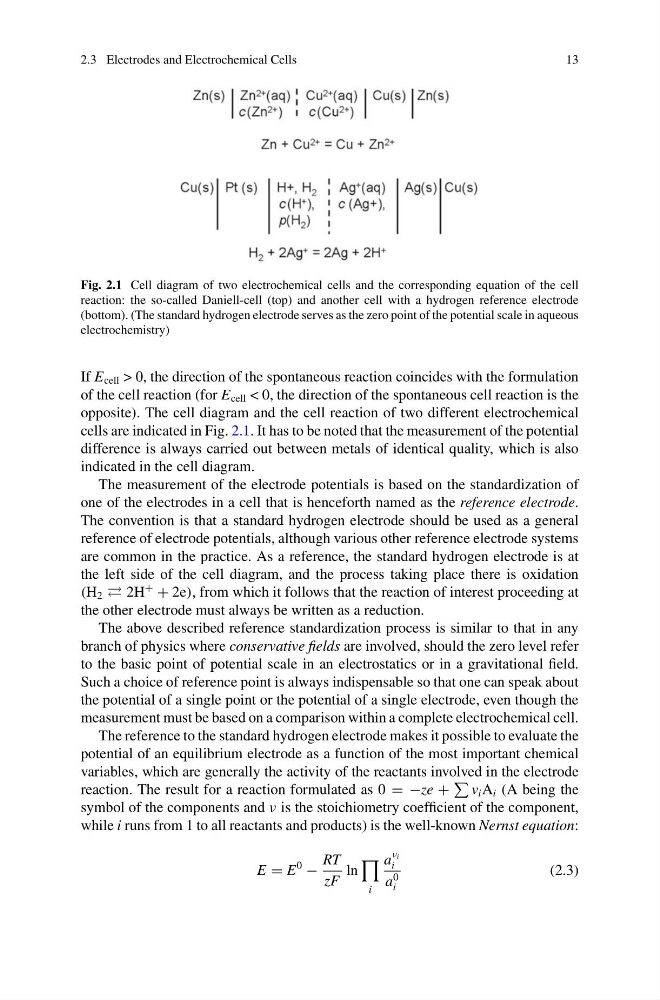
Fig. 2.1 Cell diagram of two electrochemical cells and the corresponding equation of the cell
reaction: the so-called Daniell-cell (top) and another cell with a hydrogen reference electrode
(bottom). (The standard hydrogen electrode serves as the zero point of the potential scale in aqueous
electrochemistry)
If E cell > 0, the direction of the spontaneous reaction coincides with the formulation
of the cell reaction (for E cell < 0, the direction of the spontaneous cell reaction is the
opposite). The cell diagram and the cell reaction of two different electrochemical
cells are indicated in Fig. 2.1. It has to be noted that the measurement of the potential
difference is always carried out between metals of identical quality, which is also
indicated in the cell diagram.
The measurement of the electrode potentials is based on the standardization of
one of the electrodes in a cell that is henceforth named as the reference electrode.
The convention is that a standard hydrogen electrode should be used as a general
reference of electrode potentials, although various other reference electrode systems
are common in the practice. As a reference, the standard hydrogen electrode is at
the left side of the cell diagram, and the process taking place there is oxidation
(H 2 2H
+
+ 2e), from which it follows that the reaction of interest proceeding at
the other electrode must always be written as a reduction.
The above described reference standardization process is similar to that in any
branch of physics where conservative fields are involved, should the zero level refer
to the basic point of potential scale in an electrostatics or in a gravitational field.
Such a choice of reference point is always indispensable so that one can speak about
the potential of a single point or the potential of a single electrode, even though the
measurement must be based on a comparison within a complete electrochemical cell.
The reference to the standard hydrogen electrode makes it possible to evaluate the
potential of an equilibrium electrode as a function of the most important chemical
variables, which are generally the activity of the reactants involved in the electrode
reaction. The result for a reaction formulated as 0 = −ze +
v i A i (A being the
symbol of the components and ν is the stoichiometry coefficient of the component,
while i runs from 1 to all reactants and products) is the well-known Nernst equation:
E = E
0
−
RT
zF
ln
i
a
ν i
i
a
0
i
(2.3)
13
Fig. 2.1 Cell diagram of two electrochemical cells and the corresponding equation of the cell
reaction: the so-called Daniell-cell (top) and another cell with a hydrogen reference electrode
(bottom). (The standard hydrogen electrode serves as the zero point of the potential scale in aqueous
electrochemistry)
If E cell > 0, the direction of the spontaneous reaction coincides with the formulation
of the cell reaction (for E cell < 0, the direction of the spontaneous cell reaction is the
opposite). The cell diagram and the cell reaction of two different electrochemical
cells are indicated in Fig. 2.1. It has to be noted that the measurement of the potential
difference is always carried out between metals of identical quality, which is also
indicated in the cell diagram.
The measurement of the electrode potentials is based on the standardization of
one of the electrodes in a cell that is henceforth named as the reference electrode.
The convention is that a standard hydrogen electrode should be used as a general
reference of electrode potentials, although various other reference electrode systems
are common in the practice. As a reference, the standard hydrogen electrode is at
the left side of the cell diagram, and the process taking place there is oxidation
(H 2 2H
+
+ 2e), from which it follows that the reaction of interest proceeding at
the other electrode must always be written as a reduction.
The above described reference standardization process is similar to that in any
branch of physics where conservative fields are involved, should the zero level refer
to the basic point of potential scale in an electrostatics or in a gravitational field.
Such a choice of reference point is always indispensable so that one can speak about
the potential of a single point or the potential of a single electrode, even though the
measurement must be based on a comparison within a complete electrochemical cell.
The reference to the standard hydrogen electrode makes it possible to evaluate the
potential of an equilibrium electrode as a function of the most important chemical
variables, which are generally the activity of the reactants involved in the electrode
reaction. The result for a reaction formulated as 0 = −ze +
v i A i (A being the
symbol of the components and ν is the stoichiometry coefficient of the component,
while i runs from 1 to all reactants and products) is the well-known Nernst equation:
E = E
0
−
RT
zF
ln
i
a
ν i
i
a
0
i
(2.3)