

308
9 Electrosynthesis of Nanostructures Without a Coating …
a
b
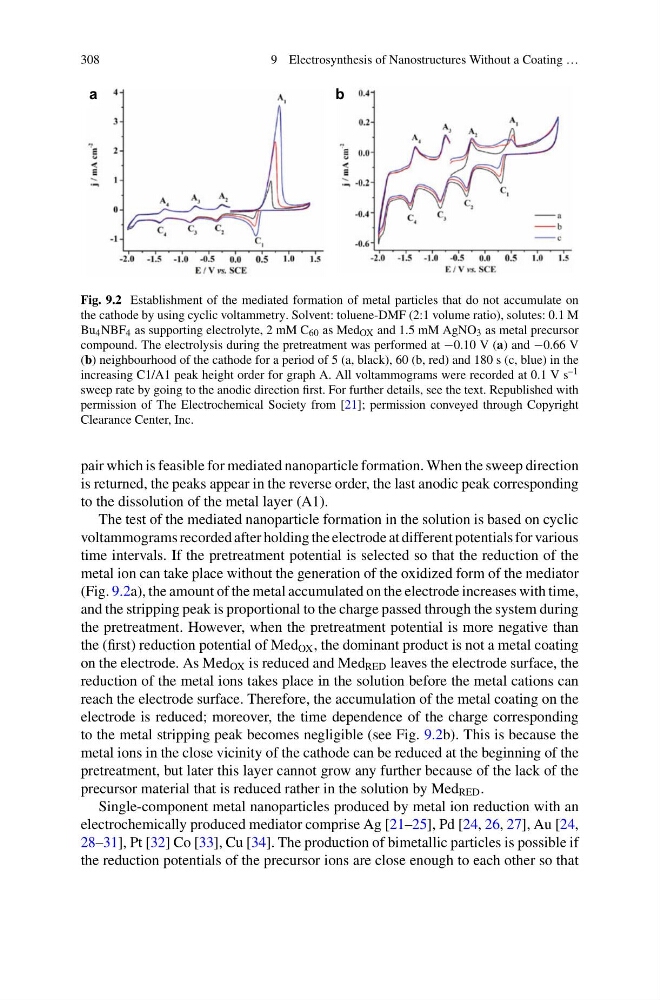
Fig. 9.2 Establishment of the mediated formation of metal particles that do not accumulate on
the cathode by using cyclic voltammetry. Solvent: toluene-DMF (2:1 volume ratio), solutes: 0.1 M
Bu 4 NBF 4 as supporting electrolyte, 2 mM C 60 as Med OX and 1.5 mM AgNO 3 as metal precursor
compound. The electrolysis during the pretreatment was performed at −0.10 V (a) and −0.66 V
(b) neighbourhood of the cathode for a period of 5 (a, black), 60 (b, red) and 180 s (c, blue) in the
increasing C1/A1 peak height order for graph A. All voltammograms were recorded at 0.1 V s –1
sweep rate by going to the anodic direction first. For further details, see the text. Republished with
permission of The Electrochemical Society from [21]; permission conveyed through Copyright
Clearance Center, Inc.
pair which is feasible for mediated nanoparticle formation. When the sweep direction
is returned, the peaks appear in the reverse order, the last anodic peak corresponding
to the dissolution of the metal layer (A1).
The test of the mediated nanoparticle formation in the solution is based on cyclic
voltammograms recorded after holding the electrode at different potentials for various
time intervals. If the pretreatment potential is selected so that the reduction of the
metal ion can take place without the generation of the oxidized form of the mediator
(Fig. 9.2a), the amount of the metal accumulated on the electrode increases with time,
and the stripping peak is proportional to the charge passed through the system during
the pretreatment. However, when the pretreatment potential is more negative than
the (first) reduction potential of Med OX , the dominant product is not a metal coating
on the electrode. As Med OX is reduced and Med RED leaves the electrode surface, the
reduction of the metal ions takes place in the solution before the metal cations can
reach the electrode surface. Therefore, the accumulation of the metal coating on the
electrode is reduced; moreover, the time dependence of the charge corresponding
to the metal stripping peak becomes negligible (see Fig. 9.2b). This is because the
metal ions in the close vicinity of the cathode can be reduced at the beginning of the
pretreatment, but later this layer cannot grow any further because of the lack of the
precursor material that is reduced rather in the solution by Med RED .
Single-component metal nanoparticles produced by metal ion reduction with an
electrochemically produced mediator comprise Ag [21–25], Pd [24, 26, 27], Au [24,
28–31], Pt [32] Co [33], Cu [34]. The production of bimetallic particles is possible if
the reduction potentials of the precursor ions are close enough to each other so that
9 Electrosynthesis of Nanostructures Without a Coating …
a
b
Fig. 9.2 Establishment of the mediated formation of metal particles that do not accumulate on
the cathode by using cyclic voltammetry. Solvent: toluene-DMF (2:1 volume ratio), solutes: 0.1 M
Bu 4 NBF 4 as supporting electrolyte, 2 mM C 60 as Med OX and 1.5 mM AgNO 3 as metal precursor
compound. The electrolysis during the pretreatment was performed at −0.10 V (a) and −0.66 V
(b) neighbourhood of the cathode for a period of 5 (a, black), 60 (b, red) and 180 s (c, blue) in the
increasing C1/A1 peak height order for graph A. All voltammograms were recorded at 0.1 V s –1
sweep rate by going to the anodic direction first. For further details, see the text. Republished with
permission of The Electrochemical Society from [21]; permission conveyed through Copyright
Clearance Center, Inc.
pair which is feasible for mediated nanoparticle formation. When the sweep direction
is returned, the peaks appear in the reverse order, the last anodic peak corresponding
to the dissolution of the metal layer (A1).
The test of the mediated nanoparticle formation in the solution is based on cyclic
voltammograms recorded after holding the electrode at different potentials for various
time intervals. If the pretreatment potential is selected so that the reduction of the
metal ion can take place without the generation of the oxidized form of the mediator
(Fig. 9.2a), the amount of the metal accumulated on the electrode increases with time,
and the stripping peak is proportional to the charge passed through the system during
the pretreatment. However, when the pretreatment potential is more negative than
the (first) reduction potential of Med OX , the dominant product is not a metal coating
on the electrode. As Med OX is reduced and Med RED leaves the electrode surface, the
reduction of the metal ions takes place in the solution before the metal cations can
reach the electrode surface. Therefore, the accumulation of the metal coating on the
electrode is reduced; moreover, the time dependence of the charge corresponding
to the metal stripping peak becomes negligible (see Fig. 9.2b). This is because the
metal ions in the close vicinity of the cathode can be reduced at the beginning of the
pretreatment, but later this layer cannot grow any further because of the lack of the
precursor material that is reduced rather in the solution by Med RED .
Single-component metal nanoparticles produced by metal ion reduction with an
electrochemically produced mediator comprise Ag [21–25], Pd [24, 26, 27], Au [24,
28–31], Pt [32] Co [33], Cu [34]. The production of bimetallic particles is possible if
the reduction potentials of the precursor ions are close enough to each other so that