

8.4 Electrochemical Dealloying
283
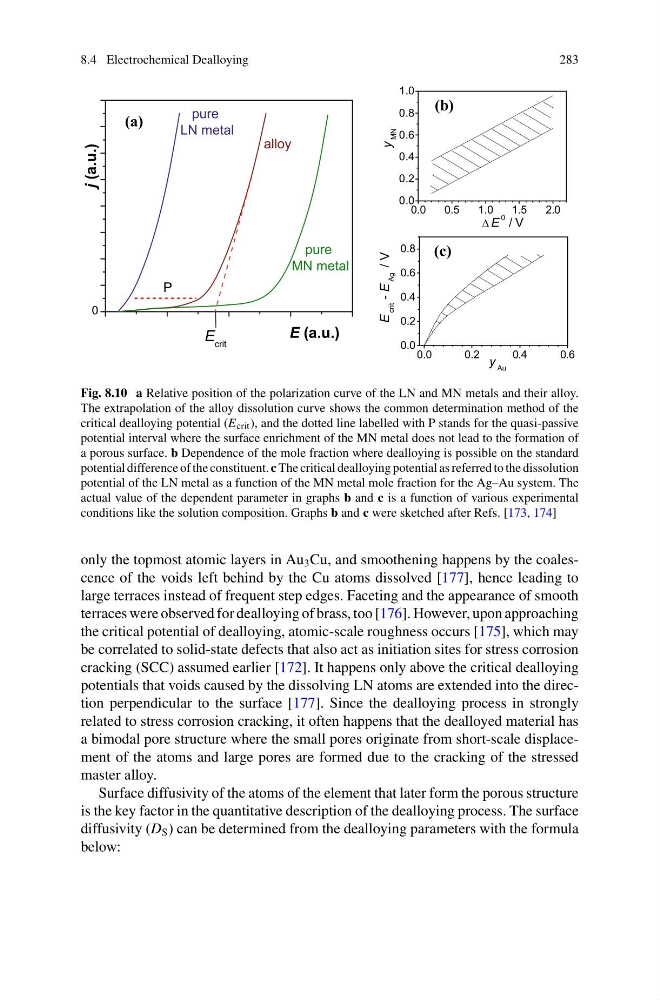
Fig. 8.10 a Relative position of the polarization curve of the LN and MN metals and their alloy.
The extrapolation of the alloy dissolution curve shows the common determination method of the
critical dealloying potential (E crit ), and the dotted line labelled with P stands for the quasi-passive
potential interval where the surface enrichment of the MN metal does not lead to the formation of
a porous surface. b Dependence of the mole fraction where dealloying is possible on the standard
potential difference of the constituent. c The critical dealloying potential as referred to the dissolution
potential of the LN metal as a function of the MN metal mole fraction for the Ag–Au system. The
actual value of the dependent parameter in graphs b and c is a function of various experimental
conditions like the solution composition. Graphs b and c were sketched after Refs. [173, 174]
only the topmost atomic layers in Au 3 Cu, and smoothening happens by the coalescence of the voids left behind by the Cu atoms dissolved [177], hence leading to
large terraces instead of frequent step edges. Faceting and the appearance of smooth
terraces were observed for dealloying of brass, too [176]. However, upon approaching
the critical potential of dealloying, atomic-scale roughness occurs [175], which may
be correlated to solid-state defects that also act as initiation sites for stress corrosion
cracking (SCC) assumed earlier [172]. It happens only above the critical dealloying
potentials that voids caused by the dissolving LN atoms are extended into the direction perpendicular to the surface [177]. Since the dealloying process in strongly
related to stress corrosion cracking, it often happens that the dealloyed material has
a bimodal pore structure where the small pores originate from short-scale displacement of the atoms and large pores are formed due to the cracking of the stressed
master alloy.
Surface diffusivity of the atoms of the element that later form the porous structure
is the key factor in the quantitative description of the dealloying process. The surface
diffusivity (D S ) can be determined from the dealloying parameters with the formula
below:
283
Fig. 8.10 a Relative position of the polarization curve of the LN and MN metals and their alloy.
The extrapolation of the alloy dissolution curve shows the common determination method of the
critical dealloying potential (E crit ), and the dotted line labelled with P stands for the quasi-passive
potential interval where the surface enrichment of the MN metal does not lead to the formation of
a porous surface. b Dependence of the mole fraction where dealloying is possible on the standard
potential difference of the constituent. c The critical dealloying potential as referred to the dissolution
potential of the LN metal as a function of the MN metal mole fraction for the Ag–Au system. The
actual value of the dependent parameter in graphs b and c is a function of various experimental
conditions like the solution composition. Graphs b and c were sketched after Refs. [173, 174]
only the topmost atomic layers in Au 3 Cu, and smoothening happens by the coalescence of the voids left behind by the Cu atoms dissolved [177], hence leading to
large terraces instead of frequent step edges. Faceting and the appearance of smooth
terraces were observed for dealloying of brass, too [176]. However, upon approaching
the critical potential of dealloying, atomic-scale roughness occurs [175], which may
be correlated to solid-state defects that also act as initiation sites for stress corrosion
cracking (SCC) assumed earlier [172]. It happens only above the critical dealloying
potentials that voids caused by the dissolving LN atoms are extended into the direction perpendicular to the surface [177]. Since the dealloying process in strongly
related to stress corrosion cracking, it often happens that the dealloyed material has
a bimodal pore structure where the small pores originate from short-scale displacement of the atoms and large pores are formed due to the cracking of the stressed
master alloy.
Surface diffusivity of the atoms of the element that later form the porous structure
is the key factor in the quantitative description of the dealloying process. The surface
diffusivity (D S ) can be determined from the dealloying parameters with the formula
below: