

270
8 Porous Nanostructured Materials
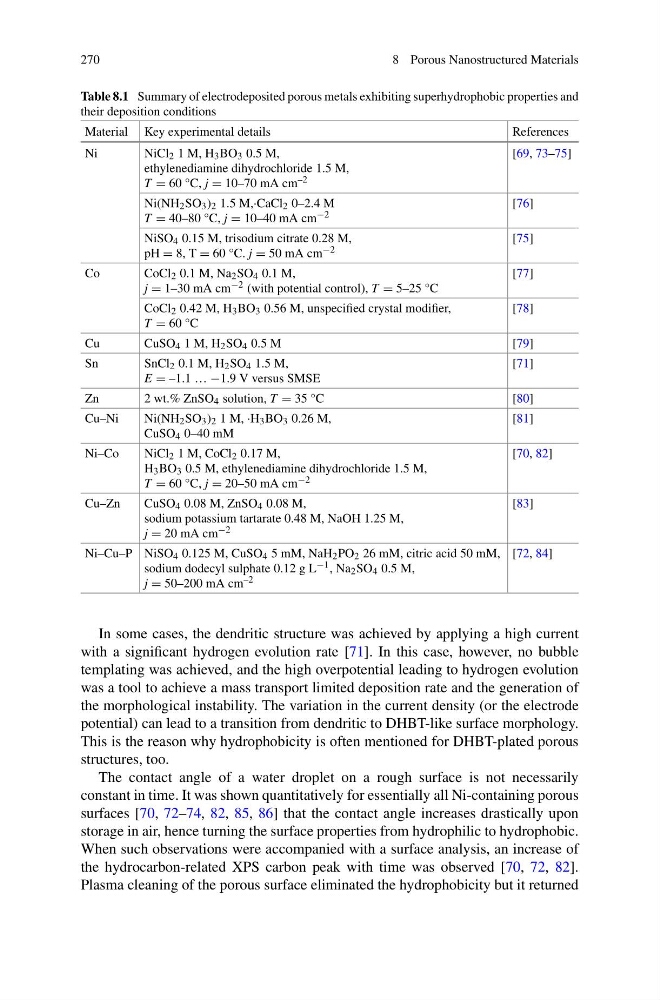
Table 8.1 Summary of electrodeposited porous metals exhibiting superhydrophobic properties and
their deposition conditions
Material Key experimental details
References
Ni
NiCl 2 1 M, H 3 BO 3 0.5 M,
ethylenediamine dihydrochloride 1.5 M,
T = 60 °C, j = 10–70 mA cm –2
[69, 73–75]
Ni(NH 2 SO 3 ) 2 1.5 M,·CaCl 2 0–2.4 M
T = 40–80 °C, j = 10–40 mA cm −2
[76]
NiSO 4 0.15 M, trisodium citrate 0.28 M,
pH = 8, T = 60 °C. j = 50 mA cm −2
[75]
Co
CoCl 2 0.1 M, Na 2 SO 4 0.1 M,
j = 1–30 mA cm −2 (with potential control), T = 5–25 °C
[77]
CoCl 2 0.42 M, H 3 BO 3 0.56 M, unspecified crystal modifier,
T = 60 °C
[78]
Cu
CuSO 4 1 M, H 2 SO 4 0.5 M
[79]
Sn
SnCl 2 0.1 M, H 2 SO 4 1.5 M,
E = –1.1 … −1.9 V versus SMSE
[71]
Zn
2 wt.% ZnSO 4 solution, T = 35 °C
[80]
Cu–Ni
Ni(NH 2 SO 3 ) 2 1 M, ·H 3 BO 3 0.26 M,
CuSO 4 0–40 mM
[81]
Ni–Co
NiCl 2 1 M, CoCl 2 0.17 M,
H 3 BO 3 0.5 M, ethylenediamine dihydrochloride 1.5 M,
T = 60 °C, j = 20–50 mA cm −2
[70, 82]
Cu–Zn
CuSO 4 0.08 M, ZnSO 4 0.08 M,
sodium potassium tartarate 0.48 M, NaOH 1.25 M,
j = 20 mA cm −2
[83]
Ni–Cu–P NiSO 4 0.125 M, CuSO 4 5 mM, NaH 2 PO 2 26 mM, citric acid 50 mM,
sodium dodecyl sulphate 0.12 g L −1 , Na 2 SO 4 0.5 M,
j = 50–200 mA cm –2
[72, 84]
In some cases, the dendritic structure was achieved by applying a high current
with a significant hydrogen evolution rate [71]. In this case, however, no bubble
templating was achieved, and the high overpotential leading to hydrogen evolution
was a tool to achieve a mass transport limited deposition rate and the generation of
the morphological instability. The variation in the current density (or the electrode
potential) can lead to a transition from dendritic to DHBT-like surface morphology.
This is the reason why hydrophobicity is often mentioned for DHBT-plated porous
structures, too.
The contact angle of a water droplet on a rough surface is not necessarily
constant in time. It was shown quantitatively for essentially all Ni-containing porous
surfaces [70, 72–74, 82, 85, 86] that the contact angle increases drastically upon
storage in air, hence turning the surface properties from hydrophilic to hydrophobic.
When such observations were accompanied with a surface analysis, an increase of
the hydrocarbon-related XPS carbon peak with time was observed [70, 72, 82].
Plasma cleaning of the porous surface eliminated the hydrophobicity but it returned
8 Porous Nanostructured Materials
Table 8.1 Summary of electrodeposited porous metals exhibiting superhydrophobic properties and
their deposition conditions
Material Key experimental details
References
Ni
NiCl 2 1 M, H 3 BO 3 0.5 M,
ethylenediamine dihydrochloride 1.5 M,
T = 60 °C, j = 10–70 mA cm –2
[69, 73–75]
Ni(NH 2 SO 3 ) 2 1.5 M,·CaCl 2 0–2.4 M
T = 40–80 °C, j = 10–40 mA cm −2
[76]
NiSO 4 0.15 M, trisodium citrate 0.28 M,
pH = 8, T = 60 °C. j = 50 mA cm −2
[75]
Co
CoCl 2 0.1 M, Na 2 SO 4 0.1 M,
j = 1–30 mA cm −2 (with potential control), T = 5–25 °C
[77]
CoCl 2 0.42 M, H 3 BO 3 0.56 M, unspecified crystal modifier,
T = 60 °C
[78]
Cu
CuSO 4 1 M, H 2 SO 4 0.5 M
[79]
Sn
SnCl 2 0.1 M, H 2 SO 4 1.5 M,
E = –1.1 … −1.9 V versus SMSE
[71]
Zn
2 wt.% ZnSO 4 solution, T = 35 °C
[80]
Cu–Ni
Ni(NH 2 SO 3 ) 2 1 M, ·H 3 BO 3 0.26 M,
CuSO 4 0–40 mM
[81]
Ni–Co
NiCl 2 1 M, CoCl 2 0.17 M,
H 3 BO 3 0.5 M, ethylenediamine dihydrochloride 1.5 M,
T = 60 °C, j = 20–50 mA cm −2
[70, 82]
Cu–Zn
CuSO 4 0.08 M, ZnSO 4 0.08 M,
sodium potassium tartarate 0.48 M, NaOH 1.25 M,
j = 20 mA cm −2
[83]
Ni–Cu–P NiSO 4 0.125 M, CuSO 4 5 mM, NaH 2 PO 2 26 mM, citric acid 50 mM,
sodium dodecyl sulphate 0.12 g L −1 , Na 2 SO 4 0.5 M,
j = 50–200 mA cm –2
[72, 84]
In some cases, the dendritic structure was achieved by applying a high current
with a significant hydrogen evolution rate [71]. In this case, however, no bubble
templating was achieved, and the high overpotential leading to hydrogen evolution
was a tool to achieve a mass transport limited deposition rate and the generation of
the morphological instability. The variation in the current density (or the electrode
potential) can lead to a transition from dendritic to DHBT-like surface morphology.
This is the reason why hydrophobicity is often mentioned for DHBT-plated porous
structures, too.
The contact angle of a water droplet on a rough surface is not necessarily
constant in time. It was shown quantitatively for essentially all Ni-containing porous
surfaces [70, 72–74, 82, 85, 86] that the contact angle increases drastically upon
storage in air, hence turning the surface properties from hydrophilic to hydrophobic.
When such observations were accompanied with a surface analysis, an increase of
the hydrocarbon-related XPS carbon peak with time was observed [70, 72, 82].
Plasma cleaning of the porous surface eliminated the hydrophobicity but it returned