

210
6 Nanocrystalline Deposits
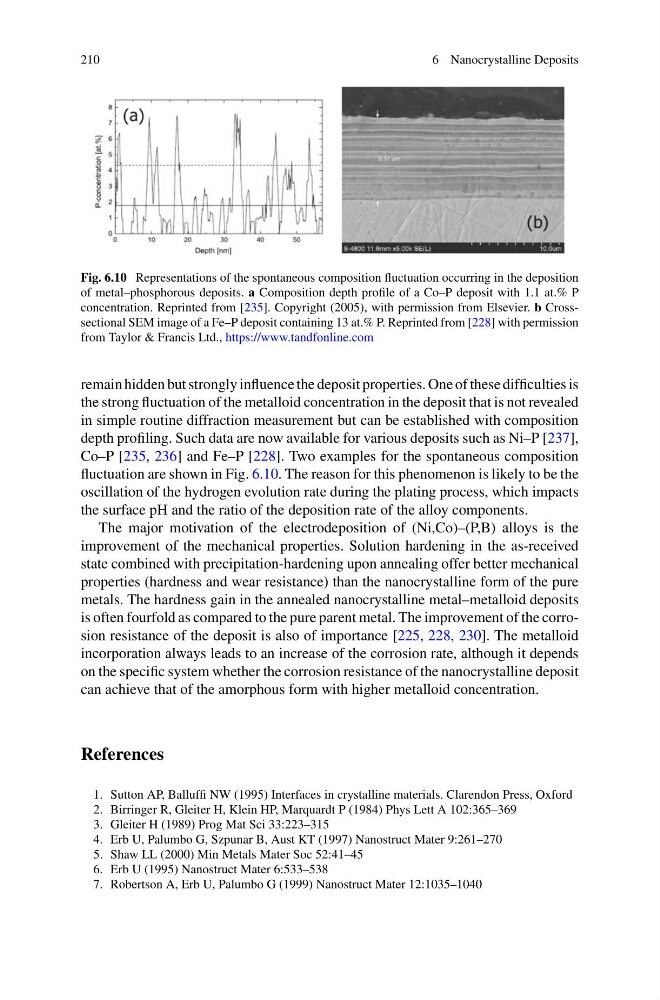
Fig. 6.10 Representations of the spontaneous composition fluctuation occurring in the deposition
of metal–phosphorous deposits. a Composition depth profile of a Co–P deposit with 1.1 at.% P
concentration. Reprinted from [235]. Copyright (2005), with permission from Elsevier. b Crosssectional SEM image of a Fe–P deposit containing 13 at.% P. Reprinted from [228] with permission
from Taylor & Francis Ltd., https://www.tandfonline.com
remain hidden but strongly influence the deposit properties. One of these difficulties is
the strong fluctuation of the metalloid concentration in the deposit that is not revealed
in simple routine diffraction measurement but can be established with composition
depth profiling. Such data are now available for various deposits such as Ni–P [237],
Co–P [235, 236] and Fe–P [228]. Two examples for the spontaneous composition
fluctuation are shown in Fig. 6.10. The reason for this phenomenon is likely to be the
oscillation of the hydrogen evolution rate during the plating process, which impacts
the surface pH and the ratio of the deposition rate of the alloy components.
The major motivation of the electrodeposition of (Ni,Co)–(P,B) alloys is the
improvement of the mechanical properties. Solution hardening in the as-received
state combined with precipitation-hardening upon annealing offer better mechanical
properties (hardness and wear resistance) than the nanocrystalline form of the pure
metals. The hardness gain in the annealed nanocrystalline metal–metalloid deposits
is often fourfold as compared to the pure parent metal. The improvement of the corrosion resistance of the deposit is also of importance [225, 228, 230]. The metalloid
incorporation always leads to an increase of the corrosion rate, although it depends
on the specific system whether the corrosion resistance of the nanocrystalline deposit
can achieve that of the amorphous form with higher metalloid concentration.
References
1. Sutton AP, Balluffi NW (1995) Interfaces in crystalline materials. Clarendon Press, Oxford
2. Birringer R, Gleiter H, Klein HP, Marquardt P (1984) Phys Lett A 102:365–369
3. Gleiter H (1989) Prog Mat Sci 33:223–315
4. Erb U, Palumbo G, Szpunar B, Aust KT (1997) Nanostruct Mater 9:261–270
5. Shaw LL (2000) Min Metals Mater Soc 52:41–45
6. Erb U (1995) Nanostruct Mater 6:533–538
7. Robertson A, Erb U, Palumbo G (1999) Nanostruct Mater 12:1035–1040
6 Nanocrystalline Deposits
Fig. 6.10 Representations of the spontaneous composition fluctuation occurring in the deposition
of metal–phosphorous deposits. a Composition depth profile of a Co–P deposit with 1.1 at.% P
concentration. Reprinted from [235]. Copyright (2005), with permission from Elsevier. b Crosssectional SEM image of a Fe–P deposit containing 13 at.% P. Reprinted from [228] with permission
from Taylor & Francis Ltd., https://www.tandfonline.com
remain hidden but strongly influence the deposit properties. One of these difficulties is
the strong fluctuation of the metalloid concentration in the deposit that is not revealed
in simple routine diffraction measurement but can be established with composition
depth profiling. Such data are now available for various deposits such as Ni–P [237],
Co–P [235, 236] and Fe–P [228]. Two examples for the spontaneous composition
fluctuation are shown in Fig. 6.10. The reason for this phenomenon is likely to be the
oscillation of the hydrogen evolution rate during the plating process, which impacts
the surface pH and the ratio of the deposition rate of the alloy components.
The major motivation of the electrodeposition of (Ni,Co)–(P,B) alloys is the
improvement of the mechanical properties. Solution hardening in the as-received
state combined with precipitation-hardening upon annealing offer better mechanical
properties (hardness and wear resistance) than the nanocrystalline form of the pure
metals. The hardness gain in the annealed nanocrystalline metal–metalloid deposits
is often fourfold as compared to the pure parent metal. The improvement of the corrosion resistance of the deposit is also of importance [225, 228, 230]. The metalloid
incorporation always leads to an increase of the corrosion rate, although it depends
on the specific system whether the corrosion resistance of the nanocrystalline deposit
can achieve that of the amorphous form with higher metalloid concentration.
References
1. Sutton AP, Balluffi NW (1995) Interfaces in crystalline materials. Clarendon Press, Oxford
2. Birringer R, Gleiter H, Klein HP, Marquardt P (1984) Phys Lett A 102:365–369
3. Gleiter H (1989) Prog Mat Sci 33:223–315
4. Erb U, Palumbo G, Szpunar B, Aust KT (1997) Nanostruct Mater 9:261–270
5. Shaw LL (2000) Min Metals Mater Soc 52:41–45
6. Erb U (1995) Nanostruct Mater 6:533–538
7. Robertson A, Erb U, Palumbo G (1999) Nanostruct Mater 12:1035–1040