

448
K. Rehak et al.
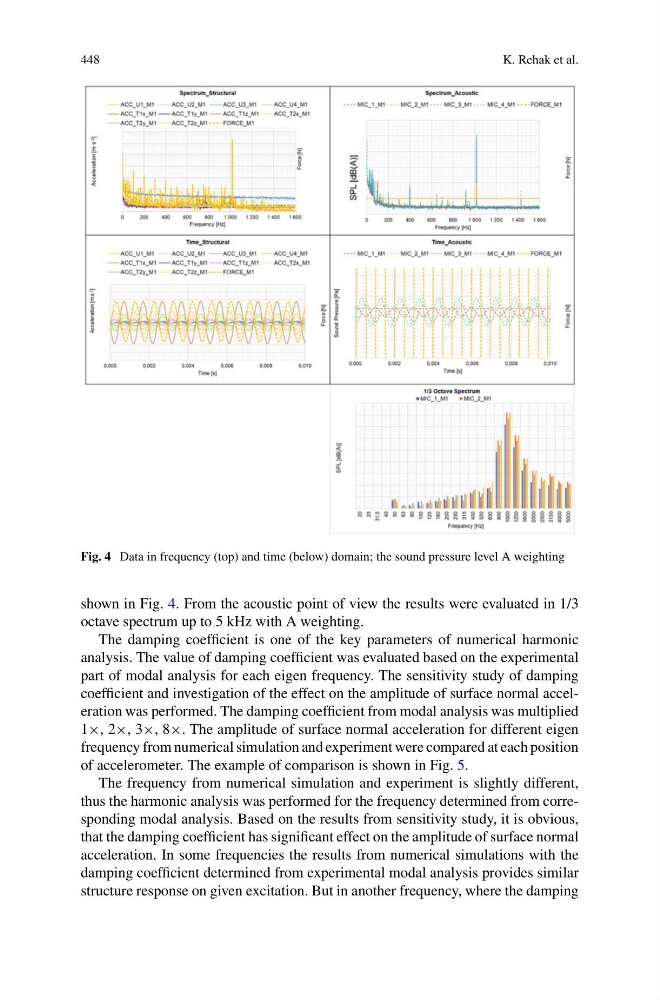
Fig. 4 Data in frequency (top) and time (below) domain; the sound pressure level A weighting
shown in Fig. 4. From the acoustic point of view the results were evaluated in 1/3
octave spectrum up to 5 kHz with A weighting.
The damping coefficient is one of the key parameters of numerical harmonic
analysis. The value of damping coefficient was evaluated based on the experimental
part of modal analysis for each eigen frequency. The sensitivity study of damping
coefficient and investigation of the effect on the amplitude of surface normal acceleration was performed. The damping coefficient from modal analysis was multiplied
1×, 2×, 3×, 8×. The amplitude of surface normal acceleration for different eigen
frequency from numerical simulation and experiment were compared at each position
of accelerometer. The example of comparison is shown in Fig. 5.
The frequency from numerical simulation and experiment is slightly different,
thus the harmonic analysis was performed for the frequency determined from corresponding modal analysis. Based on the results from sensitivity study, it is obvious,
that the damping coefficient has significant effect on the amplitude of surface normal
acceleration. In some frequencies the results from numerical simulations with the
damping coefficient determined from experimental modal analysis provides similar
structure response on given excitation. But in another frequency, where the damping
K. Rehak et al.
Fig. 4 Data in frequency (top) and time (below) domain; the sound pressure level A weighting
shown in Fig. 4. From the acoustic point of view the results were evaluated in 1/3
octave spectrum up to 5 kHz with A weighting.
The damping coefficient is one of the key parameters of numerical harmonic
analysis. The value of damping coefficient was evaluated based on the experimental
part of modal analysis for each eigen frequency. The sensitivity study of damping
coefficient and investigation of the effect on the amplitude of surface normal acceleration was performed. The damping coefficient from modal analysis was multiplied
1×, 2×, 3×, 8×. The amplitude of surface normal acceleration for different eigen
frequency from numerical simulation and experiment were compared at each position
of accelerometer. The example of comparison is shown in Fig. 5.
The frequency from numerical simulation and experiment is slightly different,
thus the harmonic analysis was performed for the frequency determined from corresponding modal analysis. Based on the results from sensitivity study, it is obvious,
that the damping coefficient has significant effect on the amplitude of surface normal
acceleration. In some frequencies the results from numerical simulations with the
damping coefficient determined from experimental modal analysis provides similar
structure response on given excitation. But in another frequency, where the damping