

20
D. B. Marghitu and D. Cojocaru
20
30
40
50
60
70
5.5
6
6.5
7
7.5
8
8.5
9
9.5
10
ω 0 [rad/s]
θ [
◦ ]
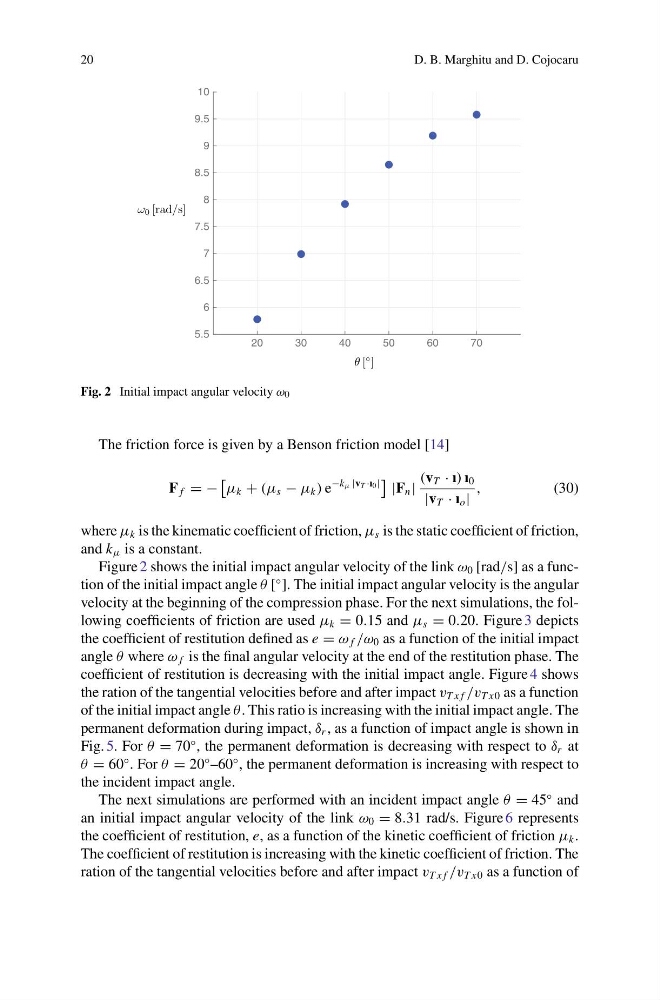
Fig. 2 Initial impact angular velocity ω 0
The friction force is given by a Benson friction model [14]
F f = −
μ k + (μ s − μ k ) e
−k μ |v T ·ı 0 |
|F n |
(v T · ı) ı 0
|v T · ı o |
,
(30)
where μ k is the kinematic coefficient of friction, μ s is the static coefficient of friction,
and k μ is a constant.
Figure 2 shows the initial impact angular velocity of the link ω 0 [rad/s] as a function of the initial impact angle θ [
◦
]. The initial impact angular velocity is the angular
velocity at the beginning of the compression phase. For the next simulations, the following coefficients of friction are used μ k = 0.15 and μ s = 0.20. Figure 3 depicts
the coefficient of restitution defined as e = ω f /ω 0 as a function of the initial impact
angle θ where ω f is the final angular velocity at the end of the restitution phase. The
coefficient of restitution is decreasing with the initial impact angle. Figure 4 shows
the ration of the tangential velocities before and after impact v T x f /v T x0 as a function
of the initial impact angle θ . This ratio is increasing with the initial impact angle. The
permanent deformation during impact, δ r , as a function of impact angle is shown in
Fig. 5. For θ = 70
◦ , the permanent deformation is decreasing with respect to δ r at
θ = 60
◦ . For θ = 20
◦ –60
◦ , the permanent deformation is increasing with respect to
the incident impact angle.
The next simulations are performed with an incident impact angle θ = 45
◦ and
an initial impact angular velocity of the link ω 0 = 8.31 rad/s. Figure 6 represents
the coefficient of restitution, e, as a function of the kinetic coefficient of friction μ k .
The coefficient of restitution is increasing with the kinetic coefficient of friction. The
ration of the tangential velocities before and after impact v T x f /v T x0 as a function of
D. B. Marghitu and D. Cojocaru
20
30
40
50
60
70
5.5
6
6.5
7
7.5
8
8.5
9
9.5
10
ω 0 [rad/s]
θ [
◦ ]
Fig. 2 Initial impact angular velocity ω 0
The friction force is given by a Benson friction model [14]
F f = −
μ k + (μ s − μ k ) e
−k μ |v T ·ı 0 |
|F n |
(v T · ı) ı 0
|v T · ı o |
,
(30)
where μ k is the kinematic coefficient of friction, μ s is the static coefficient of friction,
and k μ is a constant.
Figure 2 shows the initial impact angular velocity of the link ω 0 [rad/s] as a function of the initial impact angle θ [
◦
]. The initial impact angular velocity is the angular
velocity at the beginning of the compression phase. For the next simulations, the following coefficients of friction are used μ k = 0.15 and μ s = 0.20. Figure 3 depicts
the coefficient of restitution defined as e = ω f /ω 0 as a function of the initial impact
angle θ where ω f is the final angular velocity at the end of the restitution phase. The
coefficient of restitution is decreasing with the initial impact angle. Figure 4 shows
the ration of the tangential velocities before and after impact v T x f /v T x0 as a function
of the initial impact angle θ . This ratio is increasing with the initial impact angle. The
permanent deformation during impact, δ r , as a function of impact angle is shown in
Fig. 5. For θ = 70
◦ , the permanent deformation is decreasing with respect to δ r at
θ = 60
◦ . For θ = 20
◦ –60
◦ , the permanent deformation is increasing with respect to
the incident impact angle.
The next simulations are performed with an incident impact angle θ = 45
◦ and
an initial impact angular velocity of the link ω 0 = 8.31 rad/s. Figure 6 represents
the coefficient of restitution, e, as a function of the kinetic coefficient of friction μ k .
The coefficient of restitution is increasing with the kinetic coefficient of friction. The
ration of the tangential velocities before and after impact v T x f /v T x0 as a function of