

Solution of the Environmental Noise Problem Generated …
153
Table 2 Comparison of the background noise between initial stage, validation stage, and noise
level when noise source is active
Meas. position
4
5
6
Noise level [dB]
Initial phase background noise
55.2
53.2
54.1
Background noise levels
53.8
54.8
54.2
Validation phase noise HVACs are active
54.4
54.8
54.3
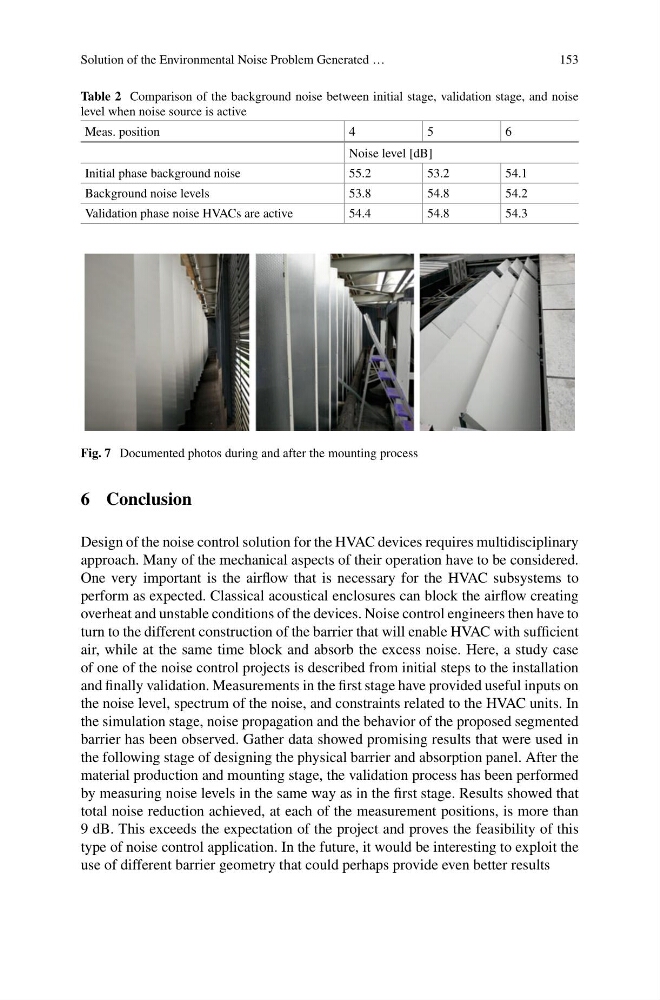
Fig. 7 Documented photos during and after the mounting process
6 Conclusion
Design of the noise control solution for the HVAC devices requires multidisciplinary
approach. Many of the mechanical aspects of their operation have to be considered.
One very important is the airflow that is necessary for the HVAC subsystems to
perform as expected. Classical acoustical enclosures can block the airflow creating
overheat and unstable conditions of the devices. Noise control engineers then have to
turn to the different construction of the barrier that will enable HVAC with sufficient
air, while at the same time block and absorb the excess noise. Here, a study case
of one of the noise control projects is described from initial steps to the installation
and finally validation. Measurements in the first stage have provided useful inputs on
the noise level, spectrum of the noise, and constraints related to the HVAC units. In
the simulation stage, noise propagation and the behavior of the proposed segmented
barrier has been observed. Gather data showed promising results that were used in
the following stage of designing the physical barrier and absorption panel. After the
material production and mounting stage, the validation process has been performed
by measuring noise levels in the same way as in the first stage. Results showed that
total noise reduction achieved, at each of the measurement positions, is more than
9 dB. This exceeds the expectation of the project and proves the feasibility of this
type of noise control application. In the future, it would be interesting to exploit the
use of different barrier geometry that could perhaps provide even better results
153
Table 2 Comparison of the background noise between initial stage, validation stage, and noise
level when noise source is active
Meas. position
4
5
6
Noise level [dB]
Initial phase background noise
55.2
53.2
54.1
Background noise levels
53.8
54.8
54.2
Validation phase noise HVACs are active
54.4
54.8
54.3
Fig. 7 Documented photos during and after the mounting process
6 Conclusion
Design of the noise control solution for the HVAC devices requires multidisciplinary
approach. Many of the mechanical aspects of their operation have to be considered.
One very important is the airflow that is necessary for the HVAC subsystems to
perform as expected. Classical acoustical enclosures can block the airflow creating
overheat and unstable conditions of the devices. Noise control engineers then have to
turn to the different construction of the barrier that will enable HVAC with sufficient
air, while at the same time block and absorb the excess noise. Here, a study case
of one of the noise control projects is described from initial steps to the installation
and finally validation. Measurements in the first stage have provided useful inputs on
the noise level, spectrum of the noise, and constraints related to the HVAC units. In
the simulation stage, noise propagation and the behavior of the proposed segmented
barrier has been observed. Gather data showed promising results that were used in
the following stage of designing the physical barrier and absorption panel. After the
material production and mounting stage, the validation process has been performed
by measuring noise levels in the same way as in the first stage. Results showed that
total noise reduction achieved, at each of the measurement positions, is more than
9 dB. This exceeds the expectation of the project and proves the feasibility of this
type of noise control application. In the future, it would be interesting to exploit the
use of different barrier geometry that could perhaps provide even better results