

94
that there can be a histidine tag at the C-terminus of the
fluorescent protein to facilitate protein purification.
2. Next, cysteine mutants of this sensor should be created at the
residue locations identified by the computational screening
(see Note 12). Any unwanted surface cysteines should be
mutated to alternative residues to avoid nonspecific labeling
(see Note 13). Although many cloning methods are suitable to
introduce mutations, our preferred method is Gibson assembly.
3. In order to create the cysteine mutants through Gibson assembly, first synthesize or order a set of complementary primers
(forward and reverse primers encoding the same sequence)
that encompasses the residue of interest, with the total length
of the primer between 30 and 50 nucleotides. The nucleotides
coding the residue of interest should be changed to encode a
cysteine residue, all other residues should match the template
DNA exactly.
4. For the PCR, these primers will then be paired with the T7
promoter/terminator primers for PCR amplification. The T7
promoter forward primer is paired with the reverse mutagenic
primer, while the T7 terminator reverse primer is paired with
the mutagenic forward primer.
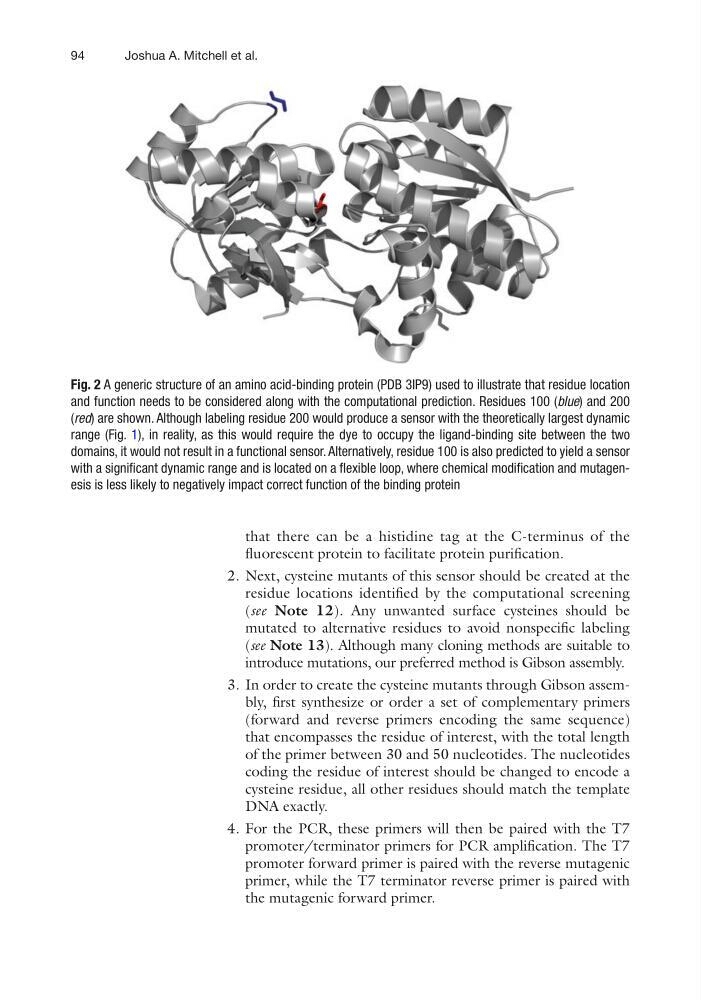
Fig. 2 A generic structure of an amino acid-binding protein (PDB 3IP9) used to illustrate that residue location
and function needs to be considered along with the computational prediction. Residues 100 (blue) and 200
(red) are shown. Although labeling residue 200 would produce a sensor with the theoretically largest dynamic
range (Fig. 1), in reality, as this would require the dye to occupy the ligand-binding site between the two
domains, it would not result in a functional sensor. Alternatively, residue 100 is also predicted to yield a sensor
with a significant dynamic range and is located on a flexible loop, where chemical modification and mutagenesis is less likely to negatively impact correct function of the binding protein
Joshua A. Mitchell et al.
that there can be a histidine tag at the C-terminus of the
fluorescent protein to facilitate protein purification.
2. Next, cysteine mutants of this sensor should be created at the
residue locations identified by the computational screening
(see Note 12). Any unwanted surface cysteines should be
mutated to alternative residues to avoid nonspecific labeling
(see Note 13). Although many cloning methods are suitable to
introduce mutations, our preferred method is Gibson assembly.
3. In order to create the cysteine mutants through Gibson assembly, first synthesize or order a set of complementary primers
(forward and reverse primers encoding the same sequence)
that encompasses the residue of interest, with the total length
of the primer between 30 and 50 nucleotides. The nucleotides
coding the residue of interest should be changed to encode a
cysteine residue, all other residues should match the template
DNA exactly.
4. For the PCR, these primers will then be paired with the T7
promoter/terminator primers for PCR amplification. The T7
promoter forward primer is paired with the reverse mutagenic
primer, while the T7 terminator reverse primer is paired with
the mutagenic forward primer.
Fig. 2 A generic structure of an amino acid-binding protein (PDB 3IP9) used to illustrate that residue location
and function needs to be considered along with the computational prediction. Residues 100 (blue) and 200
(red) are shown. Although labeling residue 200 would produce a sensor with the theoretically largest dynamic
range (Fig. 1), in reality, as this would require the dye to occupy the ligand-binding site between the two
domains, it would not result in a functional sensor. Alternatively, residue 100 is also predicted to yield a sensor
with a significant dynamic range and is located on a flexible loop, where chemical modification and mutagenesis is less likely to negatively impact correct function of the binding protein
Joshua A. Mitchell et al.