

192
5. Place the plate in the platereader and monitor the formation of
the fluorescent product at 409 nm excitation and 447 nm
emission.
6. Derive the hydrolysis rate by calculating the slope of the
fluorescence in time within the linear regime (Fig. 6).
4 Notes
1. Previous work has shown that conjugation efficiencies greatly
depend on the steric availability of the inserted cysteine. In
case of low conversion efficiencies insert a flexible GGSGG
linker between the protein and cysteine [10].
2. Plasmids encoding for TEM1-β-lactamase and BLIP will be
made available via AddGene.
3. Based on previous work using the intramolecular complex formation between TEM1-β-lactamase and BLIP as output module for genetically encoded protein switches, we here use the
E104D mutant of TEM1-β-lactamase (K i = 1500 nM) as the
wild-type proteins bind too strongly (K i = 0.5 nM), which might
result in intermolecular complex formation and oligomerization
of the DNA-directed protein switch.
4. TCEP is added to the storage buffer to reduce intermolecular
disulfide bonds that render the genetically inserted cysteine
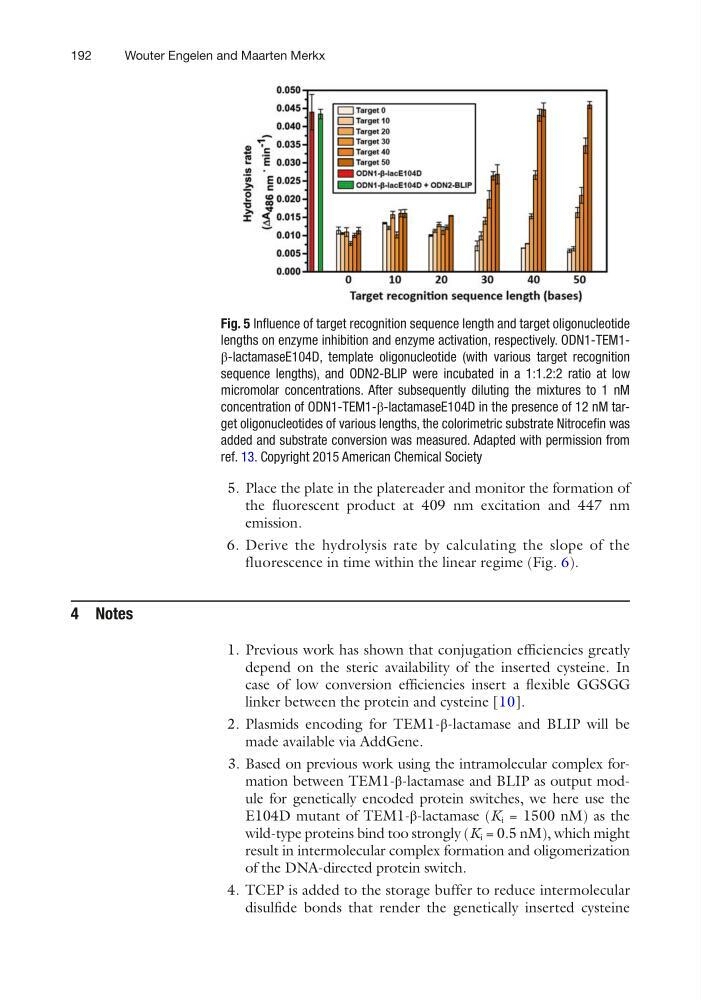
Fig. 5 Influence of target recognition sequence length and target oligonucleotide
lengths on enzyme inhibition and enzyme activation, respectively. ODN1-TEM1β-lactamaseE104D, template oligonucleotide (with various target recognition
sequence lengths), and ODN2-BLIP were incubated in a 1:1.2:2 ratio at low
micromolar concentrations. After subsequently diluting the mixtures to 1 nM
concentration of ODN1-TEM1-β-lactamaseE104D in the presence of 12 nM target oligonucleotides of various lengths, the colorimetric substrate Nitrocefin was
added and substrate conversion was measured. Adapted with permission from
ref. 13. Copyright 2015 American Chemical Society
Wouter Engelen and Maarten Merkx
5. Place the plate in the platereader and monitor the formation of
the fluorescent product at 409 nm excitation and 447 nm
emission.
6. Derive the hydrolysis rate by calculating the slope of the
fluorescence in time within the linear regime (Fig. 6).
4 Notes
1. Previous work has shown that conjugation efficiencies greatly
depend on the steric availability of the inserted cysteine. In
case of low conversion efficiencies insert a flexible GGSGG
linker between the protein and cysteine [10].
2. Plasmids encoding for TEM1-β-lactamase and BLIP will be
made available via AddGene.
3. Based on previous work using the intramolecular complex formation between TEM1-β-lactamase and BLIP as output module for genetically encoded protein switches, we here use the
E104D mutant of TEM1-β-lactamase (K i = 1500 nM) as the
wild-type proteins bind too strongly (K i = 0.5 nM), which might
result in intermolecular complex formation and oligomerization
of the DNA-directed protein switch.
4. TCEP is added to the storage buffer to reduce intermolecular
disulfide bonds that render the genetically inserted cysteine
Fig. 5 Influence of target recognition sequence length and target oligonucleotide
lengths on enzyme inhibition and enzyme activation, respectively. ODN1-TEM1β-lactamaseE104D, template oligonucleotide (with various target recognition
sequence lengths), and ODN2-BLIP were incubated in a 1:1.2:2 ratio at low
micromolar concentrations. After subsequently diluting the mixtures to 1 nM
concentration of ODN1-TEM1-β-lactamaseE104D in the presence of 12 nM target oligonucleotides of various lengths, the colorimetric substrate Nitrocefin was
added and substrate conversion was measured. Adapted with permission from
ref. 13. Copyright 2015 American Chemical Society
Wouter Engelen and Maarten Merkx