

Progress in the Chemistry of Cytochalasans
37
202 (phenochalasin A)
O O
HN
O
O
OH
O
HO
O O
HN
O
O
OH
O
O
203 (phenochalasin B)
O O
HN
O
O
OH
O
O
OH
O O
HN
O
O
OH
O
O
OH
OH
204 (scoparasin A)
205 (scoparasin B)
206 (cytochalasin Z 26 )
O O
HN
O
O
OH
O
HO
207 (scoparasin C Rukachaisirikul)
O O
HN
O
O
O
209 (scoparasin C Deng)
O
HO
O
O
O
O O
HN
O
O
O
HO
O O
HN
O
O
OH
O
O
OH
208 (scoparasin D)
O
O
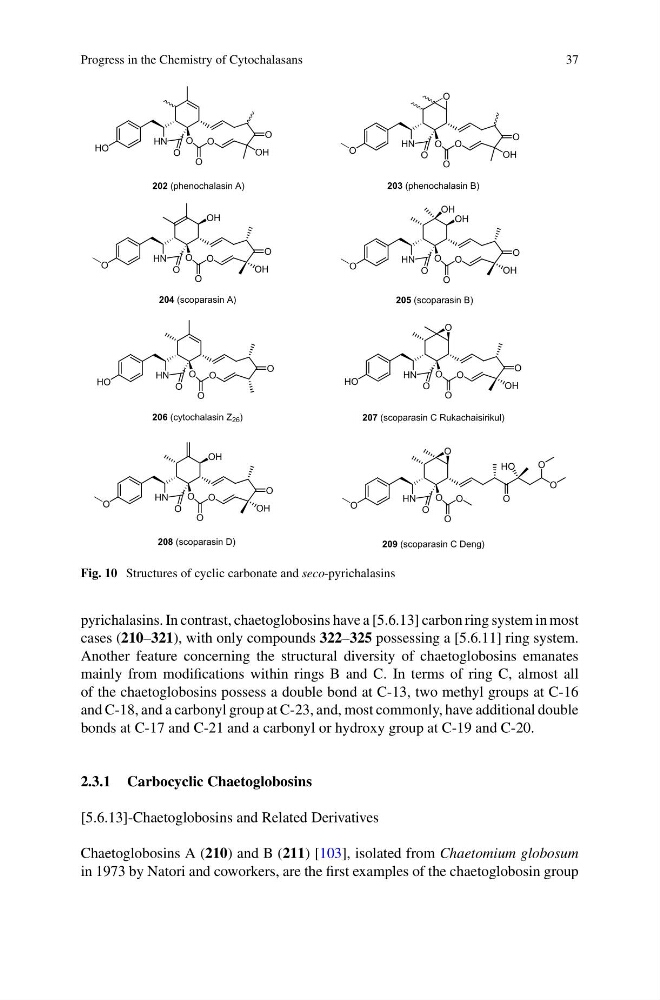
Fig. 10 Structures of cyclic carbonate and seco-pyrichalasins
pyrichalasins. In contrast, chaetoglobosins have a [5.6.13] carbon ring system in most
cases (210–321), with only compounds 322–325 possessing a [5.6.11] ring system.
Another feature concerning the structural diversity of chaetoglobosins emanates
mainly from modifications within rings B and C. In terms of ring C, almost all
of the chaetoglobosins possess a double bond at C-13, two methyl groups at C-16
and C-18, and a carbonyl group at C-23, and, most commonly, have additional double
bonds at C-17 and C-21 and a carbonyl or hydroxy group at C-19 and C-20.
2.3.1 Carbocyclic Chaetoglobosins
[5.6.13]-Chaetoglobosins and Related Derivatives
Chaetoglobosins A (210) and B (211) [103], isolated from Chaetomium globosum
in 1973 by Natori and coworkers, are the first examples of the chaetoglobosin group
37
202 (phenochalasin A)
O O
HN
O
O
OH
O
HO
O O
HN
O
O
OH
O
O
203 (phenochalasin B)
O O
HN
O
O
OH
O
O
OH
O O
HN
O
O
OH
O
O
OH
OH
204 (scoparasin A)
205 (scoparasin B)
206 (cytochalasin Z 26 )
O O
HN
O
O
OH
O
HO
207 (scoparasin C Rukachaisirikul)
O O
HN
O
O
O
209 (scoparasin C Deng)
O
HO
O
O
O
O O
HN
O
O
O
HO
O O
HN
O
O
OH
O
O
OH
208 (scoparasin D)
O
O
Fig. 10 Structures of cyclic carbonate and seco-pyrichalasins
pyrichalasins. In contrast, chaetoglobosins have a [5.6.13] carbon ring system in most
cases (210–321), with only compounds 322–325 possessing a [5.6.11] ring system.
Another feature concerning the structural diversity of chaetoglobosins emanates
mainly from modifications within rings B and C. In terms of ring C, almost all
of the chaetoglobosins possess a double bond at C-13, two methyl groups at C-16
and C-18, and a carbonyl group at C-23, and, most commonly, have additional double
bonds at C-17 and C-21 and a carbonyl or hydroxy group at C-19 and C-20.
2.3.1 Carbocyclic Chaetoglobosins
[5.6.13]-Chaetoglobosins and Related Derivatives
Chaetoglobosins A (210) and B (211) [103], isolated from Chaetomium globosum
in 1973 by Natori and coworkers, are the first examples of the chaetoglobosin group