

216
N. N. Win and H. Morita
O
OH
O
OH
O
COOH
OGlc
O
COOH
OGlc
HO
loganic acid
O
COOMe
OGlc
iridodial
iridotrial
deoxyloganic acid
secologanin
route I
route II
O
OH
O
OH
O
COOH
OGlc
8-epi-iridodial
8-epi-iridotrial
8-epi-deoxyloganic acid
O
COOH
OGlc
HO
8-epi-loganic acid
loganin
O
COOMe
OGlc
HO
O
COOMe
OGlc
HO
8-epi-loganin
O
O
O
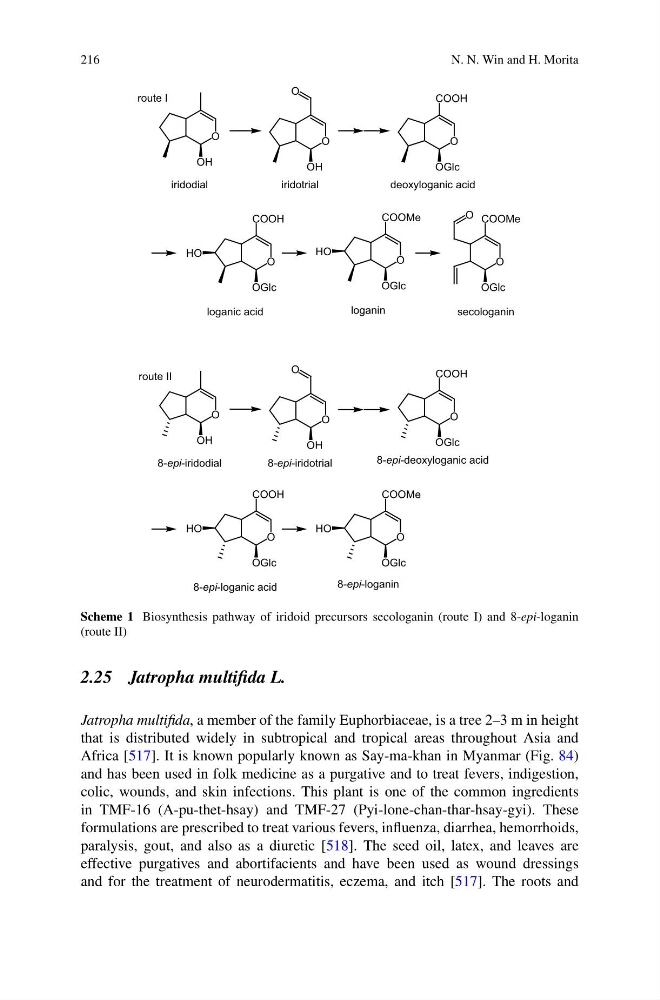
Scheme 1 Biosynthesis pathway of iridoid precursors secologanin (route I) and 8-epi-loganin
(route II)
2.25 Jatropha multifida L.
Jatropha multifida, a member of the family Euphorbiaceae, is a tree 2–3 m in height
that is distributed widely in subtropical and tropical areas throughout Asia and
Africa [517]. It is known popularly known as Say-ma-khan in Myanmar (Fig. 84)
and has been used in folk medicine as a purgative and to treat fevers, indigestion,
colic, wounds, and skin infections. This plant is one of the common ingredients
in TMF-16 (A-pu-thet-hsay) and TMF-27 (Pyi-lone-chan-thar-hsay-gyi). These
formulations are prescribed to treat various fevers, influenza, diarrhea, hemorrhoids,
paralysis, gout, and also as a diuretic [518]. The seed oil, latex, and leaves are
effective purgatives and abortifacients and have been used as wound dressings
and for the treatment of neurodermatitis, eczema, and itch [517]. The roots and
N. N. Win and H. Morita
O
OH
O
OH
O
COOH
OGlc
O
COOH
OGlc
HO
loganic acid
O
COOMe
OGlc
iridodial
iridotrial
deoxyloganic acid
secologanin
route I
route II
O
OH
O
OH
O
COOH
OGlc
8-epi-iridodial
8-epi-iridotrial
8-epi-deoxyloganic acid
O
COOH
OGlc
HO
8-epi-loganic acid
loganin
O
COOMe
OGlc
HO
O
COOMe
OGlc
HO
8-epi-loganin
O
O
O
Scheme 1 Biosynthesis pathway of iridoid precursors secologanin (route I) and 8-epi-loganin
(route II)
2.25 Jatropha multifida L.
Jatropha multifida, a member of the family Euphorbiaceae, is a tree 2–3 m in height
that is distributed widely in subtropical and tropical areas throughout Asia and
Africa [517]. It is known popularly known as Say-ma-khan in Myanmar (Fig. 84)
and has been used in folk medicine as a purgative and to treat fevers, indigestion,
colic, wounds, and skin infections. This plant is one of the common ingredients
in TMF-16 (A-pu-thet-hsay) and TMF-27 (Pyi-lone-chan-thar-hsay-gyi). These
formulations are prescribed to treat various fevers, influenza, diarrhea, hemorrhoids,
paralysis, gout, and also as a diuretic [518]. The seed oil, latex, and leaves are
effective purgatives and abortifacients and have been used as wound dressings
and for the treatment of neurodermatitis, eczema, and itch [517]. The roots and