

188
N. N. Win and H. Morita
O
HO
R
2
R
3
R
1
277 (2',4'-dihydroxychalcone) R
1 = OH, R
2 = R
3 = H
278 (2,2',4'-trihydroxychalcone) R
1 = R
2 = OH, R
3 = H
279 (2,4'-dihydroxy-2'-methoxychalcone) R
1 = OMe, R
2 = OH, R
3 = H
280 (2,4'-dihydroxy-4-methoxychalcone) R
1 = H, R
2 = OH, R
3 = OMe
O
R
1
O
OR
2
OR
3
R
4
281 (4'-hydroxy-2,4-dimethoxydihydrochalcone) R
1 = R
4 = H,
R
2 = R
3 = Me
282 (4-hydroxy-2,6,4'-trimethoxydihydrochalcone)
R
1 = R
2 = Me, R
3 = H, R
4 = OMe
283 (2,4'-dihydroxy-4-methoxydihydrochalcone)
R
1 = R
2 = R
4 = H, R
3 = Me
284 (2,4,4'-trihydroxydihydrochalcone)
R
1 = R
2 = R
3 = R
4 = H
285 (4,4'-dihydroxy-2,6-dimethoxydihydrochalcone)
R
1 = R
3 = H, R
2 = Me, R
4 = OMe
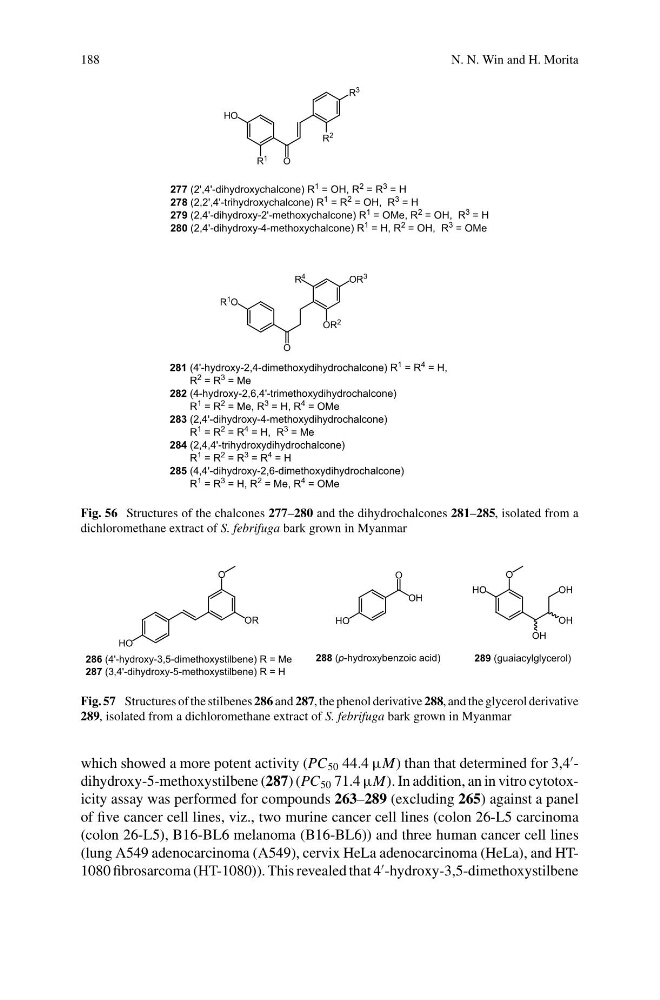
Fig. 56 Structures of the chalcones 277–280 and the dihydrochalcones 281–285, isolated from a
dichloromethane extract of S. febrifuga bark grown in Myanmar
O
OR
HO
286 (4'-hydroxy-3,5-dimethoxystilbene) R = Me
287 (3,4'-dihydroxy-5-methoxystilbene) R = H
HO
O
OH
O
HO
OH
OH
OH
288 (p-hydroxybenzoic acid)
289 (guaiacylglycerol)
Fig. 57 Structures of the stilbenes 286 and 287, the phenol derivative 288, and the glycerol derivative
289, isolated from a dichloromethane extract of S. febrifuga bark grown in Myanmar
which showed a more potent activity (PC 50 44.4 μM) than that determined for 3,4
-
dihydroxy-5-methoxystilbene (287) (PC 50 71.4 μM). In addition, an in vitro cytotoxicity assay was performed for compounds 263–289 (excluding 265) against a panel
of five cancer cell lines, viz., two murine cancer cell lines (colon 26-L5 carcinoma
(colon 26-L5), B16-BL6 melanoma (B16-BL6)) and three human cancer cell lines
(lung A549 adenocarcinoma (A549), cervix HeLa adenocarcinoma (HeLa), and HT1080 fibrosarcoma (HT-1080)). This revealed that 4
-hydroxy-3,5-dimethoxystilbene
N. N. Win and H. Morita
O
HO
R
2
R
3
R
1
277 (2',4'-dihydroxychalcone) R
1 = OH, R
2 = R
3 = H
278 (2,2',4'-trihydroxychalcone) R
1 = R
2 = OH, R
3 = H
279 (2,4'-dihydroxy-2'-methoxychalcone) R
1 = OMe, R
2 = OH, R
3 = H
280 (2,4'-dihydroxy-4-methoxychalcone) R
1 = H, R
2 = OH, R
3 = OMe
O
R
1
O
OR
2
OR
3
R
4
281 (4'-hydroxy-2,4-dimethoxydihydrochalcone) R
1 = R
4 = H,
R
2 = R
3 = Me
282 (4-hydroxy-2,6,4'-trimethoxydihydrochalcone)
R
1 = R
2 = Me, R
3 = H, R
4 = OMe
283 (2,4'-dihydroxy-4-methoxydihydrochalcone)
R
1 = R
2 = R
4 = H, R
3 = Me
284 (2,4,4'-trihydroxydihydrochalcone)
R
1 = R
2 = R
3 = R
4 = H
285 (4,4'-dihydroxy-2,6-dimethoxydihydrochalcone)
R
1 = R
3 = H, R
2 = Me, R
4 = OMe
Fig. 56 Structures of the chalcones 277–280 and the dihydrochalcones 281–285, isolated from a
dichloromethane extract of S. febrifuga bark grown in Myanmar
O
OR
HO
286 (4'-hydroxy-3,5-dimethoxystilbene) R = Me
287 (3,4'-dihydroxy-5-methoxystilbene) R = H
HO
O
OH
O
HO
OH
OH
OH
288 (p-hydroxybenzoic acid)
289 (guaiacylglycerol)
Fig. 57 Structures of the stilbenes 286 and 287, the phenol derivative 288, and the glycerol derivative
289, isolated from a dichloromethane extract of S. febrifuga bark grown in Myanmar
which showed a more potent activity (PC 50 44.4 μM) than that determined for 3,4
-
dihydroxy-5-methoxystilbene (287) (PC 50 71.4 μM). In addition, an in vitro cytotoxicity assay was performed for compounds 263–289 (excluding 265) against a panel
of five cancer cell lines, viz., two murine cancer cell lines (colon 26-L5 carcinoma
(colon 26-L5), B16-BL6 melanoma (B16-BL6)) and three human cancer cell lines
(lung A549 adenocarcinoma (A549), cervix HeLa adenocarcinoma (HeLa), and HT1080 fibrosarcoma (HT-1080)). This revealed that 4
-hydroxy-3,5-dimethoxystilbene