

152
N. N. Win and H. Morita
O
OH
R
2
O
83 (norcaesalpinin B) R
1 = OAc, R
2 = H
84 (norcaesalpinin E) R
1 = H, R
2 = OH
R
1
OAc
OH
O
O
O
R
1
R
2
77 (caesalmin B) R
1 = α-OAc, β-H, R
2 = H
78 (caesalmin G) R
1 = α-OH, β-H, R
2 = H
79 (caesalpinin D) R
1 = α-OAc, β-H, R
2 = OAc
80 (caesalpinin H) R
1 = α-OH, β-H, R
2 = OAc
81 (caesalpinin I) R
1 = O, R
2 = OAc
82 (caesalpinin O) R
1 = α-OAc, β-H, R
2 = OH
O
OH
OAc
R
3
R
1
85 (caesaldekarin e) R
1 = R
3 = H, R
2 = OAc
86 (2-acetoxycaesaldekarin e) R
1 = R
2 = OAc, R
3 = H
87 (2-acetoxy-3-deacetoxycaesaldekarin e) R
1 = OAc, R
2 = R
3 = H
88 (6-acetoxy-3-deacetoxycaesaldekarin e) R
1 = R
2 = H, R
3 = OAc
R
2
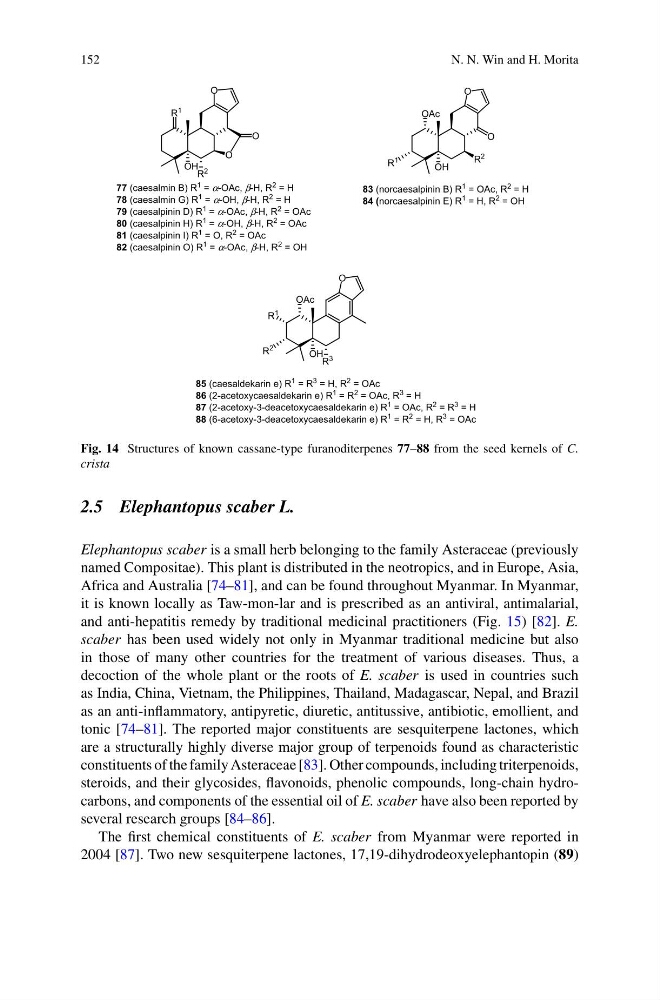
Fig. 14 Structures of known cassane-type furanoditerpenes 77–88 from the seed kernels of C.
crista
2.5 Elephantopus scaber L.
Elephantopus scaber is a small herb belonging to the family Asteraceae (previously
named Compositae). This plant is distributed in the neotropics, and in Europe, Asia,
Africa and Australia [74–81], and can be found throughout Myanmar. In Myanmar,
it is known locally as Taw-mon-lar and is prescribed as an antiviral, antimalarial,
and anti-hepatitis remedy by traditional medicinal practitioners (Fig. 15) [82]. E.
scaber has been used widely not only in Myanmar traditional medicine but also
in those of many other countries for the treatment of various diseases. Thus, a
decoction of the whole plant or the roots of E. scaber is used in countries such
as India, China, Vietnam, the Philippines, Thailand, Madagascar, Nepal, and Brazil
as an anti-inflammatory, antipyretic, diuretic, antitussive, antibiotic, emollient, and
tonic [74–81]. The reported major constituents are sesquiterpene lactones, which
are a structurally highly diverse major group of terpenoids found as characteristic
constituents of the family Asteraceae [83]. Other compounds, including triterpenoids,
steroids, and their glycosides, flavonoids, phenolic compounds, long-chain hydrocarbons, and components of the essential oil of E. scaber have also been reported by
several research groups [84–86].
The first chemical constituents of E. scaber from Myanmar were reported in
2004 [87]. Two new sesquiterpene lactones, 17,19-dihydrodeoxyelephantopin (89)
N. N. Win and H. Morita
O
OH
R
2
O
83 (norcaesalpinin B) R
1 = OAc, R
2 = H
84 (norcaesalpinin E) R
1 = H, R
2 = OH
R
1
OAc
OH
O
O
O
R
1
R
2
77 (caesalmin B) R
1 = α-OAc, β-H, R
2 = H
78 (caesalmin G) R
1 = α-OH, β-H, R
2 = H
79 (caesalpinin D) R
1 = α-OAc, β-H, R
2 = OAc
80 (caesalpinin H) R
1 = α-OH, β-H, R
2 = OAc
81 (caesalpinin I) R
1 = O, R
2 = OAc
82 (caesalpinin O) R
1 = α-OAc, β-H, R
2 = OH
O
OH
OAc
R
3
R
1
85 (caesaldekarin e) R
1 = R
3 = H, R
2 = OAc
86 (2-acetoxycaesaldekarin e) R
1 = R
2 = OAc, R
3 = H
87 (2-acetoxy-3-deacetoxycaesaldekarin e) R
1 = OAc, R
2 = R
3 = H
88 (6-acetoxy-3-deacetoxycaesaldekarin e) R
1 = R
2 = H, R
3 = OAc
R
2
Fig. 14 Structures of known cassane-type furanoditerpenes 77–88 from the seed kernels of C.
crista
2.5 Elephantopus scaber L.
Elephantopus scaber is a small herb belonging to the family Asteraceae (previously
named Compositae). This plant is distributed in the neotropics, and in Europe, Asia,
Africa and Australia [74–81], and can be found throughout Myanmar. In Myanmar,
it is known locally as Taw-mon-lar and is prescribed as an antiviral, antimalarial,
and anti-hepatitis remedy by traditional medicinal practitioners (Fig. 15) [82]. E.
scaber has been used widely not only in Myanmar traditional medicine but also
in those of many other countries for the treatment of various diseases. Thus, a
decoction of the whole plant or the roots of E. scaber is used in countries such
as India, China, Vietnam, the Philippines, Thailand, Madagascar, Nepal, and Brazil
as an anti-inflammatory, antipyretic, diuretic, antitussive, antibiotic, emollient, and
tonic [74–81]. The reported major constituents are sesquiterpene lactones, which
are a structurally highly diverse major group of terpenoids found as characteristic
constituents of the family Asteraceae [83]. Other compounds, including triterpenoids,
steroids, and their glycosides, flavonoids, phenolic compounds, long-chain hydrocarbons, and components of the essential oil of E. scaber have also been reported by
several research groups [84–86].
The first chemical constituents of E. scaber from Myanmar were reported in
2004 [87]. Two new sesquiterpene lactones, 17,19-dihydrodeoxyelephantopin (89)