

3.2 Higher Parts of the Heavens
37
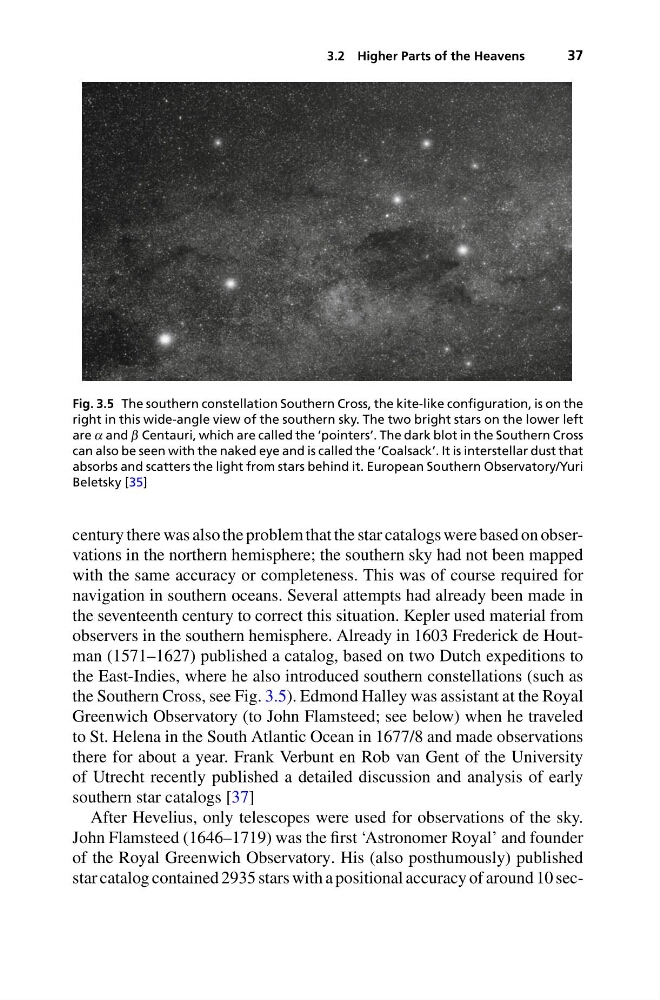
Fig. 3.5 The southern constellation Southern Cross, the kite-like configuration, is on the
right in this wide-angle view of the southern sky. The two bright stars on the lower left
are α and β Centauri, which are called the ‘pointers’. The dark blot in the Southern Cross
can also be seen with the naked eye and is called the ‘Coalsack’. It is interstellar dust that
absorbs and scatters the light from stars behind it. European Southern Observatory/Yuri
Beletsky [35]
century there was also the problem that the star catalogs were based on observations in the northern hemisphere; the southern sky had not been mapped
with the same accuracy or completeness. This was of course required for
navigation in southern oceans. Several attempts had already been made in
the seventeenth century to correct this situation. Kepler used material from
observers in the southern hemisphere. Already in 1603 Frederick de Houtman (1571–1627) published a catalog, based on two Dutch expeditions to
the East-Indies, where he also introduced southern constellations (such as
the Southern Cross, see Fig. 3.5). Edmond Halley was assistant at the Royal
Greenwich Observatory (to John Flamsteed; see below) when he traveled
to St. Helena in the South Atlantic Ocean in 1677/8 and made observations
there for about a year. Frank Verbunt en Rob van Gent of the University
of Utrecht recently published a detailed discussion and analysis of early
southern star catalogs [37]
After Hevelius, only telescopes were used for observations of the sky.
John Flamsteed (1646–1719) was the first ‘Astronomer Royal’ and founder
of the Royal Greenwich Observatory. His (also posthumously) published
star catalog contained 2935 stars with a positional accuracy of around 10 sec-
37
Fig. 3.5 The southern constellation Southern Cross, the kite-like configuration, is on the
right in this wide-angle view of the southern sky. The two bright stars on the lower left
are α and β Centauri, which are called the ‘pointers’. The dark blot in the Southern Cross
can also be seen with the naked eye and is called the ‘Coalsack’. It is interstellar dust that
absorbs and scatters the light from stars behind it. European Southern Observatory/Yuri
Beletsky [35]
century there was also the problem that the star catalogs were based on observations in the northern hemisphere; the southern sky had not been mapped
with the same accuracy or completeness. This was of course required for
navigation in southern oceans. Several attempts had already been made in
the seventeenth century to correct this situation. Kepler used material from
observers in the southern hemisphere. Already in 1603 Frederick de Houtman (1571–1627) published a catalog, based on two Dutch expeditions to
the East-Indies, where he also introduced southern constellations (such as
the Southern Cross, see Fig. 3.5). Edmond Halley was assistant at the Royal
Greenwich Observatory (to John Flamsteed; see below) when he traveled
to St. Helena in the South Atlantic Ocean in 1677/8 and made observations
there for about a year. Frank Verbunt en Rob van Gent of the University
of Utrecht recently published a detailed discussion and analysis of early
southern star catalogs [37]
After Hevelius, only telescopes were used for observations of the sky.
John Flamsteed (1646–1719) was the first ‘Astronomer Royal’ and founder
of the Royal Greenwich Observatory. His (also posthumously) published
star catalog contained 2935 stars with a positional accuracy of around 10 sec-