

36
3 Astronomy Around 1875
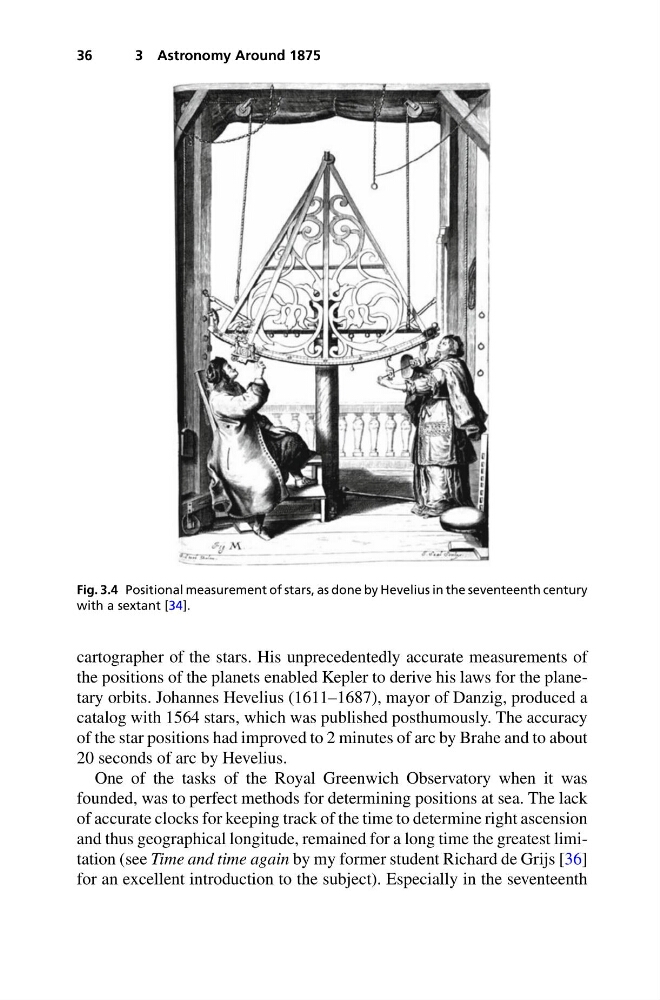
Fig. 3.4 Positional measurement of stars, as done by Hevelius in the seventeenth century
with a sextant [34].
cartographer of the stars. His unprecedentedly accurate measurements of
the positions of the planets enabled Kepler to derive his laws for the planetary orbits. Johannes Hevelius (1611–1687), mayor of Danzig, produced a
catalog with 1564 stars, which was published posthumously. The accuracy
of the star positions had improved to 2 minutes of arc by Brahe and to about
20 seconds of arc by Hevelius.
One of the tasks of the Royal Greenwich Observatory when it was
founded, was to perfect methods for determining positions at sea. The lack
of accurate clocks for keeping track of the time to determine right ascension
and thus geographical longitude, remained for a long time the greatest limitation (see Time and time again by my former student Richard de Grijs [36]
for an excellent introduction to the subject). Especially in the seventeenth
3 Astronomy Around 1875
Fig. 3.4 Positional measurement of stars, as done by Hevelius in the seventeenth century
with a sextant [34].
cartographer of the stars. His unprecedentedly accurate measurements of
the positions of the planets enabled Kepler to derive his laws for the planetary orbits. Johannes Hevelius (1611–1687), mayor of Danzig, produced a
catalog with 1564 stars, which was published posthumously. The accuracy
of the star positions had improved to 2 minutes of arc by Brahe and to about
20 seconds of arc by Hevelius.
One of the tasks of the Royal Greenwich Observatory when it was
founded, was to perfect methods for determining positions at sea. The lack
of accurate clocks for keeping track of the time to determine right ascension
and thus geographical longitude, remained for a long time the greatest limitation (see Time and time again by my former student Richard de Grijs [36]
for an excellent introduction to the subject). Especially in the seventeenth