

1 Prelude and Framework
5
The University of Utrecht, founded in 1636, followed by founding an observatory in 1642, not much later than that in Leiden. It was located on
the ‘Smeetoren’ (Smith Tower) on the ramparts, which had been used by the
smiths’ guild. Unlike in Kapteyn’s days, these observatories were originally
mainly used for education and demonstration (to special guests). No observatory was set up at Groningen University, but from the very beginning there
were lectures in astronomy, starting with Nicolaus Mulerius (1564–1630).
When the Netherlands became a Kingdom in 1815, the observatories of
Leiden and Utrecht were far from ‘state of the art’. Teaching in astronomy was
often provided for by professors for whom this was not their main task nor
their primary interest. That changed in the middle of the nineteenth century.
In Utrecht, the catalyst was Christophorus Henricus Didericus Buys Ballot
(1818–1890), best known as a meteorologist, who not only lectured in physics
but also in astronomy. In 1854 he succeeded in establishing a meteorological
institute on the ‘Sonnenborgh’, on the city walls; he had already arranged for
the astronomical observatory to move there. As early as 1843, Adolf Stephanus
Rueb (1806–1854) had been appointed a lecturer to release Buys Ballot from
his many tasks and to provide astronomical education. After his death in 1854,
Jean Oudemans was attracted as extraordinary professor (additional to the
structural or ordinary professors). Oudemans left in 1857, but returned in
1875 as professor of astronomy and director of the Utrecht Observatory.
In Leiden, people did not sit still either. In 1826, Frederick Kaiser (1809–
1878) was appointed as observator—a person carrying out the observing. He
made quite a name for himself by predicting the return of Halley’s comet in
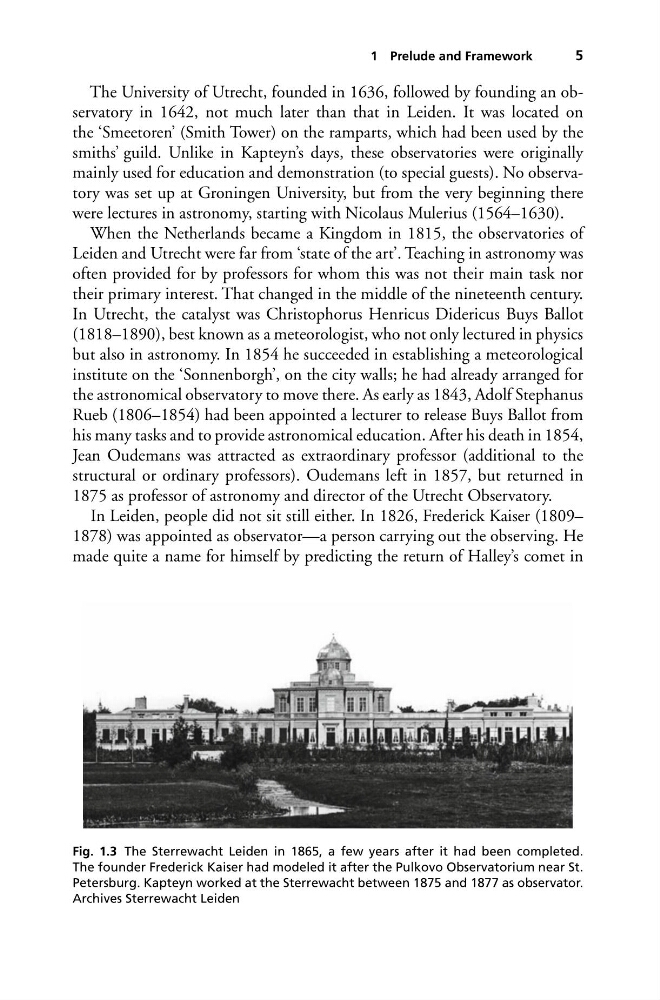
Fig. 1.3 The Sterrewacht Leiden in 1865, a few years after it had been completed.
The founder Frederick Kaiser had modeled it after the Pulkovo Observatorium near St.
Petersburg. Kapteyn worked at the Sterrewacht between 1875 and 1877 as observator.
Archives Sterrewacht Leiden
5
The University of Utrecht, founded in 1636, followed by founding an observatory in 1642, not much later than that in Leiden. It was located on
the ‘Smeetoren’ (Smith Tower) on the ramparts, which had been used by the
smiths’ guild. Unlike in Kapteyn’s days, these observatories were originally
mainly used for education and demonstration (to special guests). No observatory was set up at Groningen University, but from the very beginning there
were lectures in astronomy, starting with Nicolaus Mulerius (1564–1630).
When the Netherlands became a Kingdom in 1815, the observatories of
Leiden and Utrecht were far from ‘state of the art’. Teaching in astronomy was
often provided for by professors for whom this was not their main task nor
their primary interest. That changed in the middle of the nineteenth century.
In Utrecht, the catalyst was Christophorus Henricus Didericus Buys Ballot
(1818–1890), best known as a meteorologist, who not only lectured in physics
but also in astronomy. In 1854 he succeeded in establishing a meteorological
institute on the ‘Sonnenborgh’, on the city walls; he had already arranged for
the astronomical observatory to move there. As early as 1843, Adolf Stephanus
Rueb (1806–1854) had been appointed a lecturer to release Buys Ballot from
his many tasks and to provide astronomical education. After his death in 1854,
Jean Oudemans was attracted as extraordinary professor (additional to the
structural or ordinary professors). Oudemans left in 1857, but returned in
1875 as professor of astronomy and director of the Utrecht Observatory.
In Leiden, people did not sit still either. In 1826, Frederick Kaiser (1809–
1878) was appointed as observator—a person carrying out the observing. He
made quite a name for himself by predicting the return of Halley’s comet in
Fig. 1.3 The Sterrewacht Leiden in 1865, a few years after it had been completed.
The founder Frederick Kaiser had modeled it after the Pulkovo Observatorium near St.
Petersburg. Kapteyn worked at the Sterrewacht between 1875 and 1877 as observator.
Archives Sterrewacht Leiden