

4
1 Prelude and Framework
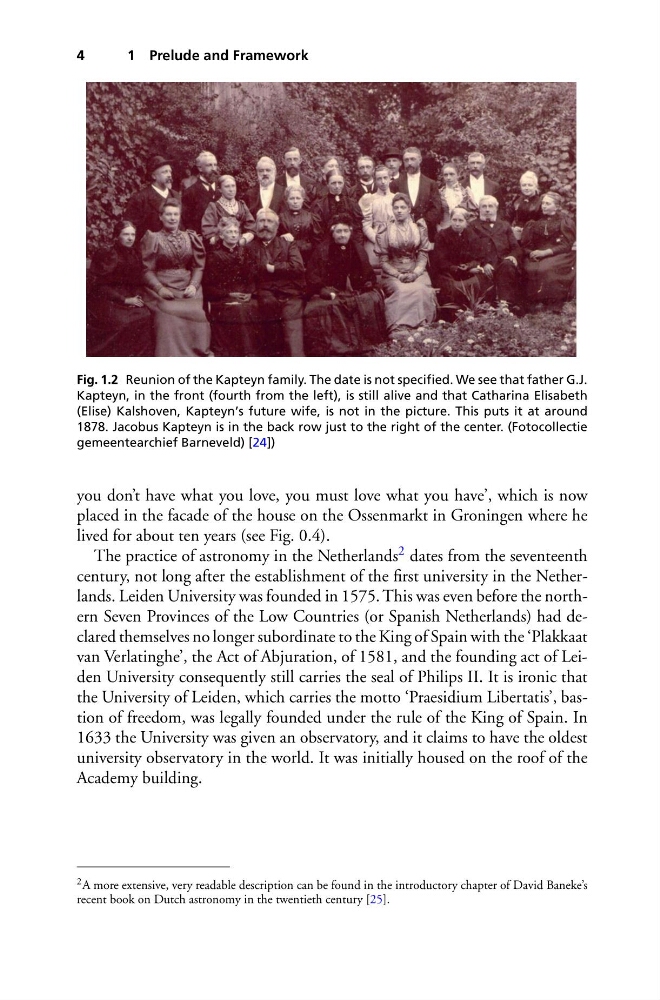
Fig. 1.2 Reunion of the Kapteyn family. The date is not specified. We see that father G.J.
Kapteyn, in the front (fourth from the left), is still alive and that Catharina Elisabeth
(Elise) Kalshoven, Kapteyn’s future wife, is not in the picture. This puts it at around
1878. Jacobus Kapteyn is in the back row just to the right of the center. (Fotocollectie
gemeentearchief Barneveld) [24])
you don’t have what you love, you must love what you have’, which is now
placed in the facade of the house on the Ossenmarkt in Groningen where he
lived for about ten years (see Fig. 0.4).
The practice of astronomy in the Netherlands 2 dates from the seventeenth
century, not long after the establishment of the first university in the Netherlands. Leiden University was founded in 1575. This was even before the northern Seven Provinces of the Low Countries (or Spanish Netherlands) had declared themselves no longer subordinate to the King of Spain with the ‘Plakkaat
van Verlatinghe’, the Act of Abjuration, of 1581, and the founding act of Leiden University consequently still carries the seal of Philips II. It is ironic that
the University of Leiden, which carries the motto ‘Praesidium Libertatis’, bastion of freedom, was legally founded under the rule of the King of Spain. In
1633 the University was given an observatory, and it claims to have the oldest
university observatory in the world. It was initially housed on the roof of the
Academy building.
2 A more extensive, very readable description can be found in the introductory chapter of David Baneke’s
recent book on Dutch astronomy in the twentieth century [25].
1 Prelude and Framework
Fig. 1.2 Reunion of the Kapteyn family. The date is not specified. We see that father G.J.
Kapteyn, in the front (fourth from the left), is still alive and that Catharina Elisabeth
(Elise) Kalshoven, Kapteyn’s future wife, is not in the picture. This puts it at around
1878. Jacobus Kapteyn is in the back row just to the right of the center. (Fotocollectie
gemeentearchief Barneveld) [24])
you don’t have what you love, you must love what you have’, which is now
placed in the facade of the house on the Ossenmarkt in Groningen where he
lived for about ten years (see Fig. 0.4).
The practice of astronomy in the Netherlands 2 dates from the seventeenth
century, not long after the establishment of the first university in the Netherlands. Leiden University was founded in 1575. This was even before the northern Seven Provinces of the Low Countries (or Spanish Netherlands) had declared themselves no longer subordinate to the King of Spain with the ‘Plakkaat
van Verlatinghe’, the Act of Abjuration, of 1581, and the founding act of Leiden University consequently still carries the seal of Philips II. It is ironic that
the University of Leiden, which carries the motto ‘Praesidium Libertatis’, bastion of freedom, was legally founded under the rule of the King of Spain. In
1633 the University was given an observatory, and it claims to have the oldest
university observatory in the world. It was initially housed on the roof of the
Academy building.
2 A more extensive, very readable description can be found in the introductory chapter of David Baneke’s
recent book on Dutch astronomy in the twentieth century [25].