

9.4 Dust
187
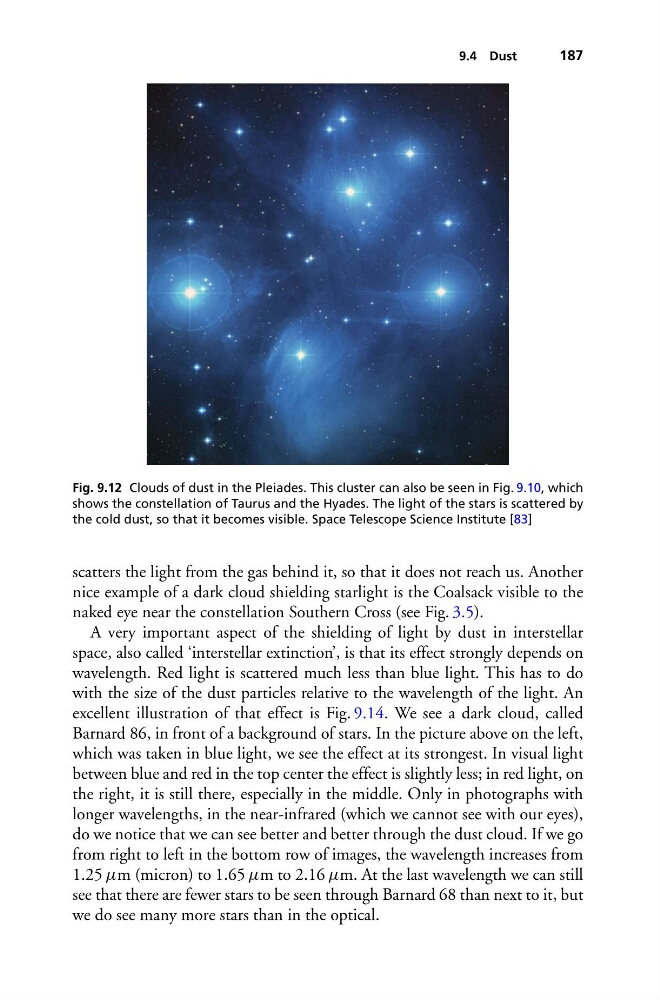
Fig. 9.12 Clouds of dust in the Pleiades. This cluster can also be seen in Fig. 9.10, which
shows the constellation of Taurus and the Hyades. The light of the stars is scattered by
the cold dust, so that it becomes visible. Space Telescope Science Institute [83]
scatters the light from the gas behind it, so that it does not reach us. Another
nice example of a dark cloud shielding starlight is the Coalsack visible to the
naked eye near the constellation Southern Cross (see Fig. 3.5).
A very important aspect of the shielding of light by dust in interstellar
space, also called ‘interstellar extinction’, is that its effect strongly depends on
wavelength. Red light is scattered much less than blue light. This has to do
with the size of the dust particles relative to the wavelength of the light. An
excellent illustration of that effect is Fig. 9.14. We see a dark cloud, called
Barnard 86, in front of a background of stars. In the picture above on the left,
which was taken in blue light, we see the effect at its strongest. In visual light
between blue and red in the top center the effect is slightly less; in red light, on
the right, it is still there, especially in the middle. Only in photographs with
longer wavelengths, in the near-infrared (which we cannot see with our eyes),
do we notice that we can see better and better through the dust cloud. If we go
from right to left in the bottom row of images, the wavelength increases from
1.25 μm (micron) to 1.65 μm to 2.16 μm. At the last wavelength we can still
see that there are fewer stars to be seen through Barnard 68 than next to it, but
we do see many more stars than in the optical.
187
Fig. 9.12 Clouds of dust in the Pleiades. This cluster can also be seen in Fig. 9.10, which
shows the constellation of Taurus and the Hyades. The light of the stars is scattered by
the cold dust, so that it becomes visible. Space Telescope Science Institute [83]
scatters the light from the gas behind it, so that it does not reach us. Another
nice example of a dark cloud shielding starlight is the Coalsack visible to the
naked eye near the constellation Southern Cross (see Fig. 3.5).
A very important aspect of the shielding of light by dust in interstellar
space, also called ‘interstellar extinction’, is that its effect strongly depends on
wavelength. Red light is scattered much less than blue light. This has to do
with the size of the dust particles relative to the wavelength of the light. An
excellent illustration of that effect is Fig. 9.14. We see a dark cloud, called
Barnard 86, in front of a background of stars. In the picture above on the left,
which was taken in blue light, we see the effect at its strongest. In visual light
between blue and red in the top center the effect is slightly less; in red light, on
the right, it is still there, especially in the middle. Only in photographs with
longer wavelengths, in the near-infrared (which we cannot see with our eyes),
do we notice that we can see better and better through the dust cloud. If we go
from right to left in the bottom row of images, the wavelength increases from
1.25 μm (micron) to 1.65 μm to 2.16 μm. At the last wavelength we can still
see that there are fewer stars to be seen through Barnard 68 than next to it, but
we do see many more stars than in the optical.