

166
8 In the Meantime in Groningen
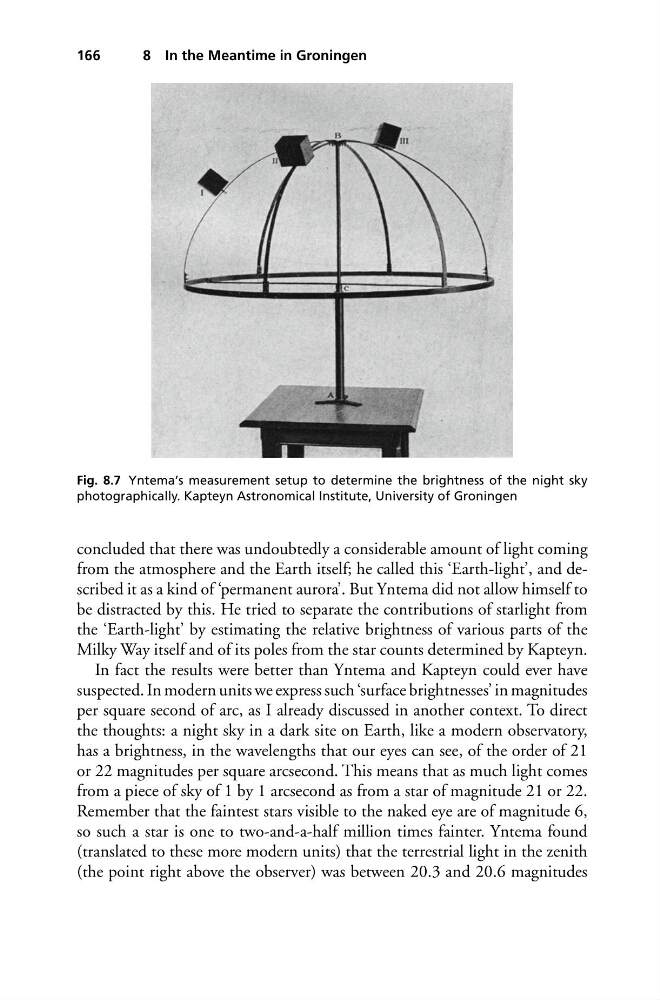
Fig. 8.7 Yntema’s measurement setup to determine the brightness of the night sky
photographically. Kapteyn Astronomical Institute, University of Groningen
concluded that there was undoubtedly a considerable amount of light coming
from the atmosphere and the Earth itself; he called this ‘Earth-light’, and described it as a kind of ‘permanent aurora’. But Yntema did not allow himself to
be distracted by this. He tried to separate the contributions of starlight from
the ‘Earth-light’ by estimating the relative brightness of various parts of the
Milky Way itself and of its poles from the star counts determined by Kapteyn.
In fact the results were better than Yntema and Kapteyn could ever have
suspected. In modern units we express such ‘surface brightnesses’ in magnitudes
per square second of arc, as I already discussed in another context. To direct
the thoughts: a night sky in a dark site on Earth, like a modern observatory,
has a brightness, in the wavelengths that our eyes can see, of the order of 21
or 22 magnitudes per square arcsecond. This means that as much light comes
from a piece of sky of 1 by 1 arcsecond as from a star of magnitude 21 or 22.
Remember that the faintest stars visible to the naked eye are of magnitude 6,
so such a star is one to two-and-a-half million times fainter. Yntema found
(translated to these more modern units) that the terrestrial light in the zenith
(the point right above the observer) was between 20.3 and 20.6 magnitudes
8 In the Meantime in Groningen
Fig. 8.7 Yntema’s measurement setup to determine the brightness of the night sky
photographically. Kapteyn Astronomical Institute, University of Groningen
concluded that there was undoubtedly a considerable amount of light coming
from the atmosphere and the Earth itself; he called this ‘Earth-light’, and described it as a kind of ‘permanent aurora’. But Yntema did not allow himself to
be distracted by this. He tried to separate the contributions of starlight from
the ‘Earth-light’ by estimating the relative brightness of various parts of the
Milky Way itself and of its poles from the star counts determined by Kapteyn.
In fact the results were better than Yntema and Kapteyn could ever have
suspected. In modern units we express such ‘surface brightnesses’ in magnitudes
per square second of arc, as I already discussed in another context. To direct
the thoughts: a night sky in a dark site on Earth, like a modern observatory,
has a brightness, in the wavelengths that our eyes can see, of the order of 21
or 22 magnitudes per square arcsecond. This means that as much light comes
from a piece of sky of 1 by 1 arcsecond as from a star of magnitude 21 or 22.
Remember that the faintest stars visible to the naked eye are of magnitude 6,
so such a star is one to two-and-a-half million times fainter. Yntema found
(translated to these more modern units) that the terrestrial light in the zenith
(the point right above the observer) was between 20.3 and 20.6 magnitudes