

8.4 Weersma, Yntema, van Rhijn
165
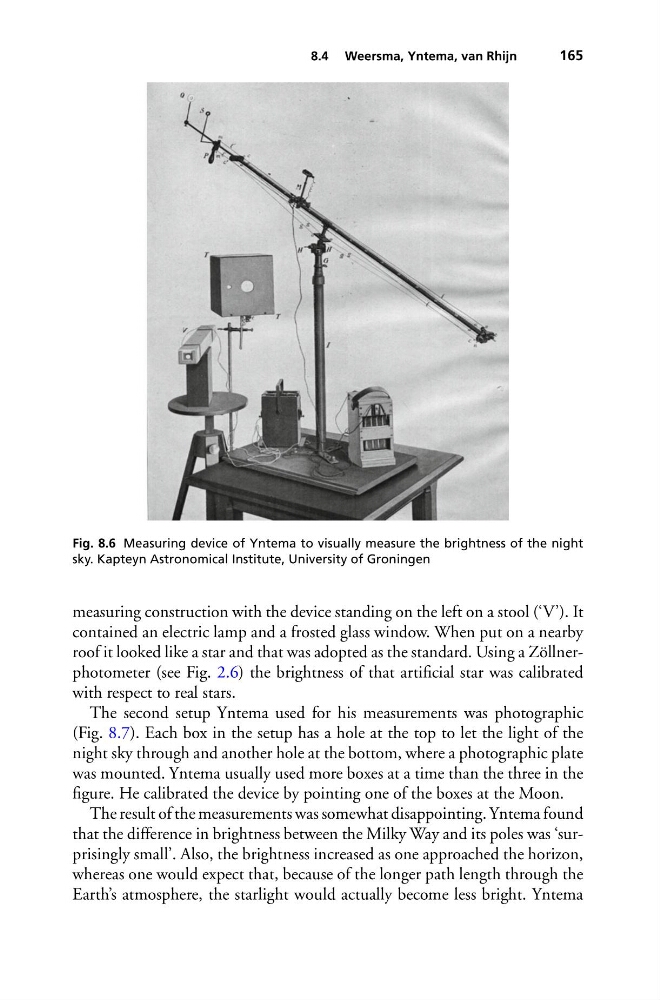
Fig. 8.6 Measuring device of Yntema to visually measure the brightness of the night
sky. Kapteyn Astronomical Institute, University of Groningen
measuring construction with the device standing on the left on a stool (‘V’). It
contained an electric lamp and a frosted glass window. When put on a nearby
roof it looked like a star and that was adopted as the standard. Using a Zöllnerphotometer (see Fig. 2.6) the brightness of that artificial star was calibrated
with respect to real stars.
The second setup Yntema used for his measurements was photographic
(Fig. 8.7). Each box in the setup has a hole at the top to let the light of the
night sky through and another hole at the bottom, where a photographic plate
was mounted. Yntema usually used more boxes at a time than the three in the
figure. He calibrated the device by pointing one of the boxes at the Moon.
The result of the measurements was somewhat disappointing. Yntema found
that the difference in brightness between the Milky Way and its poles was ‘surprisingly small’. Also, the brightness increased as one approached the horizon,
whereas one would expect that, because of the longer path length through the
Earth’s atmosphere, the starlight would actually become less bright. Yntema
165
Fig. 8.6 Measuring device of Yntema to visually measure the brightness of the night
sky. Kapteyn Astronomical Institute, University of Groningen
measuring construction with the device standing on the left on a stool (‘V’). It
contained an electric lamp and a frosted glass window. When put on a nearby
roof it looked like a star and that was adopted as the standard. Using a Zöllnerphotometer (see Fig. 2.6) the brightness of that artificial star was calibrated
with respect to real stars.
The second setup Yntema used for his measurements was photographic
(Fig. 8.7). Each box in the setup has a hole at the top to let the light of the
night sky through and another hole at the bottom, where a photographic plate
was mounted. Yntema usually used more boxes at a time than the three in the
figure. He calibrated the device by pointing one of the boxes at the Moon.
The result of the measurements was somewhat disappointing. Yntema found
that the difference in brightness between the Milky Way and its poles was ‘surprisingly small’. Also, the brightness increased as one approached the horizon,
whereas one would expect that, because of the longer path length through the
Earth’s atmosphere, the starlight would actually become less bright. Yntema