

128
7 Star Streams
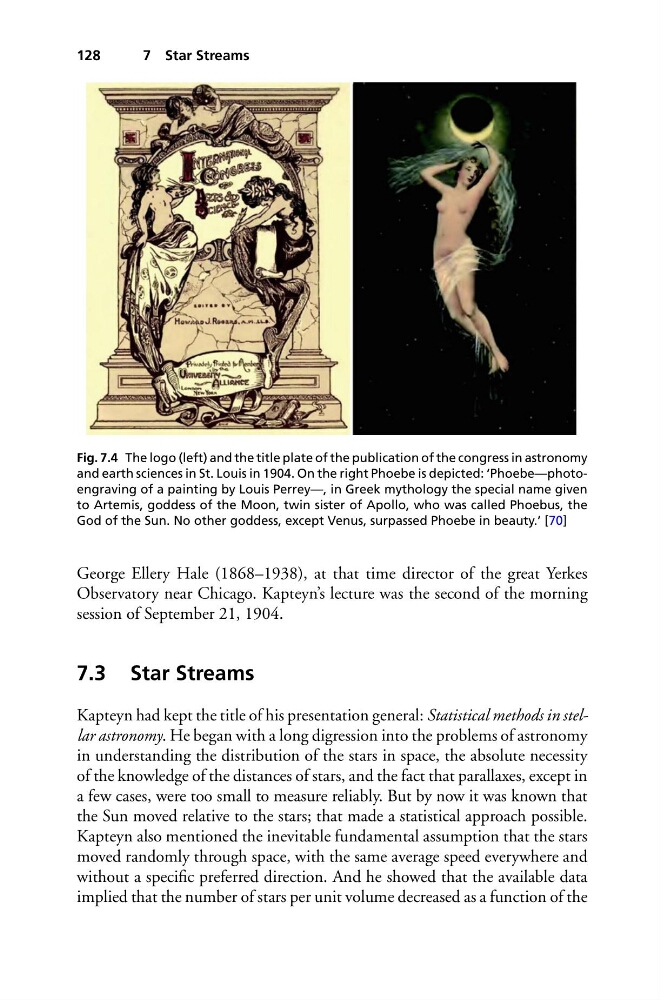
Fig. 7.4 The logo (left) and the title plate of the publication of the congress in astronomy
and earth sciences in St. Louis in 1904. On the right Phoebe is depicted: ‘Phoebe—photoengraving of a painting by Louis Perrey—, in Greek mythology the special name given
to Artemis, goddess of the Moon, twin sister of Apollo, who was called Phoebus, the
God of the Sun. No other goddess, except Venus, surpassed Phoebe in beauty.’ [70]
George Ellery Hale (1868–1938), at that time director of the great Yerkes
Observatory near Chicago. Kapteyn’s lecture was the second of the morning
session of September 21, 1904.
7.3 Star Streams
Kapteyn had kept the title of his presentation general: Statistical methods in stellar astronomy. He began with a long digression into the problems of astronomy
in understanding the distribution of the stars in space, the absolute necessity
of the knowledge of the distances of stars, and the fact that parallaxes, except in
a few cases, were too small to measure reliably. But by now it was known that
the Sun moved relative to the stars; that made a statistical approach possible.
Kapteyn also mentioned the inevitable fundamental assumption that the stars
moved randomly through space, with the same average speed everywhere and
without a specific preferred direction. And he showed that the available data
implied that the number of stars per unit volume decreased as a function of the
7 Star Streams
Fig. 7.4 The logo (left) and the title plate of the publication of the congress in astronomy
and earth sciences in St. Louis in 1904. On the right Phoebe is depicted: ‘Phoebe—photoengraving of a painting by Louis Perrey—, in Greek mythology the special name given
to Artemis, goddess of the Moon, twin sister of Apollo, who was called Phoebus, the
God of the Sun. No other goddess, except Venus, surpassed Phoebe in beauty.’ [70]
George Ellery Hale (1868–1938), at that time director of the great Yerkes
Observatory near Chicago. Kapteyn’s lecture was the second of the morning
session of September 21, 1904.
7.3 Star Streams
Kapteyn had kept the title of his presentation general: Statistical methods in stellar astronomy. He began with a long digression into the problems of astronomy
in understanding the distribution of the stars in space, the absolute necessity
of the knowledge of the distances of stars, and the fact that parallaxes, except in
a few cases, were too small to measure reliably. But by now it was known that
the Sun moved relative to the stars; that made a statistical approach possible.
Kapteyn also mentioned the inevitable fundamental assumption that the stars
moved randomly through space, with the same average speed everywhere and
without a specific preferred direction. And he showed that the available data
implied that the number of stars per unit volume decreased as a function of the