

6.2 Stars and Galaxies
101
time; Fig. 6.6 shows a sketch by the famous Dutch astronomer Jan Hendrik
Oort (1900–1992), made in the twenties or thirties and published in a book
by Willem de Sitter (1872–1934). Jan Oort and Willem de Sitter were both
students of Kapteyn. The halo as a whole rotates slowly, but stars have high
velocities among themselves.
The halo stars are all as old as the Galaxy itself, about ten billion years. But
in the disk there is also gas and dust between the stars, from which new stars
can form. So in the disk there are very young but also very old stars. There
is another fundamental difference between the halo and the disk, which only
became apparent in the middle of the twentieth century. When the Universe
was three minutes old, it was almost exclusively composed of hydrogen (for
three quarters) and helium (for one quarter). The same goes for the first stars.
But the heavy stars among them evolved rapidly and became supernovae,
adding other chemical elements to the gas between the stars (especially carbon,
nitrogen and oxygen, but also all the others, in sometimes very small amounts).
Later generations of stars therefore contain more chemical elements that are
heavier than helium (astronomers refer to this with the term abundance); for the
Sun this is only 2% of the mass in total. This is typical for the disk population.
The stars in the halo have abundances that are usually between ten and a
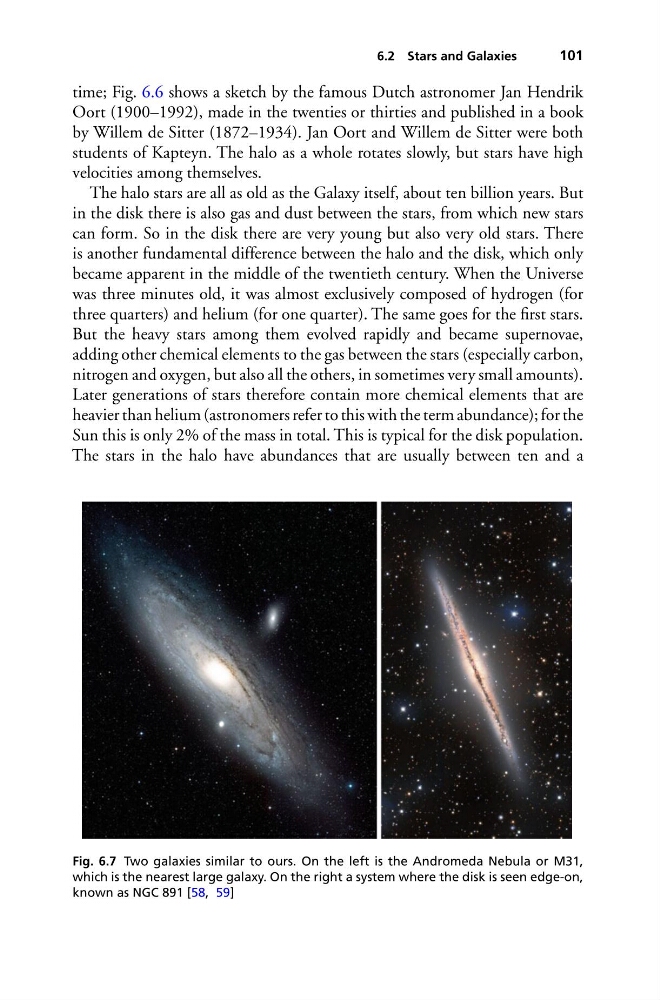
Fig. 6.7 Two galaxies similar to ours. On the left is the Andromeda Nebula or M31,
which is the nearest large galaxy. On the right a system where the disk is seen edge-on,
known as NGC 891 [58, 59]
101
time; Fig. 6.6 shows a sketch by the famous Dutch astronomer Jan Hendrik
Oort (1900–1992), made in the twenties or thirties and published in a book
by Willem de Sitter (1872–1934). Jan Oort and Willem de Sitter were both
students of Kapteyn. The halo as a whole rotates slowly, but stars have high
velocities among themselves.
The halo stars are all as old as the Galaxy itself, about ten billion years. But
in the disk there is also gas and dust between the stars, from which new stars
can form. So in the disk there are very young but also very old stars. There
is another fundamental difference between the halo and the disk, which only
became apparent in the middle of the twentieth century. When the Universe
was three minutes old, it was almost exclusively composed of hydrogen (for
three quarters) and helium (for one quarter). The same goes for the first stars.
But the heavy stars among them evolved rapidly and became supernovae,
adding other chemical elements to the gas between the stars (especially carbon,
nitrogen and oxygen, but also all the others, in sometimes very small amounts).
Later generations of stars therefore contain more chemical elements that are
heavier than helium (astronomers refer to this with the term abundance); for the
Sun this is only 2% of the mass in total. This is typical for the disk population.
The stars in the halo have abundances that are usually between ten and a
Fig. 6.7 Two galaxies similar to ours. On the left is the Andromeda Nebula or M31,
which is the nearest large galaxy. On the right a system where the disk is seen edge-on,
known as NGC 891 [58, 59]