

100
6 Laboratory and Statistical Astronomy
new nuclear reactions can occur, whereby carbon and oxygen are produced
from the helium. That phase does not take very long and eventually the star
cools down; what remains is a very compact so-called white dwarf. However,
if the star is significantly more massive than the Sun, further contraction will
occur once most of the helium has been converted into carbon and oxygen,
which will result in even higher temperatures and further nuclear reactions
up to chemical elements like iron. Eventually the inner part will collapse and
cause a huge shock wave in the star, which then explodes as a supernova. In a
short period of time, it will be billions of times brighter than the Sun. More
nuclear reactions occur, in which all possible chemical elements up to the most
massive like uranium are formed and thrown into space. What remains is a
very compact neutron star or black hole.
A galaxy like ours (the Milky Way Galaxy; see Fig. 6.5) consists roughly of
two parts when it comes to the stars. One part is called disk and the stars in
it are referred to as disk population. They form a flattened structure, because
it rotates around the center. The Sun lies about 8000 parsec (25,000 light
years) from the center of our Galaxy (about halfway its radius); the rotation
speed here is about 220 km/s. The random relative velocities of the stars are
much smaller, of the order of a few tens of km/s. The second component of
the system is called halo and the stars in it form the halo population. The most
conspicuous structures in it are the globular clusters, on average consisting of
one hundred thousand stars. This division was not yet known in Kapteyn’s
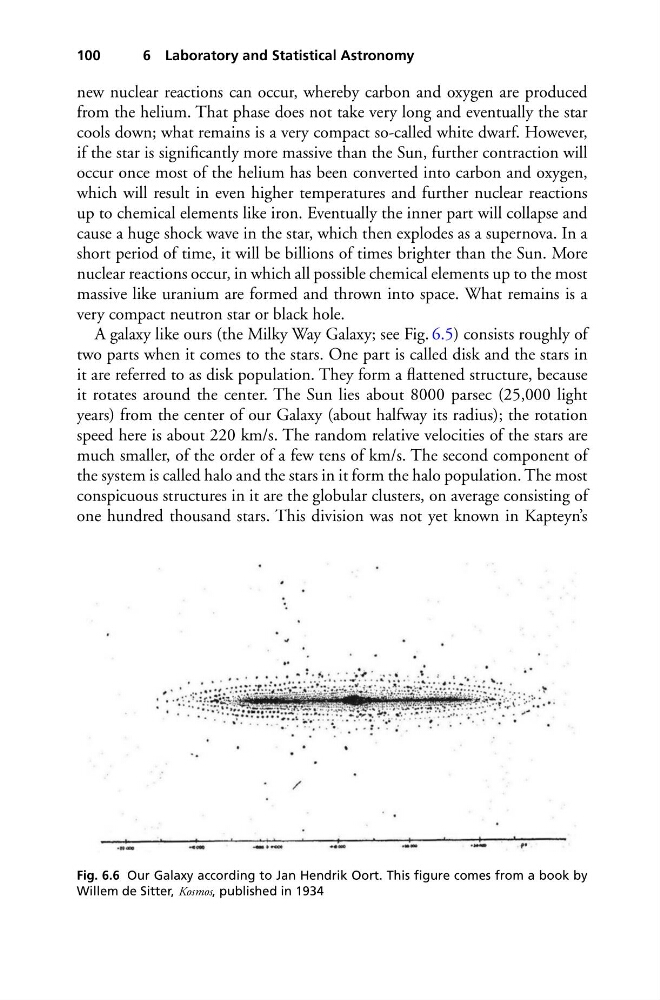
Fig. 6.6 Our Galaxy according to Jan Hendrik Oort. This figure comes from a book by
Willem de Sitter, Kosmos, published in 1934
6 Laboratory and Statistical Astronomy
new nuclear reactions can occur, whereby carbon and oxygen are produced
from the helium. That phase does not take very long and eventually the star
cools down; what remains is a very compact so-called white dwarf. However,
if the star is significantly more massive than the Sun, further contraction will
occur once most of the helium has been converted into carbon and oxygen,
which will result in even higher temperatures and further nuclear reactions
up to chemical elements like iron. Eventually the inner part will collapse and
cause a huge shock wave in the star, which then explodes as a supernova. In a
short period of time, it will be billions of times brighter than the Sun. More
nuclear reactions occur, in which all possible chemical elements up to the most
massive like uranium are formed and thrown into space. What remains is a
very compact neutron star or black hole.
A galaxy like ours (the Milky Way Galaxy; see Fig. 6.5) consists roughly of
two parts when it comes to the stars. One part is called disk and the stars in
it are referred to as disk population. They form a flattened structure, because
it rotates around the center. The Sun lies about 8000 parsec (25,000 light
years) from the center of our Galaxy (about halfway its radius); the rotation
speed here is about 220 km/s. The random relative velocities of the stars are
much smaller, of the order of a few tens of km/s. The second component of
the system is called halo and the stars in it form the halo population. The most
conspicuous structures in it are the globular clusters, on average consisting of
one hundred thousand stars. This division was not yet known in Kapteyn’s
Fig. 6.6 Our Galaxy according to Jan Hendrik Oort. This figure comes from a book by
Willem de Sitter, Kosmos, published in 1934