

84
5 Nearly Half a Million Stars
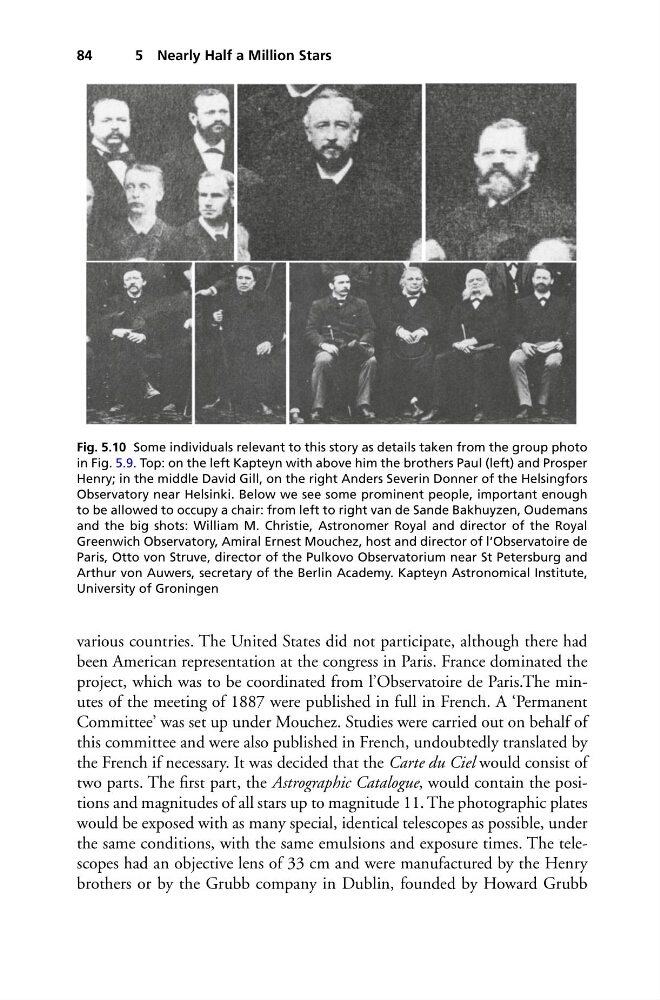
Fig. 5.10 Some individuals relevant to this story as details taken from the group photo
in Fig. 5.9. Top: on the left Kapteyn with above him the brothers Paul (left) and Prosper
Henry; in the middle David Gill, on the right Anders Severin Donner of the Helsingfors
Observatory near Helsinki. Below we see some prominent people, important enough
to be allowed to occupy a chair: from left to right van de Sande Bakhuyzen, Oudemans
and the big shots: William M. Christie, Astronomer Royal and director of the Royal
Greenwich Observatory, Amiral Ernest Mouchez, host and director of l’Observatoire de
Paris, Otto von Struve, director of the Pulkovo Observatorium near St Petersburg and
Arthur von Auwers, secretary of the Berlin Academy. Kapteyn Astronomical Institute,
University of Groningen
various countries. The United States did not participate, although there had
been American representation at the congress in Paris. France dominated the
project, which was to be coordinated from l’Observatoire de Paris.The minutes of the meeting of 1887 were published in full in French. A ‘Permanent
Committee’ was set up under Mouchez. Studies were carried out on behalf of
this committee and were also published in French, undoubtedly translated by
the French if necessary. It was decided that the Carte du Ciel would consist of
two parts. The first part, the Astrographic Catalogue, would contain the positions and magnitudes of all stars up to magnitude 11. The photographic plates
would be exposed with as many special, identical telescopes as possible, under
the same conditions, with the same emulsions and exposure times. The telescopes had an objective lens of 33 cm and were manufactured by the Henry
brothers or by the Grubb company in Dublin, founded by Howard Grubb
5 Nearly Half a Million Stars
Fig. 5.10 Some individuals relevant to this story as details taken from the group photo
in Fig. 5.9. Top: on the left Kapteyn with above him the brothers Paul (left) and Prosper
Henry; in the middle David Gill, on the right Anders Severin Donner of the Helsingfors
Observatory near Helsinki. Below we see some prominent people, important enough
to be allowed to occupy a chair: from left to right van de Sande Bakhuyzen, Oudemans
and the big shots: William M. Christie, Astronomer Royal and director of the Royal
Greenwich Observatory, Amiral Ernest Mouchez, host and director of l’Observatoire de
Paris, Otto von Struve, director of the Pulkovo Observatorium near St Petersburg and
Arthur von Auwers, secretary of the Berlin Academy. Kapteyn Astronomical Institute,
University of Groningen
various countries. The United States did not participate, although there had
been American representation at the congress in Paris. France dominated the
project, which was to be coordinated from l’Observatoire de Paris.The minutes of the meeting of 1887 were published in full in French. A ‘Permanent
Committee’ was set up under Mouchez. Studies were carried out on behalf of
this committee and were also published in French, undoubtedly translated by
the French if necessary. It was decided that the Carte du Ciel would consist of
two parts. The first part, the Astrographic Catalogue, would contain the positions and magnitudes of all stars up to magnitude 11. The photographic plates
would be exposed with as many special, identical telescopes as possible, under
the same conditions, with the same emulsions and exposure times. The telescopes had an objective lens of 33 cm and were manufactured by the Henry
brothers or by the Grubb company in Dublin, founded by Howard Grubb