

66
3 A Structuring Regime to Control Bubbling Beds
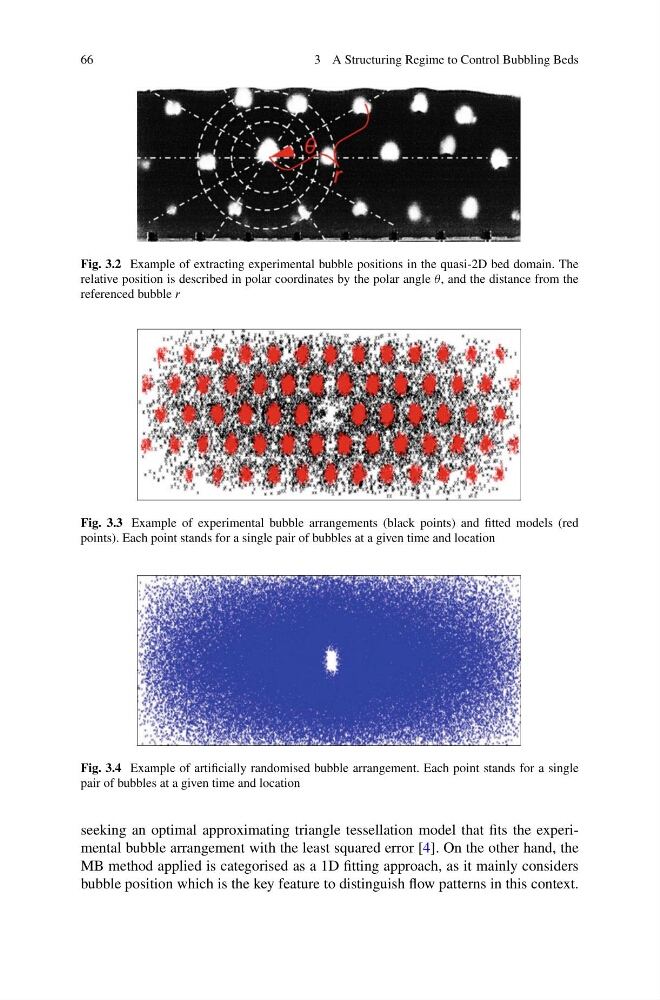
Fig. 3.2 Example of extracting experimental bubble positions in the quasi-2D bed domain. The
relative position is described in polar coordinates by the polar angle θ, and the distance from the
referenced bubble r
Fig. 3.3 Example of experimental bubble arrangements (black points) and fitted models (red
points). Each point stands for a single pair of bubbles at a given time and location
Fig. 3.4 Example of artificially randomised bubble arrangement. Each point stands for a single
pair of bubbles at a given time and location
seeking an optimal approximating triangle tessellation model that fits the experimental bubble arrangement with the least squared error [4]. On the other hand, the
MB method applied is categorised as a 1D fitting approach, as it mainly considers
bubble position which is the key feature to distinguish flow patterns in this context.
3 A Structuring Regime to Control Bubbling Beds
Fig. 3.2 Example of extracting experimental bubble positions in the quasi-2D bed domain. The
relative position is described in polar coordinates by the polar angle θ, and the distance from the
referenced bubble r
Fig. 3.3 Example of experimental bubble arrangements (black points) and fitted models (red
points). Each point stands for a single pair of bubbles at a given time and location
Fig. 3.4 Example of artificially randomised bubble arrangement. Each point stands for a single
pair of bubbles at a given time and location
seeking an optimal approximating triangle tessellation model that fits the experimental bubble arrangement with the least squared error [4]. On the other hand, the
MB method applied is categorised as a 1D fitting approach, as it mainly considers
bubble position which is the key feature to distinguish flow patterns in this context.