

52
2 Bubbling Properties in Pulsed Fluidised Beds
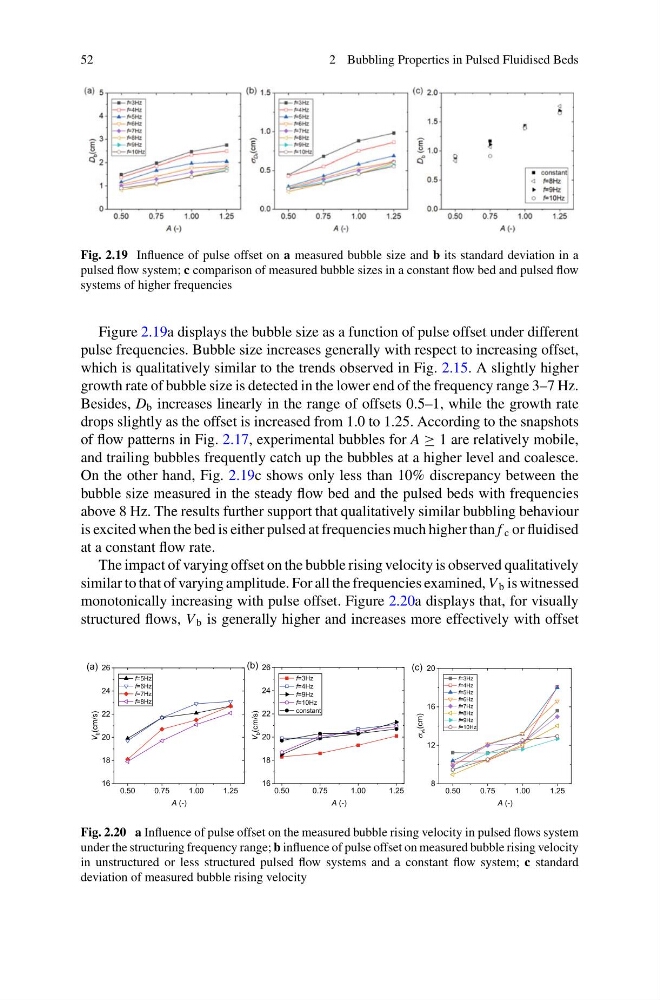
Fig. 2.19 Influence of pulse offset on a measured bubble size and b its standard deviation in a
pulsed flow system; c comparison of measured bubble sizes in a constant flow bed and pulsed flow
systems of higher frequencies
Figure 2.19a displays the bubble size as a function of pulse offset under different
pulse frequencies. Bubble size increases generally with respect to increasing offset,
which is qualitatively similar to the trends observed in Fig. 2.15. A slightly higher
growth rate of bubble size is detected in the lower end of the frequency range 3–7 Hz.
Besides, D b increases linearly in the range of offsets 0.5–1, while the growth rate
drops slightly as the offset is increased from 1.0 to 1.25. According to the snapshots
of flow patterns in Fig. 2.17, experimental bubbles for A ≥ 1 are relatively mobile,
and trailing bubbles frequently catch up the bubbles at a higher level and coalesce.
On the other hand, Fig. 2.19c shows only less than 10% discrepancy between the
bubble size measured in the steady flow bed and the pulsed beds with frequencies
above 8 Hz. The results further support that qualitatively similar bubbling behaviour
is excited when the bed is either pulsed at frequencies much higher than f c or fluidised
at a constant flow rate.
The impact of varying offset on the bubble rising velocity is observed qualitatively
similar to that of varying amplitude. For all the frequencies examined, V b is witnessed
monotonically increasing with pulse offset. Figure 2.20a displays that, for visually
structured flows, V b is generally higher and increases more effectively with offset
Fig. 2.20 a Influence of pulse offset on the measured bubble rising velocity in pulsed flows system
under the structuring frequency range; b influence of pulse offset on measured bubble rising velocity
in unstructured or less structured pulsed flow systems and a constant flow system; c standard
deviation of measured bubble rising velocity
2 Bubbling Properties in Pulsed Fluidised Beds
Fig. 2.19 Influence of pulse offset on a measured bubble size and b its standard deviation in a
pulsed flow system; c comparison of measured bubble sizes in a constant flow bed and pulsed flow
systems of higher frequencies
Figure 2.19a displays the bubble size as a function of pulse offset under different
pulse frequencies. Bubble size increases generally with respect to increasing offset,
which is qualitatively similar to the trends observed in Fig. 2.15. A slightly higher
growth rate of bubble size is detected in the lower end of the frequency range 3–7 Hz.
Besides, D b increases linearly in the range of offsets 0.5–1, while the growth rate
drops slightly as the offset is increased from 1.0 to 1.25. According to the snapshots
of flow patterns in Fig. 2.17, experimental bubbles for A ≥ 1 are relatively mobile,
and trailing bubbles frequently catch up the bubbles at a higher level and coalesce.
On the other hand, Fig. 2.19c shows only less than 10% discrepancy between the
bubble size measured in the steady flow bed and the pulsed beds with frequencies
above 8 Hz. The results further support that qualitatively similar bubbling behaviour
is excited when the bed is either pulsed at frequencies much higher than f c or fluidised
at a constant flow rate.
The impact of varying offset on the bubble rising velocity is observed qualitatively
similar to that of varying amplitude. For all the frequencies examined, V b is witnessed
monotonically increasing with pulse offset. Figure 2.20a displays that, for visually
structured flows, V b is generally higher and increases more effectively with offset
Fig. 2.20 a Influence of pulse offset on the measured bubble rising velocity in pulsed flows system
under the structuring frequency range; b influence of pulse offset on measured bubble rising velocity
in unstructured or less structured pulsed flow systems and a constant flow system; c standard
deviation of measured bubble rising velocity