

will separate in settling basins as 35–40% free liquid, called acid oil, from an
emulsified layer (high in phosphatides) and a water layer. To regain fatty acid
from soap-stock, the soap-stock is heated to between 70
C and 100
C and reacts
with sulfuric acid to reform the fatty acids. The fatty acids are insoluble in water and
float to the surface where they are skimmed. The mineral salts and any water-soluble
material remain in the water layer that is neutralized and discharged to the waste
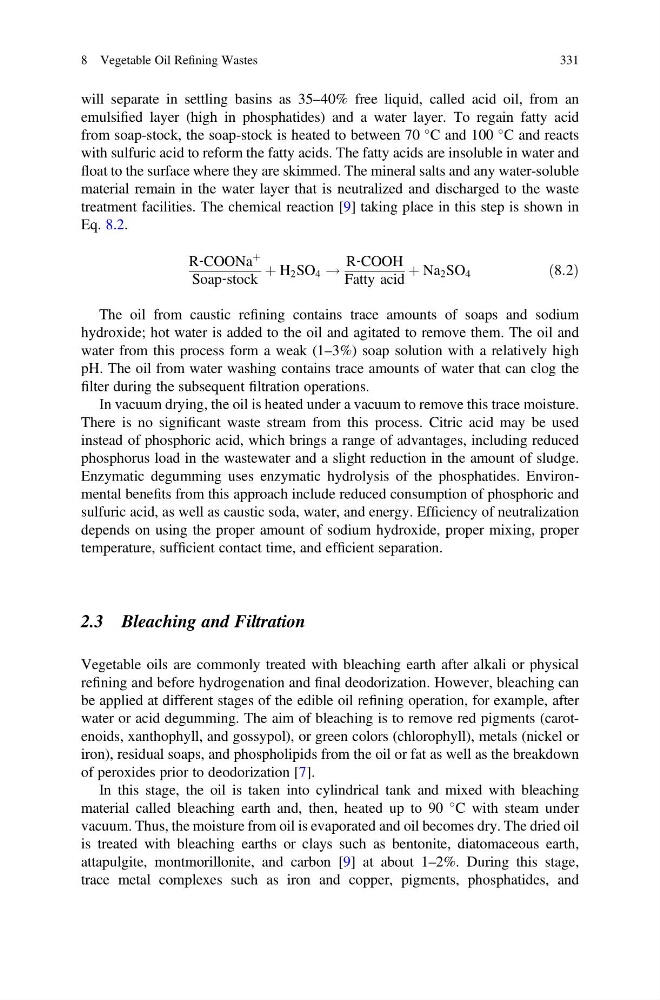
treatment facilities. The chemical reaction [9] taking place in this step is shown in
Eq. 8.2.
R‐COONa
þ
Soap‐stock
þ H 2 SO 4 !
R‐COOH
Fatty acid
þ Na 2 SO 4
ð8:2Þ
The oil from caustic refining contains trace amounts of soaps and sodium
hydroxide; hot water is added to the oil and agitated to remove them. The oil and
water from this process form a weak (1–3%) soap solution with a relatively high
pH. The oil from water washing contains trace amounts of water that can clog the
filter during the subsequent filtration operations.
In vacuum drying, the oil is heated under a vacuum to remove this trace moisture.
There is no significant waste stream from this process. Citric acid may be used
instead of phosphoric acid, which brings a range of advantages, including reduced
phosphorus load in the wastewater and a slight reduction in the amount of sludge.
Enzymatic degumming uses enzymatic hydrolysis of the phosphatides. Environmental benefits from this approach include reduced consumption of phosphoric and
sulfuric acid, as well as caustic soda, water, and energy. Efficiency of neutralization
depends on using the proper amount of sodium hydroxide, proper mixing, proper
temperature, sufficient contact time, and efficient separation.
2.3 Bleaching and Filtration
Vegetable oils are commonly treated with bleaching earth after alkali or physical
refining and before hydrogenation and final deodorization. However, bleaching can
be applied at different stages of the edible oil refining operation, for example, after
water or acid degumming. The aim of bleaching is to remove red pigments (carotenoids, xanthophyll, and gossypol), or green colors (chlorophyll), metals (nickel or
iron), residual soaps, and phospholipids from the oil or fat as well as the breakdown
of peroxides prior to deodorization [7].
In this stage, the oil is taken into cylindrical tank and mixed with bleaching
material called bleaching earth and, then, heated up to 90
C with steam under
vacuum. Thus, the moisture from oil is evaporated and oil becomes dry. The dried oil
is treated with bleaching earths or clays such as bentonite, diatomaceous earth,
attapulgite, montmorillonite, and carbon [9] at about 1–2%. During this stage,
trace metal complexes such as iron and copper, pigments, phosphatides, and
8 Vegetable Oil Refining Wastes
331
emulsified layer (high in phosphatides) and a water layer. To regain fatty acid
from soap-stock, the soap-stock is heated to between 70
C and 100
C and reacts
with sulfuric acid to reform the fatty acids. The fatty acids are insoluble in water and
float to the surface where they are skimmed. The mineral salts and any water-soluble
material remain in the water layer that is neutralized and discharged to the waste
treatment facilities. The chemical reaction [9] taking place in this step is shown in
Eq. 8.2.
R‐COONa
þ
Soap‐stock
þ H 2 SO 4 !
R‐COOH
Fatty acid
þ Na 2 SO 4
ð8:2Þ
The oil from caustic refining contains trace amounts of soaps and sodium
hydroxide; hot water is added to the oil and agitated to remove them. The oil and
water from this process form a weak (1–3%) soap solution with a relatively high
pH. The oil from water washing contains trace amounts of water that can clog the
filter during the subsequent filtration operations.
In vacuum drying, the oil is heated under a vacuum to remove this trace moisture.
There is no significant waste stream from this process. Citric acid may be used
instead of phosphoric acid, which brings a range of advantages, including reduced
phosphorus load in the wastewater and a slight reduction in the amount of sludge.
Enzymatic degumming uses enzymatic hydrolysis of the phosphatides. Environmental benefits from this approach include reduced consumption of phosphoric and
sulfuric acid, as well as caustic soda, water, and energy. Efficiency of neutralization
depends on using the proper amount of sodium hydroxide, proper mixing, proper
temperature, sufficient contact time, and efficient separation.
2.3 Bleaching and Filtration
Vegetable oils are commonly treated with bleaching earth after alkali or physical
refining and before hydrogenation and final deodorization. However, bleaching can
be applied at different stages of the edible oil refining operation, for example, after
water or acid degumming. The aim of bleaching is to remove red pigments (carotenoids, xanthophyll, and gossypol), or green colors (chlorophyll), metals (nickel or
iron), residual soaps, and phospholipids from the oil or fat as well as the breakdown
of peroxides prior to deodorization [7].
In this stage, the oil is taken into cylindrical tank and mixed with bleaching
material called bleaching earth and, then, heated up to 90
C with steam under
vacuum. Thus, the moisture from oil is evaporated and oil becomes dry. The dried oil
is treated with bleaching earths or clays such as bentonite, diatomaceous earth,
attapulgite, montmorillonite, and carbon [9] at about 1–2%. During this stage,
trace metal complexes such as iron and copper, pigments, phosphatides, and
8 Vegetable Oil Refining Wastes
331