

Vitrification is an alternative approach to the treatment of metal-containing waste
[65–67]. After vitrification, the metals are immobilized in glass matrices
[67, 68]. This process can control and reduce the leachability of the harmful
constituents of the treated products [69]. However, high temperatures
(1600–2000
C) are required [70], causing a large amount of energy consumption.
From the economic and environmental viewpoints, the development of energysaving and cost-effective metal stabilization is of great importance.
1.2 Thermal Stabilization Technique
Feasible and effective technology used to detoxify metal-containing waste is
urgently needed. Using a ceramic sintering process to thermally convert heavy
metals into various robust crystal structures via reacting with ceramic matrices is a
novel and promising waste management technique [16, 17, 19, 71] and has become a
mainstream research interest in the field of waste management [16, 17, 19, 71].
By sintering mixtures of metal-containing waste and ceramic matrices, heavy
metals can be incorporated into specific crystalline phases by driving atoms to their
most energetically favorable positions. The crystalline products generally have good
mechanical properties and high acid resistance, suggesting their potential for heavy
metal stabilization [16, 19, 72, 73]. Ceramic sintering is therefore considered to be a
good option for the treatment of different types of hazardous waste, including
contaminated soil, industrial sludge, and fly ash [61]. It is important to note that
comparing to vitrification method ceramic sintering can effectively incorporate toxic
components at relatively low temperature, which makes it attractive from economic
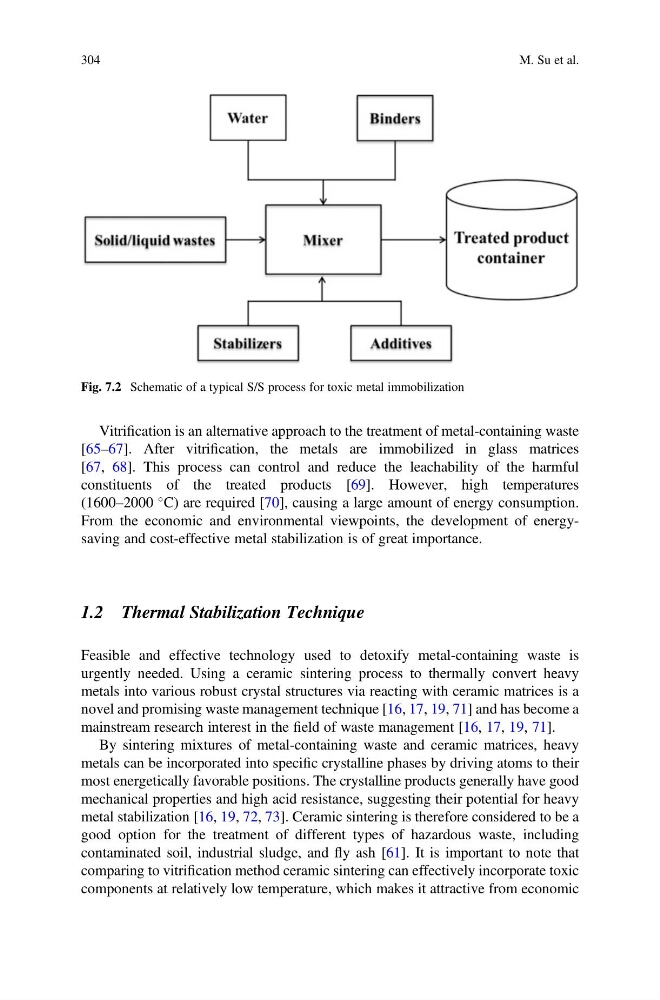
Fig. 7.2 Schematic of a typical S/S process for toxic metal immobilization
304
M. Su et al.
[65–67]. After vitrification, the metals are immobilized in glass matrices
[67, 68]. This process can control and reduce the leachability of the harmful
constituents of the treated products [69]. However, high temperatures
(1600–2000
C) are required [70], causing a large amount of energy consumption.
From the economic and environmental viewpoints, the development of energysaving and cost-effective metal stabilization is of great importance.
1.2 Thermal Stabilization Technique
Feasible and effective technology used to detoxify metal-containing waste is
urgently needed. Using a ceramic sintering process to thermally convert heavy
metals into various robust crystal structures via reacting with ceramic matrices is a
novel and promising waste management technique [16, 17, 19, 71] and has become a
mainstream research interest in the field of waste management [16, 17, 19, 71].
By sintering mixtures of metal-containing waste and ceramic matrices, heavy
metals can be incorporated into specific crystalline phases by driving atoms to their
most energetically favorable positions. The crystalline products generally have good
mechanical properties and high acid resistance, suggesting their potential for heavy
metal stabilization [16, 19, 72, 73]. Ceramic sintering is therefore considered to be a
good option for the treatment of different types of hazardous waste, including
contaminated soil, industrial sludge, and fly ash [61]. It is important to note that
comparing to vitrification method ceramic sintering can effectively incorporate toxic
components at relatively low temperature, which makes it attractive from economic
Fig. 7.2 Schematic of a typical S/S process for toxic metal immobilization
304
M. Su et al.