

purpose is to operate the system at the exponential growth phase of the activated
sludge for fast removal of BOD. The short aeration time allows only 60–75% BOD
removals. Furthermore, the sludge in the exponential growth phase does not flocculate properly. The net result of the poor settling characteristics of the sludge is a high
effluent suspended solid concentration. Because of this inferior performance, the
process is primarily suited to intermediate treatment and should not be designed as a
secondary treatment unit. In fact the modified aeration process was originally
planned as a modification of the old activated sludge treatment plants to accept
wastewater with the flow rate and strength above their design capacities. The effluent
quality is far below the secondary effluent standards specified by US EPA today.
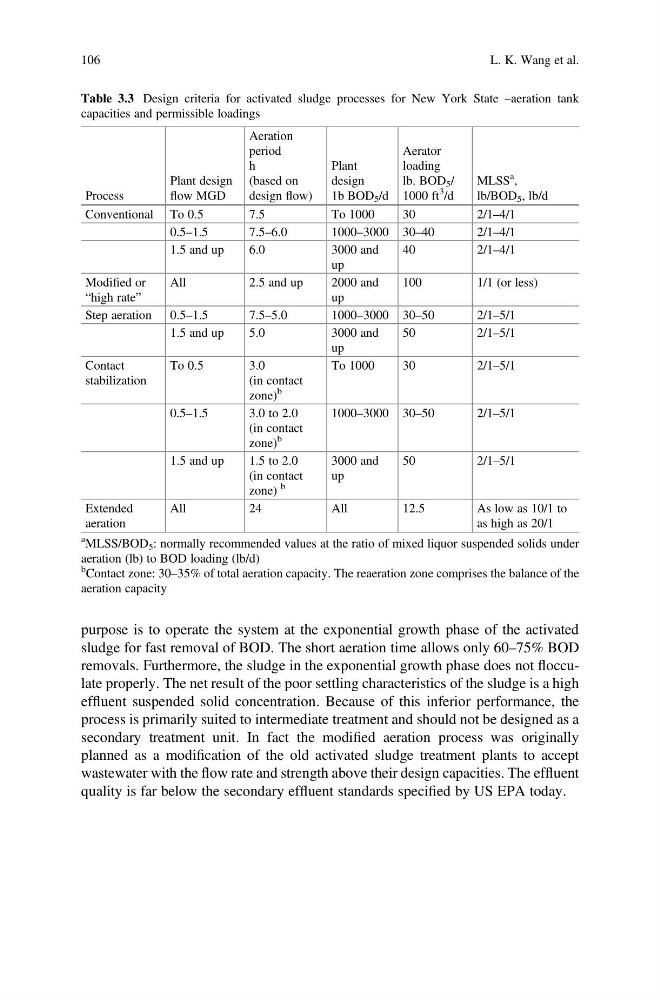
Table 3.3 Design criteria for activated sludge processes for New York State –aeration tank
capacities and permissible loadings
Process
Plant design
flow MGD
Aeration
period
h
(based on
design flow)
Plant
design
1b BOD 5 /d
Aerator
loading
lb. BOD 5 /
1000 ft
3
/d
MLSS
a ,
lb/BOD 5 , lb/d
Conventional To 0.5
7.5
To 1000
30
2/1–4/1
0.5–1.5
7.5–6.0
1000–3000 30–40
2/1–4/1
1.5 and up
6.0
3000 and
up
40
2/1–4/1
Modified or
“high rate”
All
2.5 and up
2000 and
up
100
1/1 (or less)
Step aeration 0.5–1.5
7.5–5.0
1000–3000 30–50
2/1–5/1
1.5 and up
5.0
3000 and
up
50
2/1–5/1
Contact
stabilization
To 0.5
3.0
(in contact
zone)
b
To 1000
30
2/1–5/1
0.5–1.5
3.0 to 2.0
(in contact
zone)
b
1000–3000 30–50
2/1–5/1
1.5 and up
1.5 to 2.0
(in contact
zone)
b
3000 and
up
50
2/1–5/1
Extended
aeration
All
24
All
12.5
As low as 10/1 to
as high as 20/1
a MLSS/BOD 5 : normally recommended values at the ratio of mixed liquor suspended solids under
aeration (lb) to BOD loading (lb/d)
b
Contact zone: 30–35% of total aeration capacity. The reaeration zone comprises the balance of the
aeration capacity
106
L. K. Wang et al.
sludge for fast removal of BOD. The short aeration time allows only 60–75% BOD
removals. Furthermore, the sludge in the exponential growth phase does not flocculate properly. The net result of the poor settling characteristics of the sludge is a high
effluent suspended solid concentration. Because of this inferior performance, the
process is primarily suited to intermediate treatment and should not be designed as a
secondary treatment unit. In fact the modified aeration process was originally
planned as a modification of the old activated sludge treatment plants to accept
wastewater with the flow rate and strength above their design capacities. The effluent
quality is far below the secondary effluent standards specified by US EPA today.
Table 3.3 Design criteria for activated sludge processes for New York State –aeration tank
capacities and permissible loadings
Process
Plant design
flow MGD
Aeration
period
h
(based on
design flow)
Plant
design
1b BOD 5 /d
Aerator
loading
lb. BOD 5 /
1000 ft
3
/d
MLSS
a ,
lb/BOD 5 , lb/d
Conventional To 0.5
7.5
To 1000
30
2/1–4/1
0.5–1.5
7.5–6.0
1000–3000 30–40
2/1–4/1
1.5 and up
6.0
3000 and
up
40
2/1–4/1
Modified or
“high rate”
All
2.5 and up
2000 and
up
100
1/1 (or less)
Step aeration 0.5–1.5
7.5–5.0
1000–3000 30–50
2/1–5/1
1.5 and up
5.0
3000 and
up
50
2/1–5/1
Contact
stabilization
To 0.5
3.0
(in contact
zone)
b
To 1000
30
2/1–5/1
0.5–1.5
3.0 to 2.0
(in contact
zone)
b
1000–3000 30–50
2/1–5/1
1.5 and up
1.5 to 2.0
(in contact
zone)
b
3000 and
up
50
2/1–5/1
Extended
aeration
All
24
All
12.5
As low as 10/1 to
as high as 20/1
a MLSS/BOD 5 : normally recommended values at the ratio of mixed liquor suspended solids under
aeration (lb) to BOD loading (lb/d)
b
Contact zone: 30–35% of total aeration capacity. The reaeration zone comprises the balance of the
aeration capacity
106
L. K. Wang et al.