

3.6 Kraus Process
When nitrogen deficiency occurs in biological waste treatment and exogenous
supply of nitrogen is expensive, the Kraus process can be useful in that an internal
or endogenous supply of nitrogen is used to maintain the growth of active biomass.
As shown in Fig. 3.10f, some digested sludge and digester supernatant, together with
a portion of the settled sludge from the final clarifier, are aerated in a reaeration tank.
The released ammonia nitrogen from the sludge and the supernatant is converted to
nitrate. When the content from the reaeration tank is introduced into the aeration tank
with the wastewater, nitrate serves as the supplemental nitrogen source for synthesis.
There is an improvement of the settleability of the MLSS also because of the
presence of the inert fraction of the aerated, digested sludge. Additions of nitrogen
in the form of ammonia, nitrate, or urea can be added to the reaeration tank for better
control of nitrogen supply if needed.
3.7 Design Criteria
From past experience in the activated sludge process operation, design parameters
have been established for the various processes. Table 3.2 lists the significant design
parameters for various activated sludge processes [36]. Design parameters for
modified aeration and high-rate aeration from this source are omitted here for
reasons to be given later.
For comparison purposes, Tables 3.3 and 3.4 are presented to show the current
design criteria for activated sludge processes in New York and Illinois States,
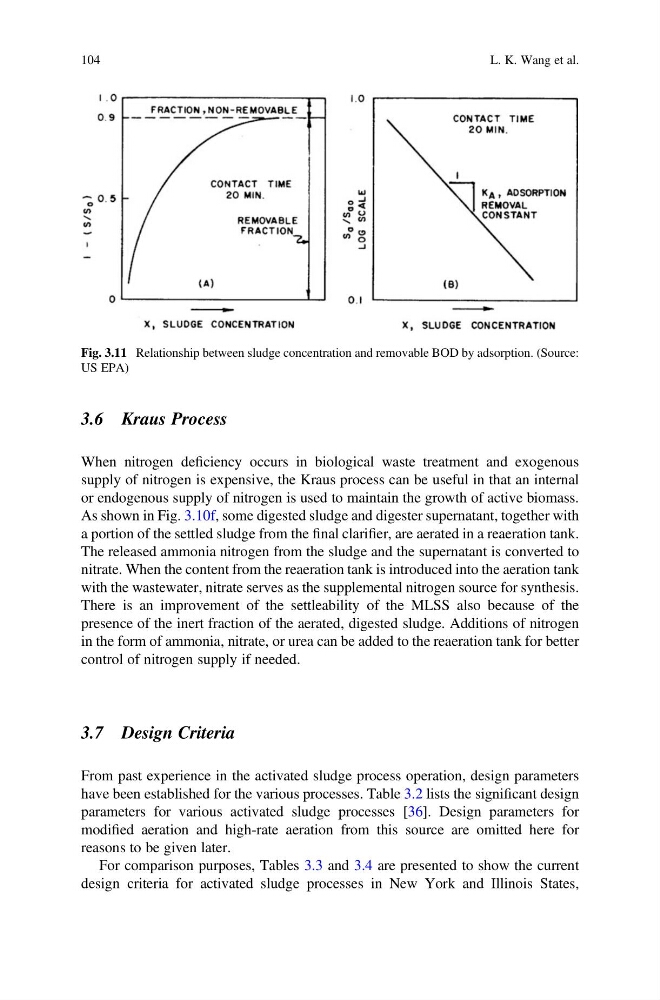
Fig. 3.11 Relationship between sludge concentration and removable BOD by adsorption. (Source:
US EPA)
104
L. K. Wang et al.
When nitrogen deficiency occurs in biological waste treatment and exogenous
supply of nitrogen is expensive, the Kraus process can be useful in that an internal
or endogenous supply of nitrogen is used to maintain the growth of active biomass.
As shown in Fig. 3.10f, some digested sludge and digester supernatant, together with
a portion of the settled sludge from the final clarifier, are aerated in a reaeration tank.
The released ammonia nitrogen from the sludge and the supernatant is converted to
nitrate. When the content from the reaeration tank is introduced into the aeration tank
with the wastewater, nitrate serves as the supplemental nitrogen source for synthesis.
There is an improvement of the settleability of the MLSS also because of the
presence of the inert fraction of the aerated, digested sludge. Additions of nitrogen
in the form of ammonia, nitrate, or urea can be added to the reaeration tank for better
control of nitrogen supply if needed.
3.7 Design Criteria
From past experience in the activated sludge process operation, design parameters
have been established for the various processes. Table 3.2 lists the significant design
parameters for various activated sludge processes [36]. Design parameters for
modified aeration and high-rate aeration from this source are omitted here for
reasons to be given later.
For comparison purposes, Tables 3.3 and 3.4 are presented to show the current
design criteria for activated sludge processes in New York and Illinois States,
Fig. 3.11 Relationship between sludge concentration and removable BOD by adsorption. (Source:
US EPA)
104
L. K. Wang et al.