

high substrate utilization rate will force the operation in exponential growth phase of
the biomass. The biomass forms flocs poorly and does not settle well in the final
clarifier resulting in low treatment efficiency. Conversely, with a prolonged sludge
retention time and its resulting low specific substrate utilization rate, the sludge is
subjected to an extended period of endogenous respiration and becomes inactive. As
a result, pinpoint flocs will develop and settle poorly in the clarifier. In either case,
the treated effluent contains a significant amount of BOD in the form of biological
solids. Thus the treatment efficiency is low, as is illustrated in Fig. 3.8. To produce
the good settling flocs essential for a successful treatment, engineers select a θ c value
that gives neither a high nor low substrate utilization rate in the process operation.
Suggested θ c values for various activated sludge processes are presented later in this
chapter.
Sludge retention time is normally controlled by wasting a portion of the settled
sludge before returning to the aeration tank. To extend the sludge retention time, one
needs to waste the biological sludge less often. This operation in effect generates less
sludge from the treatment plant. This relationship between θ c and sludge production
is expressed in Eq. (3.13) and is illustrated in Fig. 3.9. It shows a significant drop of
sludge production when the sludge retention time is very short. This is the result of
poor sludge settling associated with a small θ c value. The sludge leaves the system
with the treated effluent in significant amounts and therefore reduces the amount that
needs to be wasted in order to maintain a steady biomass in the aeration tank.
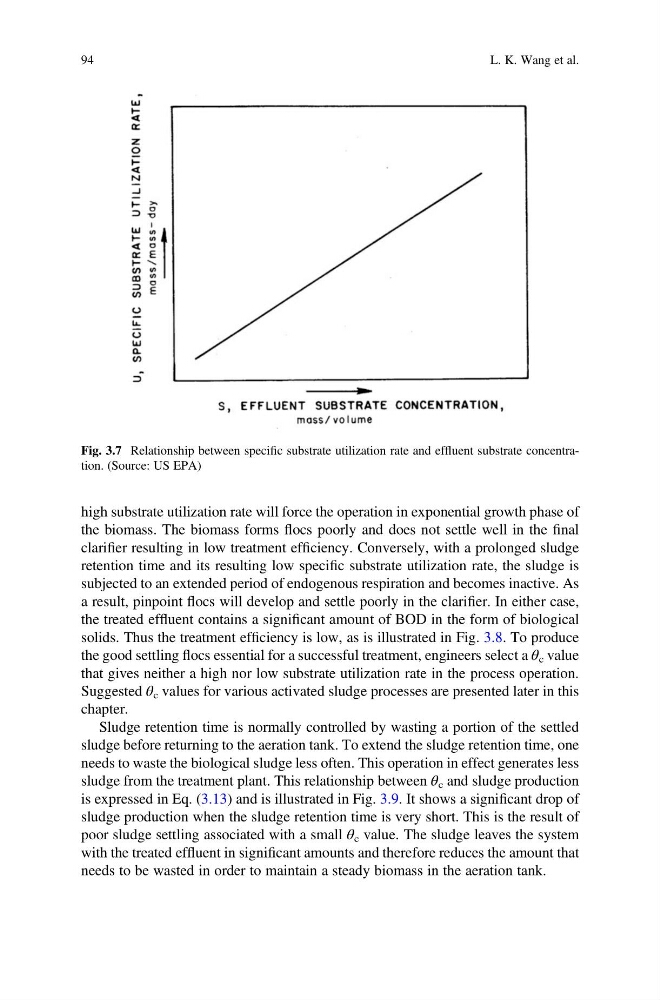
Fig. 3.7 Relationship between specific substrate utilization rate and effluent substrate concentration. (Source: US EPA)
94
L. K. Wang et al.
the biomass. The biomass forms flocs poorly and does not settle well in the final
clarifier resulting in low treatment efficiency. Conversely, with a prolonged sludge
retention time and its resulting low specific substrate utilization rate, the sludge is
subjected to an extended period of endogenous respiration and becomes inactive. As
a result, pinpoint flocs will develop and settle poorly in the clarifier. In either case,
the treated effluent contains a significant amount of BOD in the form of biological
solids. Thus the treatment efficiency is low, as is illustrated in Fig. 3.8. To produce
the good settling flocs essential for a successful treatment, engineers select a θ c value
that gives neither a high nor low substrate utilization rate in the process operation.
Suggested θ c values for various activated sludge processes are presented later in this
chapter.
Sludge retention time is normally controlled by wasting a portion of the settled
sludge before returning to the aeration tank. To extend the sludge retention time, one
needs to waste the biological sludge less often. This operation in effect generates less
sludge from the treatment plant. This relationship between θ c and sludge production
is expressed in Eq. (3.13) and is illustrated in Fig. 3.9. It shows a significant drop of
sludge production when the sludge retention time is very short. This is the result of
poor sludge settling associated with a small θ c value. The sludge leaves the system
with the treated effluent in significant amounts and therefore reduces the amount that
needs to be wasted in order to maintain a steady biomass in the aeration tank.
Fig. 3.7 Relationship between specific substrate utilization rate and effluent substrate concentration. (Source: US EPA)
94
L. K. Wang et al.