

17 Nanocomposites for Permanent Magnets
405
1910 1920 1930 1940 1950 1960 1970 1980 1990 2000
0
10
20
30
40
50
60
0
80
160
240
320
400
480
(BH)
max [kJm -3
]
Steels
Alnico
Ferrites
Sm-Co
Nd-Fe-B
Sm-Fe-N
(BH)
max [MGOe]
FePt
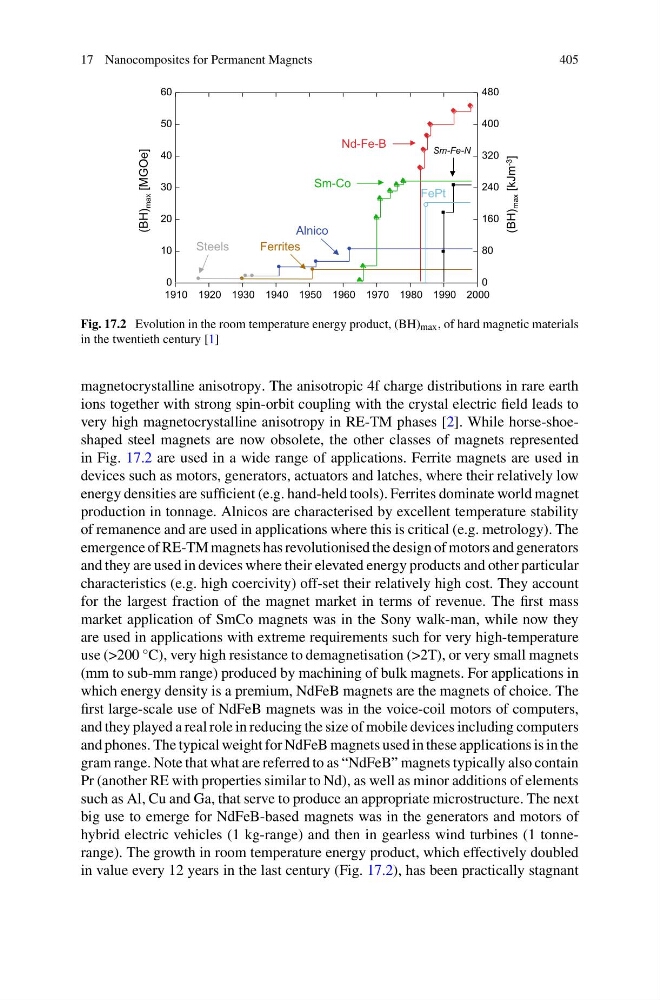
Fig. 17.2 Evolution in the room temperature energy product, (BH) max , of hard magnetic materials
in the twentieth century [1]
magnetocrystalline anisotropy. The anisotropic 4f charge distributions in rare earth
ions together with strong spin-orbit coupling with the crystal electric field leads to
very high magnetocrystalline anisotropy in RE-TM phases [2]. While horse-shoeshaped steel magnets are now obsolete, the other classes of magnets represented
in Fig. 17.2 are used in a wide range of applications. Ferrite magnets are used in
devices such as motors, generators, actuators and latches, where their relatively low
energy densities are sufficient (e.g. hand-held tools). Ferrites dominate world magnet
production in tonnage. Alnicos are characterised by excellent temperature stability
of remanence and are used in applications where this is critical (e.g. metrology). The
emergence of RE-TM magnets has revolutionised the design of motors and generators
and they are used in devices where their elevated energy products and other particular
characteristics (e.g. high coercivity) off-set their relatively high cost. They account
for the largest fraction of the magnet market in terms of revenue. The first mass
market application of SmCo magnets was in the Sony walk-man, while now they
are used in applications with extreme requirements such for very high-temperature
use (>200 °C), very high resistance to demagnetisation (>2T), or very small magnets
(mm to sub-mm range) produced by machining of bulk magnets. For applications in
which energy density is a premium, NdFeB magnets are the magnets of choice. The
first large-scale use of NdFeB magnets was in the voice-coil motors of computers,
and they played a real role in reducing the size of mobile devices including computers
and phones. The typical weight for NdFeB magnets used in these applications is in the
gram range. Note that what are referred to as “NdFeB” magnets typically also contain
Pr (another RE with properties similar to Nd), as well as minor additions of elements
such as Al, Cu and Ga, that serve to produce an appropriate microstructure. The next
big use to emerge for NdFeB-based magnets was in the generators and motors of
hybrid electric vehicles (1 kg-range) and then in gearless wind turbines (1 tonnerange). The growth in room temperature energy product, which effectively doubled
in value every 12 years in the last century (Fig. 17.2), has been practically stagnant
405
1910 1920 1930 1940 1950 1960 1970 1980 1990 2000
0
10
20
30
40
50
60
0
80
160
240
320
400
480
(BH)
max [kJm -3
]
Steels
Alnico
Ferrites
Sm-Co
Nd-Fe-B
Sm-Fe-N
(BH)
max [MGOe]
FePt
Fig. 17.2 Evolution in the room temperature energy product, (BH) max , of hard magnetic materials
in the twentieth century [1]
magnetocrystalline anisotropy. The anisotropic 4f charge distributions in rare earth
ions together with strong spin-orbit coupling with the crystal electric field leads to
very high magnetocrystalline anisotropy in RE-TM phases [2]. While horse-shoeshaped steel magnets are now obsolete, the other classes of magnets represented
in Fig. 17.2 are used in a wide range of applications. Ferrite magnets are used in
devices such as motors, generators, actuators and latches, where their relatively low
energy densities are sufficient (e.g. hand-held tools). Ferrites dominate world magnet
production in tonnage. Alnicos are characterised by excellent temperature stability
of remanence and are used in applications where this is critical (e.g. metrology). The
emergence of RE-TM magnets has revolutionised the design of motors and generators
and they are used in devices where their elevated energy products and other particular
characteristics (e.g. high coercivity) off-set their relatively high cost. They account
for the largest fraction of the magnet market in terms of revenue. The first mass
market application of SmCo magnets was in the Sony walk-man, while now they
are used in applications with extreme requirements such for very high-temperature
use (>200 °C), very high resistance to demagnetisation (>2T), or very small magnets
(mm to sub-mm range) produced by machining of bulk magnets. For applications in
which energy density is a premium, NdFeB magnets are the magnets of choice. The
first large-scale use of NdFeB magnets was in the voice-coil motors of computers,
and they played a real role in reducing the size of mobile devices including computers
and phones. The typical weight for NdFeB magnets used in these applications is in the
gram range. Note that what are referred to as “NdFeB” magnets typically also contain
Pr (another RE with properties similar to Nd), as well as minor additions of elements
such as Al, Cu and Ga, that serve to produce an appropriate microstructure. The next
big use to emerge for NdFeB-based magnets was in the generators and motors of
hybrid electric vehicles (1 kg-range) and then in gearless wind turbines (1 tonnerange). The growth in room temperature energy product, which effectively doubled
in value every 12 years in the last century (Fig. 17.2), has been practically stagnant