

390
S. Nakamae
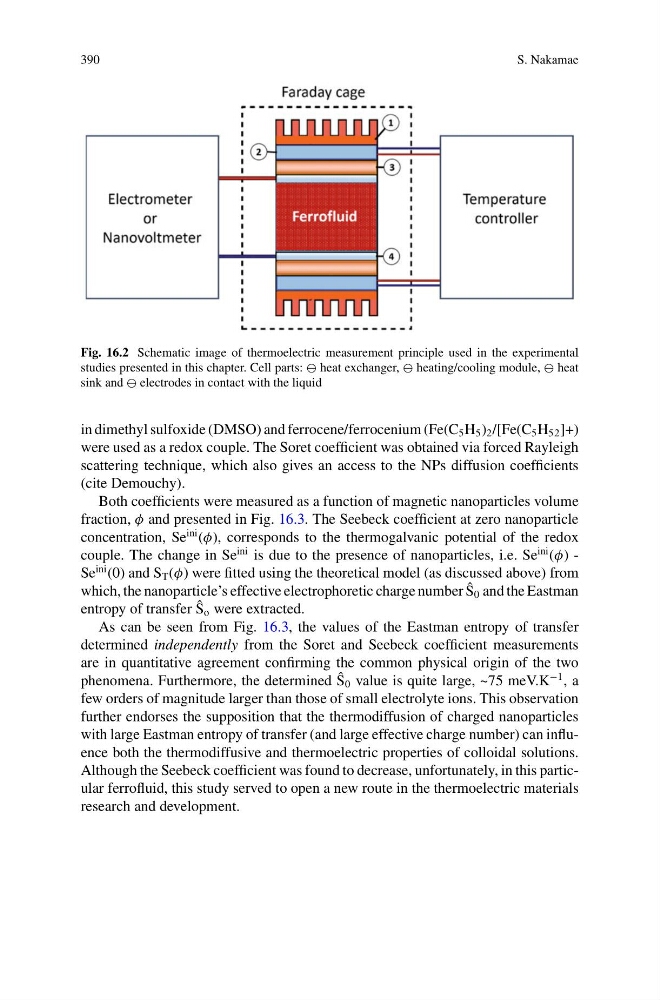
Fig. 16.2 Schematic image of thermoelectric measurement principle used in the experimental
studies presented in this chapter. Cell parts: heat exchanger, heating/cooling module, heat
sink and electrodes in contact with the liquid
in dimethyl sulfoxide (DMSO) and ferrocene/ferrocenium (Fe(C 5 H 5 ) 2 /[Fe(C 5 H 52 ]+)
were used as a redox couple. The Soret coefficient was obtained via forced Rayleigh
scattering technique, which also gives an access to the NPs diffusion coefficients
(cite Demouchy).
Both coefficients were measured as a function of magnetic nanoparticles volume
fraction, φ and presented in Fig. 16.3. The Seebeck coefficient at zero nanoparticle
concentration, Se
ini (φ), corresponds to the thermogalvanic potential of the redox
couple. The change in Se
ini is due to the presence of nanoparticles, i.e. Se
ini (φ) -
Se
ini (0) and S T (φ) were fitted using the theoretical model (as discussed above) from
which, the nanoparticle’s effective electrophoretic charge number ˆ
S 0 and the Eastman
entropy of transfer ˆ
S o were extracted.
As can be seen from Fig. 16.3, the values of the Eastman entropy of transfer
determined independently from the Soret and Seebeck coefficient measurements
are in quantitative agreement confirming the common physical origin of the two
phenomena. Furthermore, the determined ˆ
S 0 value is quite large, ~75 meV.K
−1 , a
few orders of magnitude larger than those of small electrolyte ions. This observation
further endorses the supposition that the thermodiffusion of charged nanoparticles
with large Eastman entropy of transfer (and large effective charge number) can influence both the thermodiffusive and thermoelectric properties of colloidal solutions.
Although the Seebeck coefficient was found to decrease, unfortunately, in this particular ferrofluid, this study served to open a new route in the thermoelectric materials
research and development.
S. Nakamae
Fig. 16.2 Schematic image of thermoelectric measurement principle used in the experimental
studies presented in this chapter. Cell parts: heat exchanger, heating/cooling module, heat
sink and electrodes in contact with the liquid
in dimethyl sulfoxide (DMSO) and ferrocene/ferrocenium (Fe(C 5 H 5 ) 2 /[Fe(C 5 H 52 ]+)
were used as a redox couple. The Soret coefficient was obtained via forced Rayleigh
scattering technique, which also gives an access to the NPs diffusion coefficients
(cite Demouchy).
Both coefficients were measured as a function of magnetic nanoparticles volume
fraction, φ and presented in Fig. 16.3. The Seebeck coefficient at zero nanoparticle
concentration, Se
ini (φ), corresponds to the thermogalvanic potential of the redox
couple. The change in Se
ini is due to the presence of nanoparticles, i.e. Se
ini (φ) -
Se
ini (0) and S T (φ) were fitted using the theoretical model (as discussed above) from
which, the nanoparticle’s effective electrophoretic charge number ˆ
S 0 and the Eastman
entropy of transfer ˆ
S o were extracted.
As can be seen from Fig. 16.3, the values of the Eastman entropy of transfer
determined independently from the Soret and Seebeck coefficient measurements
are in quantitative agreement confirming the common physical origin of the two
phenomena. Furthermore, the determined ˆ
S 0 value is quite large, ~75 meV.K
−1 , a
few orders of magnitude larger than those of small electrolyte ions. This observation
further endorses the supposition that the thermodiffusion of charged nanoparticles
with large Eastman entropy of transfer (and large effective charge number) can influence both the thermodiffusive and thermoelectric properties of colloidal solutions.
Although the Seebeck coefficient was found to decrease, unfortunately, in this particular ferrofluid, this study served to open a new route in the thermoelectric materials
research and development.