

384
S. Nakamae
A thermoelectric module containing such a liquid is often referred to as a “thermoelectrochemical cell”, a “thermally charged supercapacitor”, or simply a “thermocell”, depending on which TE effects dominates its thermoelectric energy conversion
process. Here, we focus our attention on a thermocell containing ionic colloidal fluids
(e.g. ferrofluids) where two sources of thermoelectric phenomena coexist, namely
the thermogalvanic Seebeck effect and the internal Seebeck effect. As described in
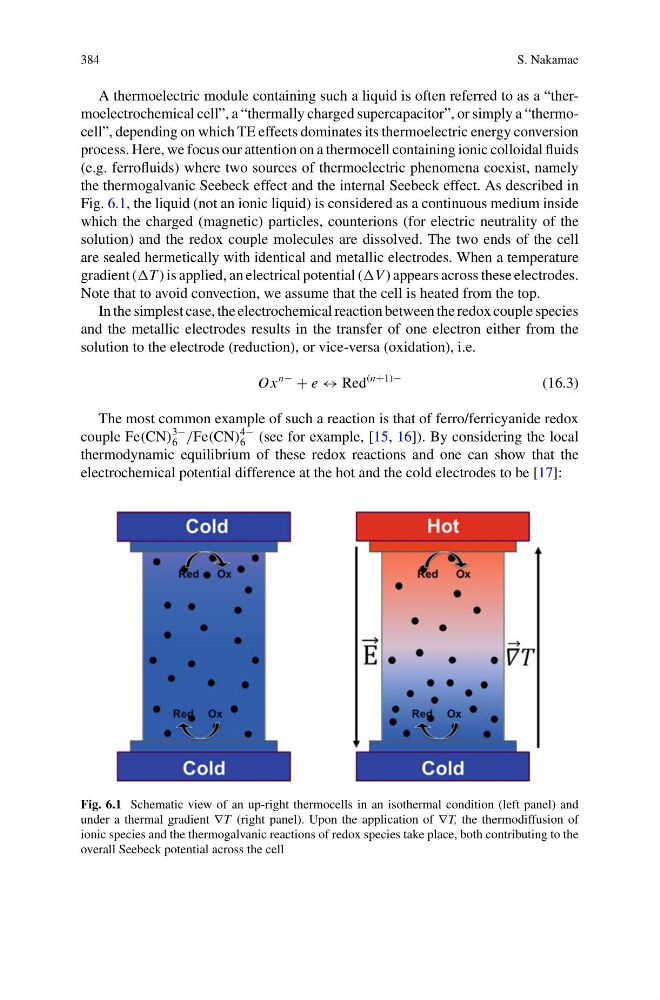
Fig. 6.1, the liquid (not an ionic liquid) is considered as a continuous medium inside
which the charged (magnetic) particles, counterions (for electric neutrality of the
solution) and the redox couple molecules are dissolved. The two ends of the cell
are sealed hermetically with identical and metallic electrodes. When a temperature
gradient (T ) is applied, an electrical potential (V ) appears across these electrodes.
Note that to avoid convection, we assume that the cell is heated from the top.
In the simplest case, the electrochemical reaction between the redox couple species
and the metallic electrodes results in the transfer of one electron either from the
solution to the electrode (reduction), or vice-versa (oxidation), i.e.
Ox
n−
+ e ↔ Red
(n+1)−
(16.3)
The most common example of such a reaction is that of ferro/ferricyanide redox
couple Fe(CN)
3−
6 /Fe(CN)
4−
6 (see for example, [15, 16]). By considering the local
thermodynamic equilibrium of these redox reactions and one can show that the
electrochemical potential difference at the hot and the cold electrodes to be [17]:
Fig. 6.1 Schematic view of an up-right thermocells in an isothermal condition (left panel) and
under a thermal gradient ∇T (right panel). Upon the application of ∇T, the thermodiffusion of
ionic species and the thermogalvanic reactions of redox species take place, both contributing to the
overall Seebeck potential across the cell
S. Nakamae
A thermoelectric module containing such a liquid is often referred to as a “thermoelectrochemical cell”, a “thermally charged supercapacitor”, or simply a “thermocell”, depending on which TE effects dominates its thermoelectric energy conversion
process. Here, we focus our attention on a thermocell containing ionic colloidal fluids
(e.g. ferrofluids) where two sources of thermoelectric phenomena coexist, namely
the thermogalvanic Seebeck effect and the internal Seebeck effect. As described in
Fig. 6.1, the liquid (not an ionic liquid) is considered as a continuous medium inside
which the charged (magnetic) particles, counterions (for electric neutrality of the
solution) and the redox couple molecules are dissolved. The two ends of the cell
are sealed hermetically with identical and metallic electrodes. When a temperature
gradient (T ) is applied, an electrical potential (V ) appears across these electrodes.
Note that to avoid convection, we assume that the cell is heated from the top.
In the simplest case, the electrochemical reaction between the redox couple species
and the metallic electrodes results in the transfer of one electron either from the
solution to the electrode (reduction), or vice-versa (oxidation), i.e.
Ox
n−
+ e ↔ Red
(n+1)−
(16.3)
The most common example of such a reaction is that of ferro/ferricyanide redox
couple Fe(CN)
3−
6 /Fe(CN)
4−
6 (see for example, [15, 16]). By considering the local
thermodynamic equilibrium of these redox reactions and one can show that the
electrochemical potential difference at the hot and the cold electrodes to be [17]:
Fig. 6.1 Schematic view of an up-right thermocells in an isothermal condition (left panel) and
under a thermal gradient ∇T (right panel). Upon the application of ∇T, the thermodiffusion of
ionic species and the thermogalvanic reactions of redox species take place, both contributing to the
overall Seebeck potential across the cell