

8
Ò. Iglesias and H. Kachkachi
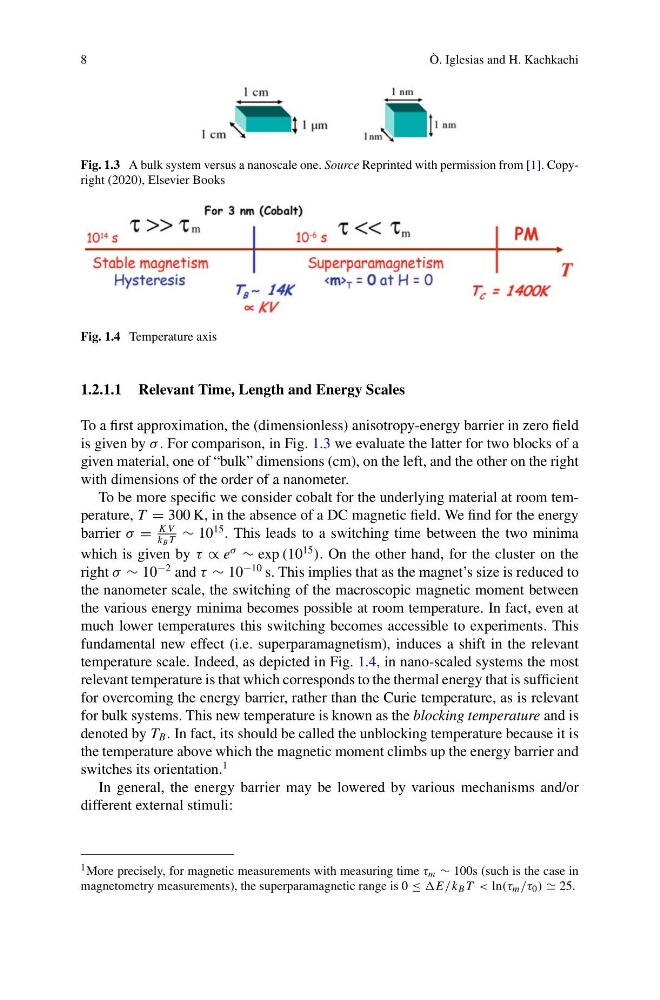
Fig. 1.3 A bulk system versus a nanoscale one. Source Reprinted with permission from [1]. Copyright (2020), Elsevier Books
Fig. 1.4 Temperature axis
1.2.1.1 Relevant Time, Length and Energy Scales
To a first approximation, the (dimensionless) anisotropy-energy barrier in zero field
is given by σ . For comparison, in Fig. 1.3 we evaluate the latter for two blocks of a
given material, one of “bulk” dimensions (cm), on the left, and the other on the right
with dimensions of the order of a nanometer.
To be more specific we consider cobalt for the underlying material at room temperature, T = 300 K, in the absence of a DC magnetic field. We find for the energy
barrier σ =
K V
k B T
∼ 10
15 . This leads to a switching time between the two minima
which is given by τ ∝ e
σ
∼ exp (10
15
). On the other hand, for the cluster on the
right σ ∼ 10
−2 and τ ∼ 10
−10 s. This implies that as the magnet’s size is reduced to
the nanometer scale, the switching of the macroscopic magnetic moment between
the various energy minima becomes possible at room temperature. In fact, even at
much lower temperatures this switching becomes accessible to experiments. This
fundamental new effect (i.e. superparamagnetism), induces a shift in the relevant
temperature scale. Indeed, as depicted in Fig. 1.4, in nano-scaled systems the most
relevant temperature is that which corresponds to the thermal energy that is sufficient
for overcoming the energy barrier, rather than the Curie temperature, as is relevant
for bulk systems. This new temperature is known as the blocking temperature and is
denoted by T B . In fact, its should be called the unblocking temperature because it is
the temperature above which the magnetic moment climbs up the energy barrier and
switches its orientation.
1
In general, the energy barrier may be lowered by various mechanisms and/or
different external stimuli:
1 More precisely, for magnetic measurements with measuring time τ m ∼ 100s (such is the case in
magnetometry measurements), the superparamagnetic range is 0 ≤ E/k B T < ln(τ m /τ 0 ) 25.
Ò. Iglesias and H. Kachkachi
Fig. 1.3 A bulk system versus a nanoscale one. Source Reprinted with permission from [1]. Copyright (2020), Elsevier Books
Fig. 1.4 Temperature axis
1.2.1.1 Relevant Time, Length and Energy Scales
To a first approximation, the (dimensionless) anisotropy-energy barrier in zero field
is given by σ . For comparison, in Fig. 1.3 we evaluate the latter for two blocks of a
given material, one of “bulk” dimensions (cm), on the left, and the other on the right
with dimensions of the order of a nanometer.
To be more specific we consider cobalt for the underlying material at room temperature, T = 300 K, in the absence of a DC magnetic field. We find for the energy
barrier σ =
K V
k B T
∼ 10
15 . This leads to a switching time between the two minima
which is given by τ ∝ e
σ
∼ exp (10
15
). On the other hand, for the cluster on the
right σ ∼ 10
−2 and τ ∼ 10
−10 s. This implies that as the magnet’s size is reduced to
the nanometer scale, the switching of the macroscopic magnetic moment between
the various energy minima becomes possible at room temperature. In fact, even at
much lower temperatures this switching becomes accessible to experiments. This
fundamental new effect (i.e. superparamagnetism), induces a shift in the relevant
temperature scale. Indeed, as depicted in Fig. 1.4, in nano-scaled systems the most
relevant temperature is that which corresponds to the thermal energy that is sufficient
for overcoming the energy barrier, rather than the Curie temperature, as is relevant
for bulk systems. This new temperature is known as the blocking temperature and is
denoted by T B . In fact, its should be called the unblocking temperature because it is
the temperature above which the magnetic moment climbs up the energy barrier and
switches its orientation.
1
In general, the energy barrier may be lowered by various mechanisms and/or
different external stimuli:
1 More precisely, for magnetic measurements with measuring time τ m ∼ 100s (such is the case in
magnetometry measurements), the superparamagnetic range is 0 ≤ E/k B T < ln(τ m /τ 0 ) 25.