

4 Gödel, Hawking and the Foundations of Physics
71
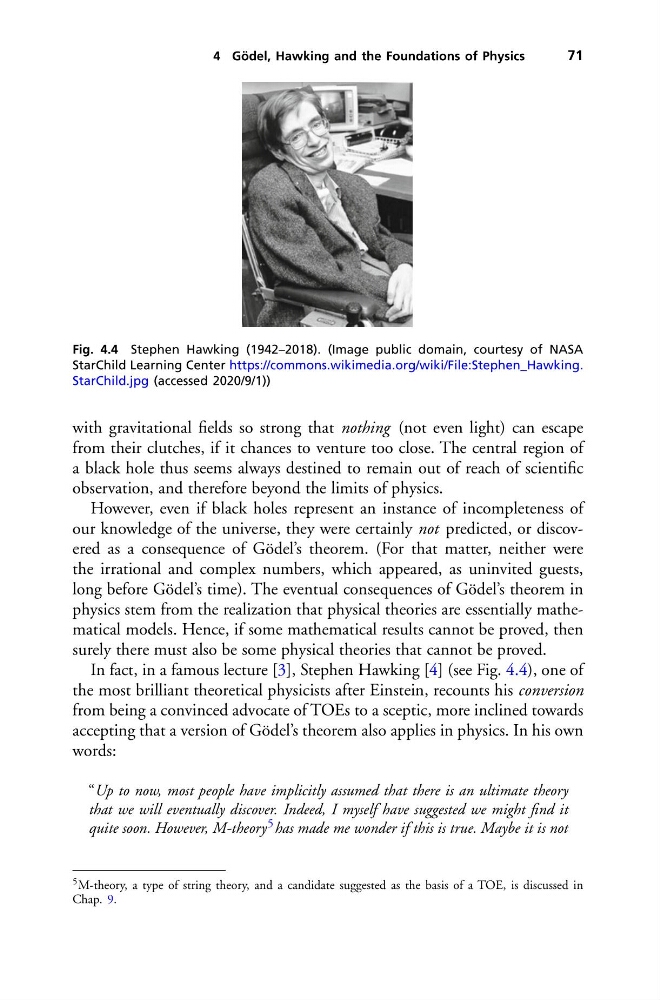
Fig. 4.4 Stephen Hawking (1942–2018). (Image public domain, courtesy of NASA
StarChild Learning Center https://commons.wikimedia.org/wiki/File:Stephen_Hawking.
StarChild.jpg (accessed 2020/9/1))
with gravitational fields so strong that nothing (not even light) can escape
from their clutches, if it chances to venture too close. The central region of
a black hole thus seems always destined to remain out of reach of scientific
observation, and therefore beyond the limits of physics.
However, even if black holes represent an instance of incompleteness of
our knowledge of the universe, they were certainly not predicted, or discovered as a consequence of Gödel’s theorem. (For that matter, neither were
the irrational and complex numbers, which appeared, as uninvited guests,
long before Gödel’s time). The eventual consequences of Gödel’s theorem in
physics stem from the realization that physical theories are essentially mathematical models. Hence, if some mathematical results cannot be proved, then
surely there must also be some physical theories that cannot be proved.
In fact, in a famous lecture [3], Stephen Hawking [4] (see Fig. 4.4), one of
the most brilliant theoretical physicists after Einstein, recounts his conversion
from being a convinced advocate of TOEs to a sceptic, more inclined towards
accepting that a version of Gödel’s theorem also applies in physics. In his own
words:
“Up to now, most people have implicitly assumed that there is an ultimate theory
that we will eventually discover. Indeed, I myself have suggested we might find it
quite soon. However, M-theory 5 has made me wonder if this is true. Maybe it is not
5 M-theory, a type of string theory, and a candidate suggested as the basis of a TOE, is discussed in
Chap. 9.
71
Fig. 4.4 Stephen Hawking (1942–2018). (Image public domain, courtesy of NASA
StarChild Learning Center https://commons.wikimedia.org/wiki/File:Stephen_Hawking.
StarChild.jpg (accessed 2020/9/1))
with gravitational fields so strong that nothing (not even light) can escape
from their clutches, if it chances to venture too close. The central region of
a black hole thus seems always destined to remain out of reach of scientific
observation, and therefore beyond the limits of physics.
However, even if black holes represent an instance of incompleteness of
our knowledge of the universe, they were certainly not predicted, or discovered as a consequence of Gödel’s theorem. (For that matter, neither were
the irrational and complex numbers, which appeared, as uninvited guests,
long before Gödel’s time). The eventual consequences of Gödel’s theorem in
physics stem from the realization that physical theories are essentially mathematical models. Hence, if some mathematical results cannot be proved, then
surely there must also be some physical theories that cannot be proved.
In fact, in a famous lecture [3], Stephen Hawking [4] (see Fig. 4.4), one of
the most brilliant theoretical physicists after Einstein, recounts his conversion
from being a convinced advocate of TOEs to a sceptic, more inclined towards
accepting that a version of Gödel’s theorem also applies in physics. In his own
words:
“Up to now, most people have implicitly assumed that there is an ultimate theory
that we will eventually discover. Indeed, I myself have suggested we might find it
quite soon. However, M-theory 5 has made me wonder if this is true. Maybe it is not
5 M-theory, a type of string theory, and a candidate suggested as the basis of a TOE, is discussed in
Chap. 9.