

10 How the World Began
193
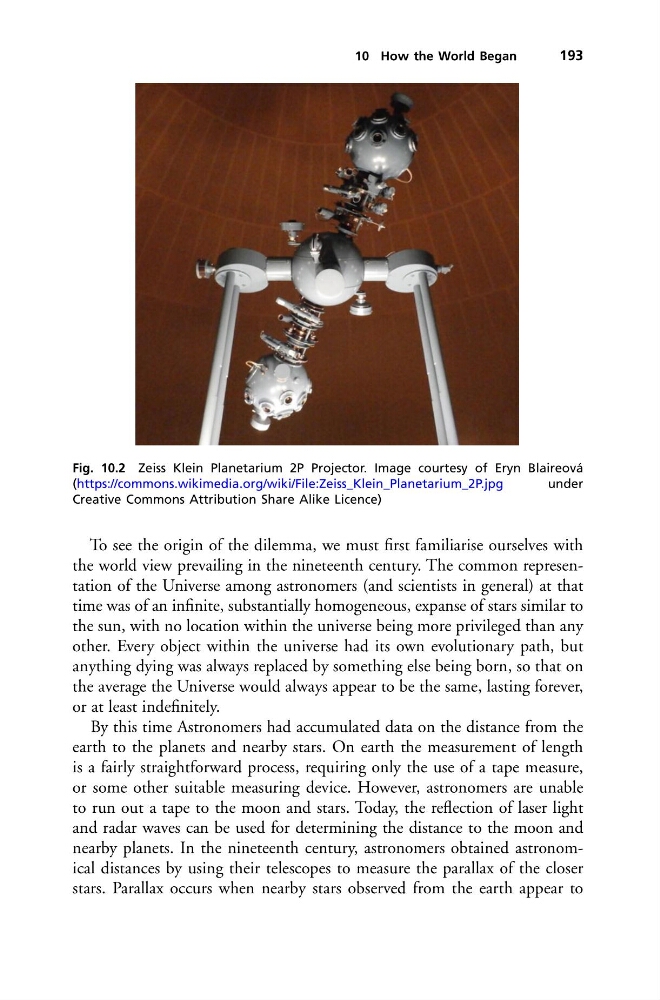
Fig. 10.2 Zeiss Klein Planetarium 2P Projector. Image courtesy of Eryn Blaireová
(https://commons.wikimedia.org/wiki/File:Zeiss_Klein_Planetarium_2P.jpg
under
Creative Commons Attribution Share Alike Licence)
To see the origin of the dilemma, we must first familiarise ourselves with
the world view prevailing in the nineteenth century. The common representation of the Universe among astronomers (and scientists in general) at that
time was of an infinite, substantially homogeneous, expanse of stars similar to
the sun, with no location within the universe being more privileged than any
other. Every object within the universe had its own evolutionary path, but
anything dying was always replaced by something else being born, so that on
the average the Universe would always appear to be the same, lasting forever,
or at least indefinitely.
By this time Astronomers had accumulated data on the distance from the
earth to the planets and nearby stars. On earth the measurement of length
is a fairly straightforward process, requiring only the use of a tape measure,
or some other suitable measuring device. However, astronomers are unable
to run out a tape to the moon and stars. Today, the reflection of laser light
and radar waves can be used for determining the distance to the moon and
nearby planets. In the nineteenth century, astronomers obtained astronomical distances by using their telescopes to measure the parallax of the closer
stars. Parallax occurs when nearby stars observed from the earth appear to
193
Fig. 10.2 Zeiss Klein Planetarium 2P Projector. Image courtesy of Eryn Blaireová
(https://commons.wikimedia.org/wiki/File:Zeiss_Klein_Planetarium_2P.jpg
under
Creative Commons Attribution Share Alike Licence)
To see the origin of the dilemma, we must first familiarise ourselves with
the world view prevailing in the nineteenth century. The common representation of the Universe among astronomers (and scientists in general) at that
time was of an infinite, substantially homogeneous, expanse of stars similar to
the sun, with no location within the universe being more privileged than any
other. Every object within the universe had its own evolutionary path, but
anything dying was always replaced by something else being born, so that on
the average the Universe would always appear to be the same, lasting forever,
or at least indefinitely.
By this time Astronomers had accumulated data on the distance from the
earth to the planets and nearby stars. On earth the measurement of length
is a fairly straightforward process, requiring only the use of a tape measure,
or some other suitable measuring device. However, astronomers are unable
to run out a tape to the moon and stars. Today, the reflection of laser light
and radar waves can be used for determining the distance to the moon and
nearby planets. In the nineteenth century, astronomers obtained astronomical distances by using their telescopes to measure the parallax of the closer
stars. Parallax occurs when nearby stars observed from the earth appear to