

7 General Relativity
129
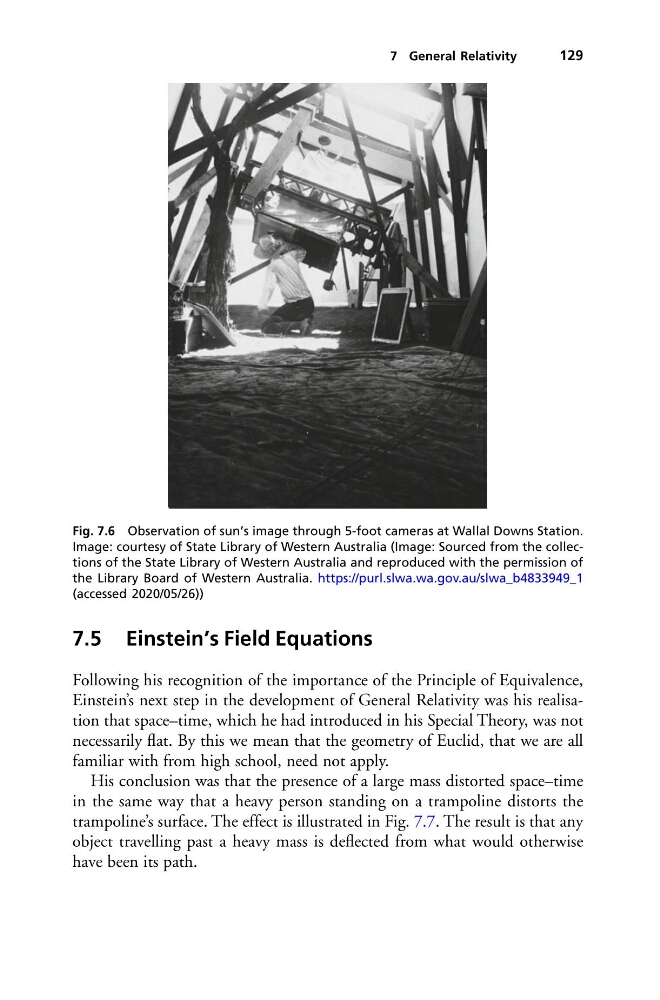
Fig. 7.6 Observation of sun’s image through 5-foot cameras at Wallal Downs Station.
Image: courtesy of State Library of Western Australia (Image: Sourced from the collections of the State Library of Western Australia and reproduced with the permission of
the Library Board of Western Australia. https://purl.slwa.wa.gov.au/slwa_b4833949_1
(accessed 2020/05/26))
7.5 Einstein’s Field Equations
Following his recognition of the importance of the Principle of Equivalence,
Einstein’s next step in the development of General Relativity was his realisation that space–time, which he had introduced in his Special Theory, was not
necessarily flat. By this we mean that the geometry of Euclid, that we are all
familiar with from high school, need not apply.
His conclusion was that the presence of a large mass distorted space–time
in the same way that a heavy person standing on a trampoline distorts the
trampoline’s surface. The effect is illustrated in Fig. 7.7. The result is that any
object travelling past a heavy mass is deflected from what would otherwise
have been its path.
129
Fig. 7.6 Observation of sun’s image through 5-foot cameras at Wallal Downs Station.
Image: courtesy of State Library of Western Australia (Image: Sourced from the collections of the State Library of Western Australia and reproduced with the permission of
the Library Board of Western Australia. https://purl.slwa.wa.gov.au/slwa_b4833949_1
(accessed 2020/05/26))
7.5 Einstein’s Field Equations
Following his recognition of the importance of the Principle of Equivalence,
Einstein’s next step in the development of General Relativity was his realisation that space–time, which he had introduced in his Special Theory, was not
necessarily flat. By this we mean that the geometry of Euclid, that we are all
familiar with from high school, need not apply.
His conclusion was that the presence of a large mass distorted space–time
in the same way that a heavy person standing on a trampoline distorts the
trampoline’s surface. The effect is illustrated in Fig. 7.7. The result is that any
object travelling past a heavy mass is deflected from what would otherwise
have been its path.